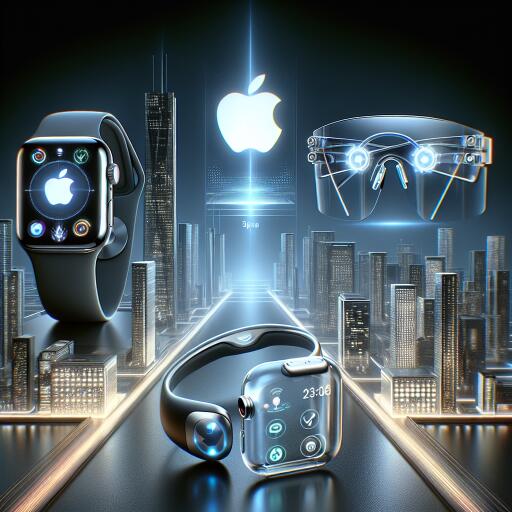

Apple’s Trio of AI Wearables Could Arrive as Soon as Next Year
Apple is quietly lining up its next act in wearables: a trio of AI-driven devices that could begin landing as early as next year, with pieces potentially arriving even sooner. The lineup reportedly includes camera-first glasses, a screenless smart pin, and a next-generation version of AirPods with new sensors—all designed to work together as a seamless, always-available interface for Apple’s expanding AI ambitions.
The Three Devices At a Glance
- AI glasses (display-free): Think lightweight frames with microphones, speakers, and multiple cameras. Two separate camera modules are expected to split duties: one for photos and video, the other focused on environmental awareness and depth. Without a built-in display, these would lean on voice, audio cues, and your iPhone for processing and visual handoff. Expect features like hands-free capture, real-time guidance, translation, audio captioning, and subtle notifications—essentially “AirPods for your eyes,” minus the screen. Apple’s own frame designs and in-store fitting seem likely, aligning with how it handles other personalized hardware.
- Next-gen AirPods with infrared sensing: An upcoming AirPods Pro update is expected to add inward- and outward-facing IR sensors for close-range gesture tracking. This isn’t about snapping photos—it’s about recognizing quick pinches, swipes, or subtle finger movements, even in low light. That could unlock discreet controls for music, workouts, accessibility features, and AI prompts without touching your phone or saying a word. Consider these the earliest building blocks for a broader gesture vocabulary that could later extend to glasses.
- AI pin (camera-enabled, screenless): A clip-on accessory designed to live on your lapel or collar, working in tandem with iPhone. The concept centers on quick, context-aware assistance: point-and-ask queries, audio recording and summarization, scene awareness, and instant capture. Timing for this device is the least certain—it may slip further out or even be reconsidered depending on how the ecosystem gels—but it fits Apple’s pattern of testing new input paradigms in compact form factors.
Why Apple Is Moving Now
Apple’s recent AI push strongly hints at more camera- and context-aware features across devices. The company has been exploring partnerships and models capable of live, multimodal comprehension—understanding what you see, hear, and do in the moment. Wearables are the natural delivery system for that vision. Put simply: the closer AI gets to your eyes, ears, and hands, the more useful it becomes.
And Apple is uniquely positioned to execute. Its strengths in silicon, camera pipelines, spatial audio, and ultra-tight device integration give it a foundation others struggle to match. Much of the necessary tech—biometric sensors, precision microphones, beamforming audio, on-device ML accelerators—already lives across iPhone, Apple Watch, AirPods, and Vision Pro. The next step is to reorganize those capabilities around ambient, glance-free computing.
How They Could Work Together
Picture a day with all three:
- AirPods silently listen for commands and track simple finger gestures. You double-pinch to accept a call, swipe to jump a track, or squeeze to ask a question—no phone out, no “Hey” needed.
- Glasses augment what you’re hearing: they capture the moment, translate a sign, describe a menu, or whisper directions while you keep your eyes up and your hands free. They’re your face-forward sensor hub.
- The pin steps in for quick clips, micro-memos, or context-aware prompts when you don’t want anything on your face but still need fast access to AI assistance.
All of this hinges on continuity. Apple’s ecosystem excels at passing tasks between devices with almost no friction—handoff, audio routing, and shared context are second nature here. With wearables, that coherence matters more than ever. Rather than betting everything on a single gadget, Apple seems to be building a mesh of tiny interfaces that together feel like one ambient computer.
What They Won’t Be—At Least Not Yet
Don’t expect built-in displays this round. The early wave skews toward audio-first interactions, cameras for scene understanding, and phones for heavy lifting. A screenless approach keeps glasses light and socially acceptable, while letting Apple refine voice, gesture, and camera-driven AI before it commits to transparent or microdisplay optics at scale. Longer term, it’s easy to imagine these accessories converging with a lighter, more affordable take on Apple’s spatial computing platform, but that’s not the focus of this first phase.
Timelines and Teasers
Internal schedules can shift, but the rough order seems to favor the AirPods update first, then the glasses, with the pin following later if it clears the bar. Some pieces could surface this year, with the broader rollout accelerating through next year. Apple has a habit of previewing new product categories months ahead of launch to give developers time to adapt, so an early look wouldn’t be surprising once the software scaffolding is ready.
WWDC is the obvious stage for clues: APIs for on-device understanding, gesture frameworks, camera permissions tailored to wearables, or new accessibility features could quietly signal where Apple’s heading. If the company follows past playbooks, expect a steady drip of developer tools before the hardware fully lands.
The Bottom Line
Apple’s next wave of wearables is less about new screens and more about new senses. By distributing AI across your ears, face, and lapel, the company is sketching a future where you don’t need to look down to get things done. If the timing holds, 2025 could mark the moment Apple’s ambient AI steps out of your pocket and into your everyday life—one tiny interface at a time.