
PHI presents Jakob Kudsk Steensen and Paola Pivi
Two boundary-pushing exhibitions converge at PHI in Montréal’s Old Port, pairing virtual ecosystems with mischievous sculptural theater. On one side, Danish artist Jakob Kudsk Steensen transforms years of ecological fieldwork into enveloping virtual worlds. On the other, Paola Pivi fractures familiar symbols to probe truth, falsehood, and the strange gap in between. Together, they offer a double feature that feels equal parts museum, cinema, and game—an invitation to step into spaces where reality is rebuilt, reimagined, and interrogated.
Jakob Kudsk Steensen: Otherworlds
Steensen’s practice starts on the ground—boots in mud, eyes on ice, ears in the forest—before it blossoms into immersive, digital landscapes. His research has carried him from the collapsed ice caverns of Switzerland’s Glacier d’Arolla to the wetland matrices of Minnesota’s Marcell Experimental Forest; from overgrown, once-buzzing resorts where plants and animals retake the stage to the storied specimen cases of a major natural history museum; from Bora-Bora’s marine zones to the volcanic seafloors near the Azores. The thread that binds these disparate sites is change—rapid, disquieting, and profoundly material.
Instead of pointing a finger or delivering a didactic lesson, Steensen builds places to dwell in. Scientific observation and imaginative retelling are fused in environments that feel lived-in and lucid, yet also dreamlike. Climate change, in his hands, is not an abstract graph line but a texture, a rhythm, a psychological weather front. His works consider how altered ecologies reshape memory, seep into our bodies, and haunt our collective unconscious.
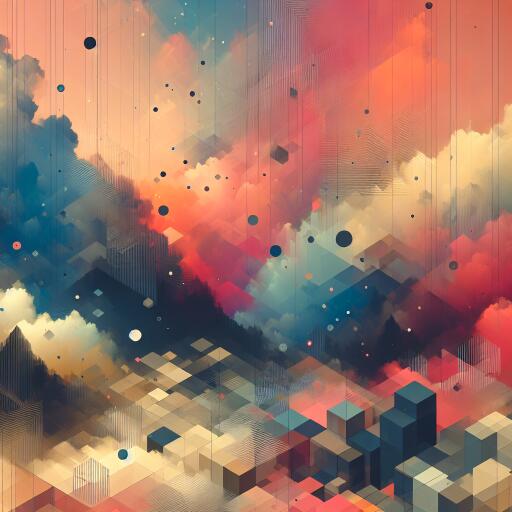
For this Montréal presentation, the artist flips his field method inward. Otherworlds assembles six major environments from the past decade and treats them like a landscape unto themselves. Visitors move through virtual reality pieces, spatialized sound fields, and large-scale video installations as if progressing through chapters of a novel or levels of a game. Each space is a fragment—part of a body, a stanza, a melody—and the sum is a living atlas of entangled human–nonhuman worlds.
This marks Steensen’s first solo exhibition in Canada and his most expansive institutional showcase to date. A highlight is the North American premiere of Psychosphere (2025), a monumental installation originally commissioned for the subterranean cisterns of Copenhagen. At PHI, the work’s scale and sonic ambition pull audiences into a cavernous sense of presence, where time seems to pool and refract.
Paola Pivi: Come check it out. Lies lies lies
Across the building, Paola Pivi stages a parallel exploration—less about data and more about the mythologies that scaffold our daily lives. Raised in Milan and now spending time in Toronto, Pivi is a master of the uncanny tweak, the small distortion that flips the world on its head. Her artworks look playful and fantastical at first glance, but their foundations are rigorously tied to the currents of our time: the spectacle of power, the fog of disinformation, and our uneasy pact with the built environment.
This exhibition, her first major presentation in Québec and first Canadian tour developed with Contemporary Calgary, is a study in symbols and the way they calcify into “truth.” Pivi’s sculptural installations grapple with icons like the Statue of Liberty and the polar bear—stand-ins for freedom and climate anxiety—and push them until their surface meanings crack open. At the core is Lies (2018), an enveloping experience that treats truth and fabrication not as opposites but as a contested terrain, where narratives collide and mutate in real time.
Pivi composes her installations like theatrical sets, orchestrating materials and references so they converse, clash, and cross-pollinate. Associations do the heavy lifting: the natural sidles up to the artificial, the factual rubs against the performative. Rather than scold or simplify, she leans into irony and absurdity to make room for critical reflection. The result is a lucid kind of play—one that exposes the seams of our stories and asks us to own the choices stitched into them.
Why this pairing matters
Seen together, Steensen and Pivi map two complementary routes through the now. Steensen’s virtual ecologies are navigated like interactive worlds—scored with enveloping sound, paced to encourage attention rather than speed. They feel game-adjacent without slipping into gamification, trading points and objectives for presence and perception. Pivi, meanwhile, constructs a stage where cultural code gets rewritten in real time; you won’t wear a headset, but you’ll still feel the ground shift beneath your assumptions.
Both artists reject tidy binaries. Nature versus culture, real versus fake news, documentation versus fantasy—these oppositions don’t hold in their work. Instead, each show treats complexity as a design principle. Visitors are invited to slow down, to listen, to let perception stretch. In an era when information blares and images sprint past, that deceleration is quietly radical.
For Montréal’s Old Port, long a crossroads of goods, people, and ideas, this tandem feels apt. One exhibition tunes your senses to the more-than-human world through virtual immersion; the other unpacks the symbols that choreograph civic imagination. Expect to leave with new questions, not answers: about how we build our realities, who gets to define them, and what futures are still possible when we choose to see—and hear—differently.