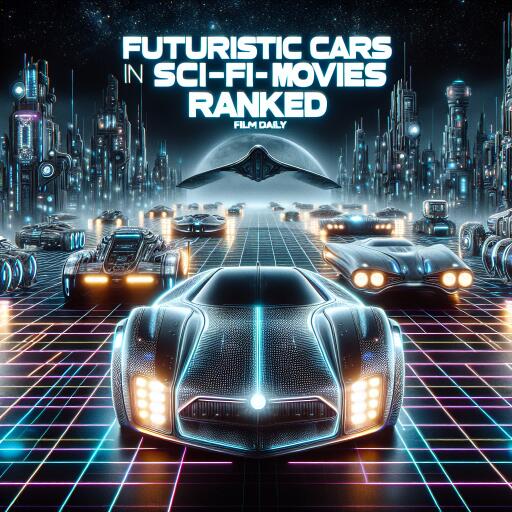

Futuristic cars in sci-fi movies ranked – Film Daily
In sci-fi cinema, transportation isn’t just about getting from A to B—it’s a storytelling device that reflects imagined futures and often fuels real-world tech dreams. From time machines to gravity-defying taxis, these cinematic rides have shaped design sensibilities and sparked conversations about how we’ll move in the decades ahead. Here’s a concise ranking of seven iconic movie cars and what they signified for designers, engineers, and dreamers alike.
-
DeLorean DMC-12 (Back to the Future)
A stainless steel two-seater famous for doors that swing upward and a fictional flux capacitor that makes time travel possible at 88 mph. Its playful, optimistic vibe helped revive interest in the car and cemented a pop-culture idea of gadgetry in the garage. Later films experimented with flight capabilities, reinforcing the notion that today’s everyday car could host tomorrow’s miracles.
-
Spinner (Blade Runner)
A police craft capable of cruising streets and lifting into the rainy night sky, created with a blend of practical effects and early CGI. The Spinner grounded a believable cyberpunk world and foreshadowed the era of urban air mobility being contemplated by designers and city planners alike.
-
Lightcycle (Tron, 1982)
A neon-lit motorbike racing through a digital grid, born from groundbreaking computer animation. The Lightcycle’s glow and streamlined form helped define the aesthetics of digital transit and continues to influence how people imagine riding inside virtual and augmented realities.
-
Landspeeder (Star Wars)
A compact repulsorlift vehicle skimming across desert terrain, crafted with practical models and puppetry that grounded its sci‑fi tech in tangible physics. The Landspeeder helped make futuristic transport feel attainable and linked everyday environments to galactic-scale adventures.
-
The Interceptor (Mad Max)
A raw, high-performance chase machine built from a real production car, perfected for a wasteland look that emphasizes resourcefulness and power. Its gritty presence demonstrated that mobility can symbolize survival and resilience as much as speed and polish.
-
The Fifth Element taxi (The Fifth Element)
A vibrant, multi-layered yellow flying taxi weaving through a bustling future city, realized with a mix of practical builds and CGI. Its exuberant design and witty on-board chatter helped redefine mass transit fantasies in crowded megacities and hinted at a future where air lanes are as common as roads.
-
Self-driving concept sedan (Minority Report)
Set in a near-future D.C., an autonomous car showcases a magnetically levitated, wheel-free propulsion concept that integrates with predictive urban systems. The design illustrated a plausible path for autonomous mobility, influencing real-world concept work at automakers and tech firms alike.
These machines endure as more than cinematic props: they map our evolving hopes, fears, and questions about travel, control, and the relationship between people and machines. As engineers, designers, and storytellers chase the next breakthroughs, these iconic cars continue to inspire and provoke debate about what mobility could become.