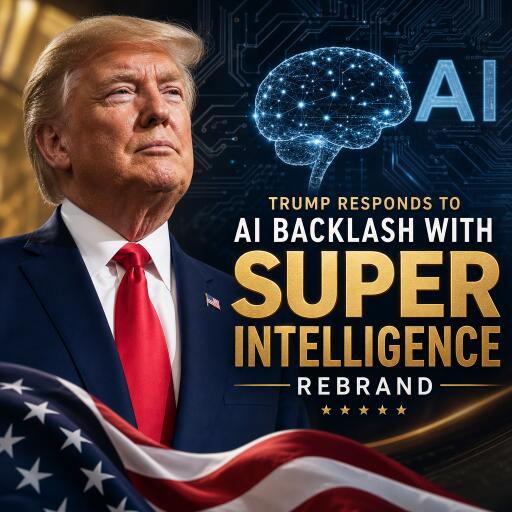
Trump Responds to AI Backlash With ‘Super Intelligence’ Rebrand
In a bid to steer the national conversation around artificial intelligence, the president floated a branding pivot designed to recast public perception. Rather than focusing on the technical terminology that dominates labs and policy briefs, the proposal envisions labeling the technology as “super intelligence” to convey capability, stewardship, and practical benefits for society.
The discussions unfolded during a White House luncheon that brought together leaders from major tech firms, research institutions, and startup ecosystems. Attendees described a candid, sometimes tense, exchange about where AI is headed, how it is portrayed to the public, and the responsibilities that come with rapid advancement. The event underscored how policymakers, executives, and researchers are grappling with the dual imperatives of enabling innovation while guarding against risk.
Under the proposal, the traditional shorthand of artificial intelligence would gradually be replaced with the broader concept of “super intelligence.” Proponents argue the change could help the public grasp complex ideas such as automation, decision-making, and safety more clearly. They contend the new label would signal not just the technology itself but a governance mindset—emphasizing oversight, accountability, and measurable outcomes rather than dazzling demonstrations alone.
Not everyone at the table embraced the idea, however. Critics warned that slapping a new name onto a complex field could become a distraction from the hard work of policy development. They cautioned that safety nets, transparency standards, and anti-bias commitments should be the foundation of governance, not marketing cues. Some tech executives expressed cautious optimism, while others stressed that branding cannot replace a robust regulatory framework, independent testing, and ongoing risk assessment.
Beyond the rhetoric, the luncheon touched on concrete steps to align innovation with public interests. Participants discussed formalizing standards for responsible use, strengthening data governance, and creating mechanisms for ongoing scrutiny of AI systems as they become more embedded in workplaces, consumer devices, and government services. The administration signaled openness to cross‑sector collaboration—bridging Congress, industry, and academia—to build a comprehensive framework that balances opportunity with safeguards.
Analysts say that naming shifts can influence how policies are discussed and implemented, especially during rapid epochs of technological change. The current moment, marked by intense media attention and geopolitical implications, makes it particularly important that the public receives clear, consistent information about what AI can do, what it cannot, and how risk will be managed. The proposed rebranding is being framed as part of a broader effort to establish a shared vocabulary that supports responsible development and practical governance.
Observers also note potential international consequences. A shift in branding from AI to “super intelligence” could prompt comparable moves abroad, with implications for collaboration, global standards, and cross-border data flows. The administration’s approach appears to prioritize transparent dialogue and actionable policy steps that can keep pace with rapid technical progress while embedding ethical guardrails into design, deployment, and oversight.
As the event wrapped, officials emphasized that this is only the starting point of a wider conversation. The aim is to translate a high-level vision into tangible policy instruments—funding for safety research, incentives for responsible innovation, and clearer accountability for developers and users alike. Whether the rebrand endures or serves as a transitional phase will hinge on continued engagement from lawmakers, industry partners, and the public.