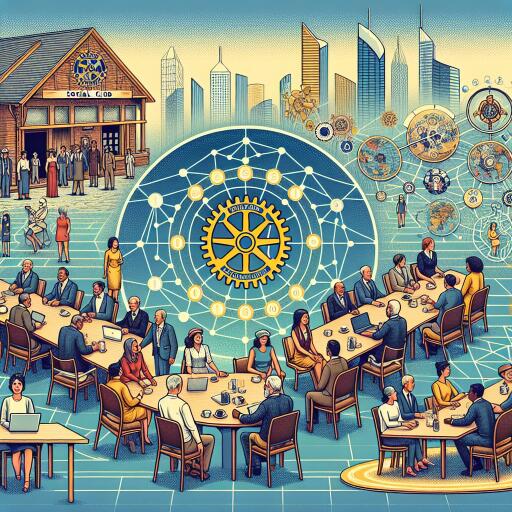

From Rotary Clubs to Meta: How Social Connectivity Has Evolved Over the Decades
It’s a startling revelation: research indicates that the typical American will dedicate approximately two years of their life to navigating the infinite scroll of Meta and its digital counterparts. But is this really so different from the social gatherings of yesteryears? My parents had their own social clubs, whether it was Tupperware parties, Rotary gatherings, or local community meetings, and by most accounts, they turned out just fine. So, how do these modern social environments actually differ from the past?
Firstly, consider the expansiveness of online networks. With a global reach and instantaneous engagement functionality, these digital platforms are ever-present in our lives. Unlike traditional meetings or gatherings, there’s no definitive pause button. Engagement happens continuously through likes, comments, and posts. Our expectation to respond and immerse ourselves in the digital world is relentless.
The irony lies in the dichotomy of our social interactions. Online, we effortlessly connect with strangers on professional networks, keep up with former acquaintances on platforms like Meta, and follow the trends dictated by influencers. Yet, in reality, the thought of meeting someone in person—like a simple coffee with a friend—feels overwhelmingly taxing. Frequent thoughts marinate as a sort of mantra: “Maybe another time.”
Then there’s the peculiar scale of these networks. Designed deliberately to hold our attention, platforms are engineered with addictive qualities that promote prolonged use. We often hide behind curated personas, expressing opinions and ideas we might not otherwise share face-to-face, while calibrating our virtue signaling to the audience on the other side of the screen. Social activism, often driven by celebrities with expansive digital clout, blurs the line between personal intention and public perception.
The potent breadth of social media platforms has rendered them both a spark for rapid social movements and a megaphone for minor discord. Through the pervasive spread of misinformation, once minor disagreements now escalate quickly, fostering division and outrage among communities. Consider the notorious data privacy concerns that have periodically surfaced; these are just glimpses into the vast world of data exploitation, where our personal details are mined, monetized, and ultimately weaponized to maintain our online addiction.
Another repercussion involves how our engagement in these digital realms impacts our everyday productivity. We are perpetually comparing our mundane daily existences to the meticulously curated lives broadcasted worldwide. Our time is fleetingly spent indulging in the creativity of others when it could be harnessed for our creative potential.
Notably absent in this discussion is comprehensive regulatory oversight, particularly in countries such as the United States. While the European Union has implemented the General Data Protection Regulation (GDPR), which grants users rights over their data and enforces penalties for non-compliance, a parallel structure doesn’t exist uniformly elsewhere. Without stringent rules regarding privacy and company data policies, users’ personal information remains vulnerable.
The path forward requires a deep understanding of the inherent risks related to the pervasiveness and scale of social media. Until consumers recognize the potential harm and legislators implement significant oversight for these companies, society will likely continue its descent into endless digital distractions, epitomized by the seemingly harmless allure of viral cat content.