
400 People at This Massive Support Studio Worked on The Elder Scrolls IV: Oblivion Remastered — but You Probably Don’t Know They Exist
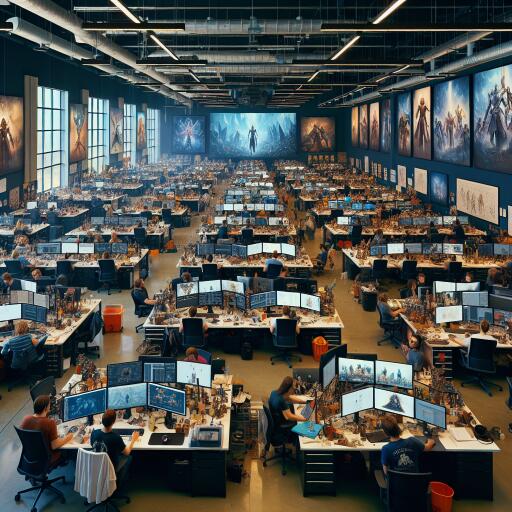
There’s a quiet giant behind some of the biggest games of the past few years, and most players don’t realize it. Virtuos, a global development powerhouse with dozens of studios and thousands of developers, has had a hand in projects like Cyberpunk 2077 and Metal Gear Solid Delta: Snake Eater. Its most high-profile turn in the spotlight, though, is The Elder Scrolls IV: Oblivion Remastered — a project so large it marshaled roughly 400 Virtuos staff at its peak.
For years, Virtuos has been the studio other studios call — a veteran of remasters and large-scale co-development that typically stays off the box art. That anonymity is fading. When Bethesda unveiled Oblivion Remastered, it deliberately highlighted Virtuos’ role, and other partners have begun spotlighting its developers during community streams. Upcoming releases like Ken Levine’s Judas and Riot’s 2XKO are also drawing on Virtuos’ support, further cementing the company’s ubiquity.
The path hasn’t been entirely smooth. Recently, Virtuos reduced its global headcount by about 7% — approximately 270 positions — with the brunt of the changes impacting teams in Asia. The company framed the move as a restructuring to keep pace with shifting partner needs and a turbulent market. Even so, its pipeline remains busy, and leadership insists the business is built for the long haul.
How Oblivion’s Remaster Took Shape
Oblivion Remastered plays like the game you remember, but looks and feels like a modern release — by design. Virtuos drew on a deep track record remastering classics across Batman, Final Fantasy, and Dark Souls to pitch its approach. The team ran a “prove-it” phase early on, delivering a polished vertical slice that aligned expectations, quality targets, and audience goals before ramping up to full production.
The core strategy: pair the original gameplay engine with a cutting-edge renderer. Virtuos leaned on Unreal Engine 5 for the new visuals, while preserving the legacy systems that define Oblivion’s moment-to-moment feel. This engine pairing ensured the combat cadence, quirks, and “old magic” remained intact, even as lighting, materials, foliage, and effects were rebuilt to modern standards.
On the feature front, the remaster isn’t just a sharper coat of paint. It targets 4K resolution and 60 frames per second, but also meaningfully reworks the experience. Fans will notice revamped leveling and character creation flows, cleaner UI and menu systems, richer combat animations, improved third-person play, updated lip-sync tech, and heaps of new dialogue. The overhaul is broad enough that some players have called it a borderline remake; Bethesda, however, positioned it as a remaster to respect the game’s original identity.
A 400-Person Effort Spanning Multiple Studios
Virtuos’ Paris studio steered the project, setting technical and artistic direction, while a constellation of sister teams handled content, art, engineering, and QA. Hundreds of artists worked to “speak Oblivion” fluently — translating its distinct look into higher fidelity without losing its essence. On the publisher side, a compact group within Bethesda, working under Todd Howard’s oversight, kept the collaboration tight and the vision consistent.
At its height, nearly 400 Virtuos developers were on Oblivion Remastered — a true AAA-scale, multi-year undertaking. The result: a launch that clicked with both newcomers and returning fans, with the remaster surpassing nine million players to date. Bethesda’s decision to openly credit Virtuos during the announcement wasn’t just a nicety; it helped elevate the studio’s profile across the industry, where support teams too often remain invisible.
Why Virtuos Is Built for Remasters — and What’s Next
Remasters are trickier than they look. They require reverence for the original’s design language alongside deft modernization. Virtuos has cultivated that balance: ship a test slice, agree on quality bars, then scale up with predictable execution. Its experience integrating new rendering tech with legacy gameplay has become something of a signature move, and Oblivion Remastered showcases that playbook at its most ambitious.
So what comes after Oblivion? Don’t expect specific titles to be named just yet, but the studio hints at more “big-impact” remasters on the way and ongoing work that extends the life of major live games. That could mean anything from expansions and performance overhauls to platform upgrades and content refreshes.
Comfortable in the Spotlight’s Shadow
There’s perennial curiosity about whether a support titan like Virtuos will pivot to original IP. The answer, for now, seems to be: not necessarily. The company talks about ambition in terms of scale, stability, and service, not celebrity. In other words, it’s content playing lead guitar from the wings while partners take center stage — and that niche can be remarkably powerful when executed at Virtuos’ level.
Oblivion Remastered illustrates what a world-class support studio can do when trusted with a beloved classic. It preserves the charm, pushes the tech, and expands the audience, all without breaking the spell of the original. If this is a preview of Virtuos’ next few years, expect more cherished games to look and play like you remember — only better than you ever thought they could.