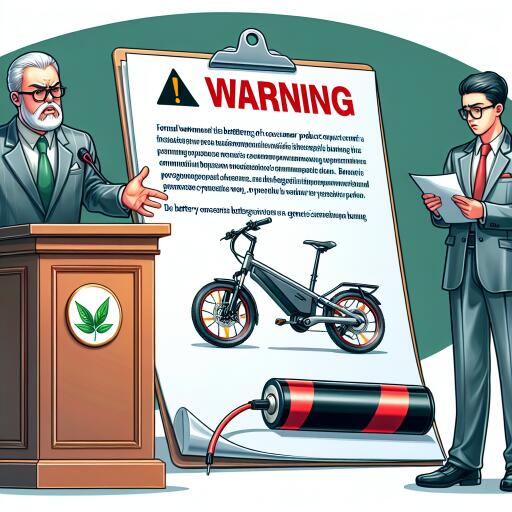

Consumer Product Safety Commission issues warning over Rad Power Bikes batteries
A federal safety agency has issued a warning about certain lithium-ion batteries used in popular Rad Power Bikes models, citing reports that the cells can ignite or explode without warning. The advisory covers two battery variants associated with the Seattle-based e-bike maker, following 31 documented fire-related incidents and related property damage.
What the warning covers
The safety notice identifies two battery configurations linked to the bikes: RP-1304 and HL-RP-S1304. Across the reports, 12 fires led to material losses totaling hundreds of thousands of dollars. The agency warns that these dangerous cells can flare up unexpectedly, particularly if the battery or its wiring has been exposed to water or debris. In several cases, incidents occurred while the battery was not charging, with the bike in storage or not in use.
Which bikes might be affected
The alert notes that some Rad Power Bikes models ship with these batteries included. Consumers should inspect the battery’s back panel to confirm the model number. The company operates a retail presence in Salt Lake City and emphasizes widespread availability through bike shops, online channels, and in some retail locations. Typical pricing for the bikes ranges from about $1,500 to $2,000, with replacement batteries listed around $550.
Rad Power Bikes’ response
The manufacturer counters that the number of incidents is a small fraction of the total batteries sold and that independent testing has shown conformity with top safety standards. The company asserts that the safety alert does not affect its Safe Shield-branded batteries or semi-integrated battery systems. It also points to options offered to customers, including upgrades to an unaffected battery model, as part of its good-faith efforts.
Safety testing and ongoing monitoring
The company states that it has sold a substantial volume of batteries and that the reported cases represent a tiny portion of overall distribution. Independent laboratories reportedly conducted tests as part of routine quality checks and during investigations, with findings indicating compliance with established safety benchmarks. The company notes however that the battery unit itself may not have undergone every individual industry-standard test separately.
Practical guidance for users
- Check the back of the battery to verify the model number and determine if it falls within the warned configurations.
- Inspect for visible damage, moisture intrusion, or corrosion before charging or use, and discontinue use if any issues are found.
- Be aware that not all customers may be offered a recall or replacement under every circumstance, depending on model and purchase details.
General safety reminder
As with all lithium-ion cells, prudent handling matters. Always follow manufacturer instructions for charging and storage, and promptly remove from service any battery showing signs of damage or compromised integrity.