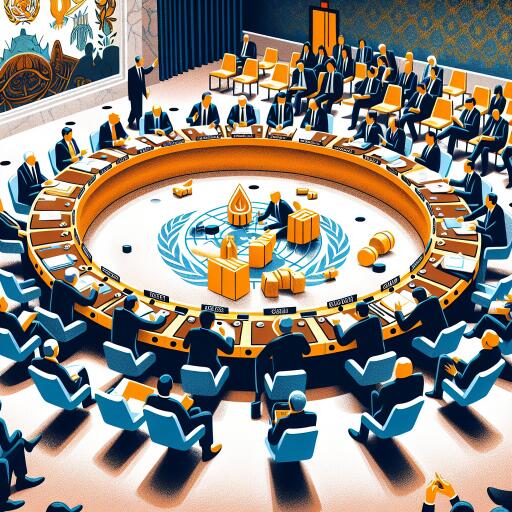

No Agreement on Way Forward, UN Political Chief Tells Security Council, as Speakers Split over Iran’s Nuclear Ambitions, Merits of Snapback Sanctions
The latest briefing to the Security Council indicated that Tehran has not provided current data on its enriched uranium stockpiles, intensifying a debate over the legitimacy and effectiveness of the snapback mechanism linked to the JCPOA and the viability of pursuing negotiations to resolve the broader standoff.
Despite intensified diplomatic activity in the latter part of the year, members failed to reach a consensus on next steps for the Iranian nuclear issue. The group of three European powers warned that activating the snapback, under a 2015 resolution, was warranted due to what they described as Iran’s significant non-compliance with its JCPOA obligations. When the council did not adopt a resolution to continue lifting measures after the E3 letter, sanctions that had been reimposed earlier in the year were restored, including access to relevant sanctions listings. Several member states questioned the formal validity of the snapback, arguing procedural and legal concerns.
IAEA findings and implications
In a report issued in November, the IAEA noted that Iran ceased honoring JCPOA nuclear commitments in February 2021, while verification continued under IAEA safeguards within the framework of the NPT. The agency found that Tehran exceeded JCPOA limits and, in October, disclosed that it had no information about the status of its enriched uranium stockpiles, underscoring the need for a workable framework to ensure the program remains peaceful.
Compliance, enforcement, and path forward
The Secretary-General’s update indicated no new allegations of violations related to nuclear activities under the 2231 framework, and no fresh procurement proposals were put forward. Even with ongoing disagreements over the 2231 text and the JCPOA, parties continued to stress that a peaceful nuclear program coupled with some sanctions relief remains the most viable option for stability.
Debate among delegations
During the discussion, some delegations argued that the move to reinstate restrictions risks serving broader political aims, while others defended the sanctions as a necessary leverage for compliance. Concerns were raised about the amount of high-enriched uranium in circulation and the lack of clarity about its current location. There were warnings about potential military implications if such material were diverted for weaponization. Some speakers stressed that any punitive approach must avoid harming civilians and should stay focused on diplomacy and a credible path back to the negotiating table.
Regional and global perspectives
The European bloc, speaking in a capacity as observers, underscored that sanctions should not be an endpoint but a tool to foster dialogue and verifiable constraints. The aim remains to prevent any resurgence of weaponization while preserving humanitarian protections and safeguards. China criticized the snapback as legally and procedurally flawed, urging all sides to refrain from force and to avoid what it described as “microphone diplomacy.” The Russian delegation questioned the current relevance of the 2231 framework, arguing that the mandate for monitoring its implementation no longer aligns with present realities. There were contemporaneous references to broader regional tensions, including incidents involving other actors in the region, which some argued complicate the non-proliferation landscape.
Amid the discussions, several speakers urged unity to safeguard the non-proliferation regime, stressing that sanctions must not undermine the welfare of ordinary people and should be aligned with a viable diplomatic route. Multilateralism was presented as the preferred means to reach a commonly accepted framework that keeps the focus on peaceful verification and dialogue.
U.S. position and Tehran’s response
The United States maintained that most of the 2231 framework remains in effect, and that the council should honor the snapback provisions unless a new diplomatic framework is agreed. Washington signaled openness to direct talks with Tehran but insisted any negotiations must include verifiable constraints on enrichment and a clear path to meaningful engagement. The U.S. delegation urged other states to support the expeditious use of reinstated resolutions as a bulwark against regional insecurity.
Iran rejected the gathering as a continuation of a non-productive framework, arguing that 2231 was designed as a self-terminating instrument that expired in mid-October 2025 and that there is no legal basis for ongoing actions under its terms. Tehran pointed to alleged external aggression, including attacks on facilities under IAEA safeguards, as violations of international law and said its program remains peaceful and strictly monitored. The Iranian leadership asserted that it would not bow to coercion or political pressure and reiterated a commitment to peaceful development under robust verification.
The U.S. representative countered, stating that 2231 did not automatically expire with the snapback, and reiterated willingness for talks provided Tehran shows genuine readiness to engage. The spokesperson emphasized that enrichment inside Iran is unacceptable and called for direct diplomacy with a constructive stance from Tehran.