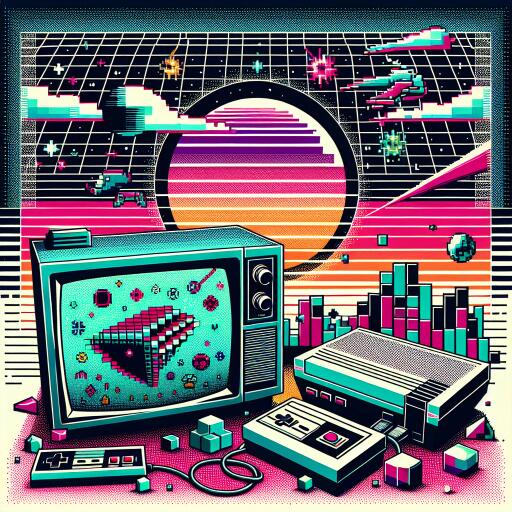

Age of Intellivision(s)
In the mid-20th century, restless storytellers drifted from typewriters to film. By the late 1990s, another pivot was brewing: the belief that many of tomorrow’s most influential creators would swap cameras for code. Interactive media promised not just new worlds, but new ways to inhabit them. Two decades later, the question lingers—did games grow into the medium that could rival, or even surpass, cinema?
From Arcades to the Couch
Video games exploded in the 1970s and ’80s. PCs nurtured a tinkerer’s subculture, but the living room belonged to consoles—cheaper, simpler, and engineered for instant fun on a TV. Nintendo and Sega defined the era’s duel, one rooted in family-friendly polish versus arcade swagger. Before them, Mattel’s Intellivision pitched “intelligent television,” a bold promise that outpaced its time. It didn’t survive the 1983 crash, but the idea—that a console could be more than a toy—never died.
The First ‘Smart TV’ Dream
Between dial-up tones and clamshell modems, the “living room war” took shape. Could a console become the household’s digital hub—email, simple web, media—years before broadband? In that awkward, 56K moment, it felt plausible. Yet skepticism simmered. The idea of giving viewers the agency to choose, shape, and interact with content was thrilling to technologists and unnerving to traditional broadcasters. The fuse was lit, but the dynamite—cheap, fast internet—was still being hauled into place.
3D Arrives, and a New Superpower Enters
Mid-’90s graphics leapt forward, borrowing techniques from high-end film workstations. True 3D worlds on home hardware changed expectations overnight. Nintendo’s 64-bit era dazzled, while Sega stumbled. Then came a heavyweight with deep pockets and deep manufacturing prowess: Sony. With PlayStation, Sony turned game consoles into global culture engines. Nintendo countered by narrowing its focus—affordable hardware, evergreen IP, and family-first design—ceding older teens and adults to the newcomer without surrendering its identity.
Microsoft Bets the Living Room
On PC, games like Myst flirted with cinema. Microsoft asked a blunt question: what if a PC, stripped to essentials, became an effortless console? The bet was straightforward, the execution anything but. Developers weigh cost, tech leadership, audience size, royalties, and vibes. A platform can be powerful and still lose if it feels uncool—or if its install base lags. The wager would cost billions and reshape the company’s image for years.
Dreamcast, PS2, Xbox, GameCube
Sega’s Dreamcast arrived first with ambition and ingenuity, but the economics broke it. Sega exited hardware and focused on software. Sony’s PS2 seized momentum as a multimedia box and games juggernaut. Microsoft’s Xbox launched in late 2001, a bold debut shadowed by a world in turmoil. Nintendo’s compact, underrated GameCube kept the company in the fight. Behind the scenes, the era revealed an industry still overwhelmingly male—and a startup-style bravado at odds with buttoned-down corporate cultures.
Xbox’s early strategy took risks that paid off in the long run. Broadband-only online services made life easier for developers and pushed console networking forward, even if adoption lagged at first. Halo delivered the killer app, yet Xbox struggled in Japan and never found traction there. Elsewhere, the brand matured into a serious rival, with years when it topped the charts and years it chased.
Online Play, Hits, and Growing Pains
As the ecosystem expanded, some games outgrew platforms. World of Warcraft turned PC into a social phenomenon. Minecraft redefined creation as play. Publishers tried to court broader audiences; The Sims proved an enduring gateway, though competitive online spaces too often doubled as hostile arenas. As kids aged up from safe sandboxes, Fortnite met them with social spectacle. Meanwhile, games like League of Legends built vast universes that fans helped author, blurring the line between canon and community.
For all the fights and format shifts, the landscape steadied around three pillars—Sony, Microsoft, Nintendo—while PC gaming thrived alongside them. Call of Duty, Souls-likes, and countless indies filled out a layered economy of experiences, from annual tentpoles to singular passion projects.
Exclusives Erode, Walls Come Down
The latest tremor: once immovable exclusives are loosening. A flagship shooter synonymous with Xbox going multi-platform signals a pragmatic future. Today, subscription services, cross-play, and enormous budgets incentivize reach over walls. It’s not the VHS-vs.-Betamax reckoning of old, but it does feel like the end of a phase defined by bragging rights and box-counting.
Hollywood, Humbled—And What Comes Next
Once upon a time, studios dabbled in tech to future-proof themselves. Now, film and television routinely look to games for the audience, aesthetics, and IP gravity they crave. Even so, the medium hasn’t yet produced the singular, game-like work that makes passive viewing feel quaint the way sound films ended silent cinema. Not yet.
AI may be the missing accelerant. Procedural characters that remember, worlds that adapt, narratives that co-author with the player—these aren’t sci-fi anymore. The “intelligent television” Intellivision promised was never about a screen learning tricks; it was about the stories inside becoming aware of you. If the next era finally delivers that intimacy at scale, the long prophecy of games as the definitive moving-image art form might stop being a bet—and start being history.