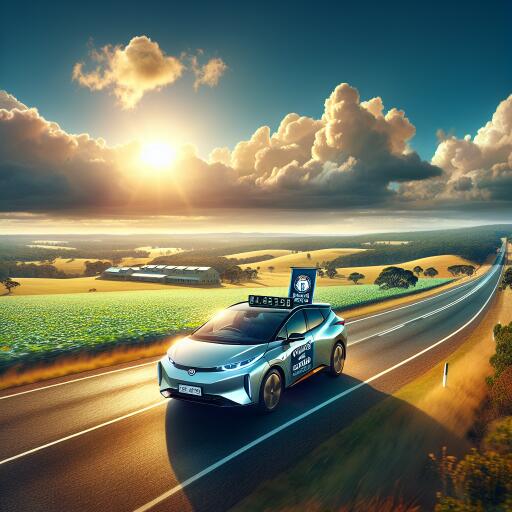

Hybrid smashes Guinness World Record on Sydney to Melbourne drive
A pair of plug-in hybrids have etched a new Guinness World Record for the lowest fuel use on a 1,000-kilometre run between Sydney and Melbourne, finishing the journey with a single electric charge and one full tank of fuel.
The test featured two units of the Geely Star Ray EMI cruising along the coastal highway toward Victoria’s capital, highlighting a turning point for eco-friendly travel in Australia. The effort was conducted with overnight monitoring to ensure the challenge remained true to its one-charge, one-tank premise and to seal the record for accuracy.
The event underscored a growing belief among engineers and researchers that electric and hybrid technologies are now close to mainstreaming long-distance trips. As the crew pressed on through the night, observers noted that the setup avoided any other energy input, reinforcing the integrity of the claim.
For those following the evolution of electric mobility, the message is clear: the perception of “range anxiety” is shifting. The attempt demonstrated that large-scale, multi-hour drives can be powered by a mix of electric and conventional fuel in a way that minimizes stops and optimizes efficiency, even under continuous use and varying road conditions.
In terms of capability, the Star Ray EMI is designed to cover substantial distances on electric power alone—roughly 130 kilometres in pure electric mode. For longer trips, the hybrid system takes over to extend range and carry the vehicle through the return leg of a lengthy journey. This dual-mode approach is what makes the model suitable for family travel and road trips that would otherwise push traditional hybrids to their limits.
The milestone arrives as Australia experiences a steady rise in the uptake of electric, plug-in hybrid, and hybrid vehicles, with industry analyses noting that roughly three in ten new car sales fall into these categories. The record not only spotlights the engineering advances but also signals a potential shift in consumer expectations for how far and how efficiently modern vehicles can travel on a single charge and a single tank.
From a broader tech perspective, the achievement resonates beyond the automotive sector. For developers of driving simulations, augmented reality road trips, and immersive training tools, real-world data about hybrid performance across long hauls can refine physics models, traffic scenario generation, and energy-management algorithms in virtual environments.
As automakers continue refining battery technology, energy recovery systems, and hybrid powertrains, drivers may soon find long-distance travel being powered by smarter, lighter components that stretch every litre of fuel and every kilowatt of charge. The Sydney-to-Melbourne expedition stands as a notable chapter in that ongoing story, illustrating how far practical electrification has progressed—and how quickly it could reshape the way people plan, experience, and even simulate road journeys.