
Ghana to roll out AI education tools in Twi, Ewe and Dagbani
Ghana will soon deploy Artificial Intelligence (AI) learning tools built in local languages, a move the Education Ministry says is designed to widen access and improve learning outcomes nationwide—especially for students in rural areas and those with disabilities.
The Minister for Education, Haruna Iddrisu, disclosed the initiative after meeting a Google vice president on the sidelines of the Generative AI Summit in the United Kingdom. In a Facebook update on Friday, 23 January 2026, he said the conversation centred on applying AI to strengthen teaching and learning in Ghana and across the continent.
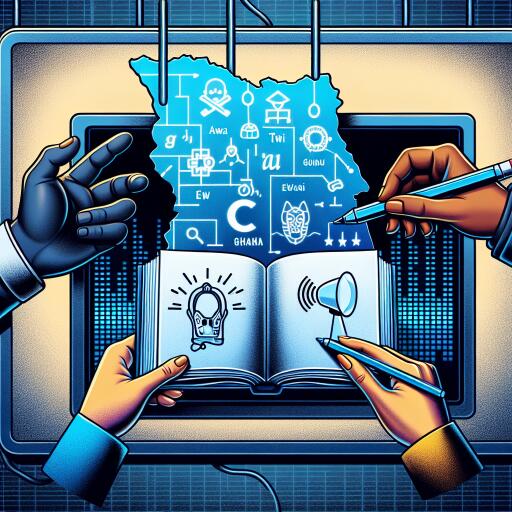
The rollout forms part of Google’s reported $37 million investment in Africa and will include speech recognition and AI-powered learning tools in Twi, Ewe, and Dagbani. Crucially, the systems are being trained to handle non-standard speech—covering diverse accents, dialects, and atypical speech patterns—to make digital learning more inclusive.
To expand the programme’s reach, the government has also proposed the addition of Hausa, reflecting its wide usage in Ghana and across West Africa. According to Iddrisu, bringing AI to learners in their own languages can help close enduring gaps in access to quality educational content and support.
In a significant boost to affordability, Google has assured the Ministry that the education platforms will be zero-rated in Ghana—meaning learners can access them without incurring data charges. For households where connectivity costs remain a barrier, zero-rating could be pivotal to increasing usage and impact.
The package is expected to include content aligned to Ghana’s curriculum alongside clear guidance for schools and teachers on the responsible use of AI in classrooms. The Education Ministry is also partnering with the University of Ghana and GDI Hub to advance research in local-language AI and help ensure the tools are inclusive by design.
“Ghana is not just participating in the AI revolution; we are helping to shape it for Africa,” the minister noted, framing the initiative as both a national investment in equitable education and a contribution to the continent’s emerging AI ecosystem.
Key features at a glance
- Local-language tools: Initial focus on Twi, Ewe, and Dagbani, with a proposal to add Hausa.
- Accessibility built in: Speech recognition designed to recognise non-standard speech for broader inclusivity.
- Zero-rated access: Learners can use the platforms without data charges in Ghana.
- Curriculum alignment: Content tailored to Ghana’s educational standards and learning objectives.
- Responsible AI: Guidance for safe, ethical classroom use.
- Research partnerships: Collaboration with the University of Ghana and GDI Hub to deepen local-language AI capabilities.
Why it matters
Local-language support addresses a persistent equity challenge: students learn best when content is presented in languages they understand. AI-driven speech tools that recognise diverse ways of speaking can also remove barriers for learners with disabilities and for communities where dominant-language proficiency is lower. Combined with zero-rated access, the initiative targets three core constraints—language, inclusivity, and affordability—that have long shaped digital education outcomes in Ghana.
What to watch next
- Rollout timeline and pilot locations, particularly in rural districts.
- Teacher training and school onboarding plans to ensure effective classroom use.
- Data protection and transparency measures governing how student data is collected and used.
- Expansion to additional Ghanaian languages, based on impact and community feedback.
Ghana’s Education Ministry positions this as a practical, student-first application of AI—one that could serve as a blueprint for other African education systems looking to deploy inclusive, cost-conscious digital learning at scale.