
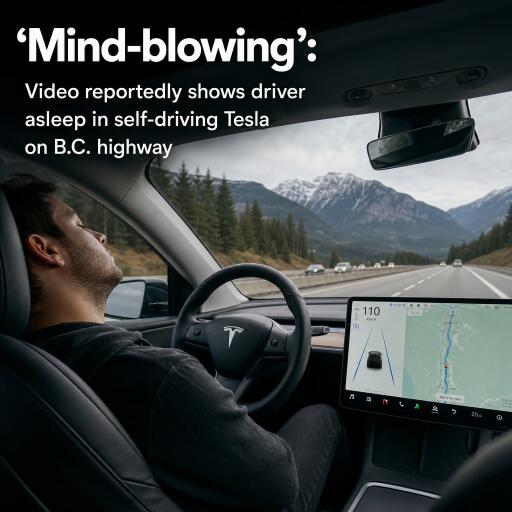

Unsettling moment on a BC highway: Driver appears to sleep behind the wheel of a semi-autonomous Tesla
A routine cross‑provincial drive through British Columbia’s interior quickly shifted to a moment of concern when a vehicle in front appeared to be running on automated features with the driver seemingly unconscious at the wheel.
A family from Alberta was traveling along Highway 1 between Golden and Revelstoke on a Sunday afternoon. One of the passengers felt carsick, so they stopped to stretch and swapped seats. While settling into the back with a book, the witness glanced up and noticed something alarming in the lane ahead.
She first spotted a black Tesla and, after a closer look, realized the driver seemed to be asleep. The moment prompted the couple to slow down and observe more carefully. With two children aboard, they kept a cautious distance and sought guidance from authorities as they continued along a busy route that features active construction zones, wildlife, and unpredictable traffic patterns.
The family began recording the situation on a video and promptly contacted local authorities in Revelstoke. They understood the highway’s complexity and the risks posed by sudden changes in traffic, road work, and the potential for other drivers to misjudge the scenario.
Officials who spoke about the incident emphasized that current rules in the province restrict automated driving to assistive features rather than full autonomy. Motorists are allowed to use certain aids, such as adaptive cruise control and lane-keeping systems, but the driver must remain fully engaged, with hands on the wheel and feet ready on the pedals at all times.
Raising the possibility of penalties, authorities noted that a driver who falls asleep behind the wheel could face charges tied to driving without due care or attention and related licence points. The emphasis from law enforcement is clear: you must be in control when you drive, just as you would be if the vehicle were not equipped with automated features.
Officials stressed that self‑driving technologies can be useful, but they are not substitutes for a vigilant, hands‑on approach to driving. In the province’s framework, automated aids may be used to assist, but drivers must remain alert and ready to take over whenever necessary. The overarching message is straightforward: stay engaged, stay prepared, and avoid relying on technology in situations that demand full manual control.