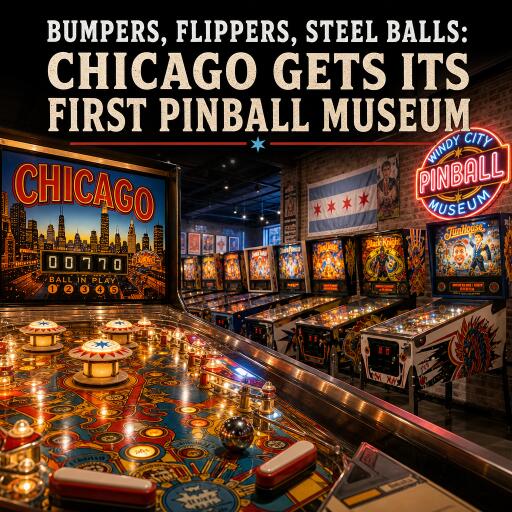
Bumpers, flippers, steel balls: Chicago gets its first pinball museum | Jefferson City News-Tribune
Chicago once treated pinball like a public menace. Decades later, the city’s downtown now hums with chimes, bumpers, and flippers thanks to a new attraction that turns nostalgia into a playable history lesson: The Flip, a nonprofit pinball museum in the Loop. Equal parts archive and arcade, it’s the rare spot where you can study a 1930s bagatelle and then step up to a modern table and chase multiballs yourself.
From outlaw to landmark
Midcentury Chicago helped build the world’s pinball scene even while the city kept the games illegal for stretches between the 1940s and 1970s, fueled by fears that these machines were little more than gambling devices. Old cabinets from the 1930s and ’40s—some designed around chance mechanics—help explain why officials bristled back then. Today, that complicated past is part of the story The Flip aims to tell, charting how pinball evolved from suspect pastime to a celebrated slice of Americana.
The Flip arrives in the Loop
Opened in June in the Block 37 pedway, The Flip: Chicago’s Playable Pinball Museum sits between the Red and Blue Line stops, placing it directly in the flow of downtown commuters and visitors. Three coin-operated machines sit just outside the entrance to lure passersby looking to squeeze in a quick game. Inside, admission covers unlimited play across the collection, turning a museum visit into an all-you-can-flip session.
The lineup currently includes about 30 fully playable machines on the floor, with another handful in the workshop awaiting repair or restoration. Each table is paired with a placard explaining its era, features, and design quirks so you walk away with more than just high scores—you leave with context.
A museum built by tinkerers
The Flip grew from a personal collection expanded through years of hunting in garages and basements. Along the way, it became clear that one of pinball’s biggest threats isn’t popularity—it’s maintenance. Veteran repair pros are thinning out, and parts can be finicky. So the museum runs on a volunteer repair crew, with a long-term goal of training future technicians and building a curriculum to keep classic machines alive instead of scrapped.
Before the downtown debut, a small space in Pilsen served as a pilot, building a volunteer base and testing whether visitors would respond to a curated, playable timeline of pinball. The success of those trials led to the Loop move, helped by a favorable lease on a high-visibility former sandwich shop. There’s a catch: if a full-market tenant appears, the museum has 30 days to relocate. It’s a calculated risk that trades permanence for prime foot traffic.
Not a barcade—by design
Most modern pinball hubs double as bars, which keeps minors on the sidelines. The Flip goes the other way: no alcohol, more accessibility. Kids, teens, and families can jump in, learn the fundamentals, and feel the satisfying skill curve of a game that rewards practice. It’s an intentional bet on future generations.
Chicago zoning’s quirky bonus level
There’s another twist born from the city’s past: in this zoning district, “arcades” are prohibited, a holdover from when coin-ops were stereotyped as trouble magnets. The Flip keeps only three coin-operated games out front; four would cross the line into “arcade” territory. Inside, the machines are set to free play under admission—problem solved.
Pinball fades, then rebounds
Pinball ruled the 20th century’s amusement landscape—until video games crashed the party. By the early 2000s, the industry was hanging by a thread, with a single major manufacturer in the Chicago area keeping production alive. Then, something flipped. Collectors rediscovered the hobby, basement space opened up, and fans who grew up on the silver ball came back with the means to buy. In an age of screens, the tactile charm of flippers, ramps, and steel balls feels refreshingly analog—and younger players are catching on fast.
Themes, myths, and multiballs
The Flip’s roster doubles as a time machine. You’ll find licensed showstoppers like Indiana Jones and Twilight Zone from the early ’90s, sci-fi hits like Star Trek and comic-leaning classics like The Incredible Hulk from the late ’70s, alongside evergreen Americana like Stock Car (1970) and Derby Day (1956). The oldest tables date to 1932, when themes lived mostly on backglass art. As competition from video games heated up in the late ’70s and early ’80s, pinball design stitched theme and gameplay together more tightly, rewarding objectives that mirrored stories and characters.
The 1992 Addams Family machine—often cited as the best-selling flipper game ever—set a high bar for this approach, turning movie moments into on-table goals: tour the mansion room by room, trigger spooky toys, and rack up modes that feel like scenes come to life.
Under the glass: tech that endures
Pinball’s core language has stayed surprisingly stable. Flippers arrived in 1947 and never left. The mid-1970s brought a seismic shift from electromechanical relays to solid-state electronics, unlocking deeper rules and wild light shows. Yet some bits are timeless: the tilt mechanism that punishes overzealous nudging has been spoiling cheaters since the early days.
A lifer at the plunger
The museum’s founder grew up spending quarters while parents socialized after softball games, then cemented the hobby during college arcade runs. A chance encounter with a used Addams Family machine in the ’90s turned into a lifelong companion and, eventually, a seed for this museum. These days, running the place leaves less time for marathon sessions, but the soundtrack of clicks, dings, and knocker thwacks tells its own stories—experienced players, nail-biter finales, and newcomers discovering that rush of nudging a save just in time.
In a city that once locked pinball out, The Flip throws the doors open. It’s a hands-on chronicle of design, chance, and skill—built for diehards, families, and anyone who’s ever watched a silver ball careen down a lane and thought: one more game.