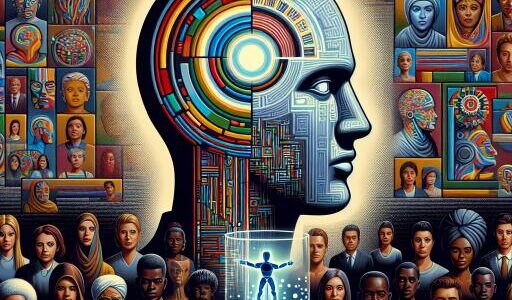

Critical thinking vital in age of AI, Large Language Models: Zoho’s Director AI Research
New Delhi | September 9 — The human edge in reasoning and critical thinking will remain indispensable even as artificial intelligence and large language models reshape workflows and boost productivity, says Ramprakash Ramamoorthy, Director of AI Research at Zoho Corp. Speaking to PTI, he argued that while AI can accelerate output, human judgment will continue to anchor decision-making, especially in complex or high-stakes contexts.
“Job roles will evolve, and everyone should learn to use AI—just as they adapted when the internet arrived,” he noted, urging professionals across domains to build practical familiarity rather than watch from the sidelines.
Why critical thinking still matters
Ramamoorthy contends that AI’s surge doesn’t diminish the value of human cognition; it elevates it. As tools like large language models (LLMs) make it easier to draft, summarize, or analyze at scale, organizations will prize people who can frame the right problems, interrogate outputs, catch subtle errors, and make sound trade-offs. In other words, the capacity to reason, challenge assumptions, and synthesize across contexts becomes more—not less—important.
Adopt AI like a tool, not a crutch
To illustrate, he compared two professionals competing for the same project: one who augments their work with search and modern tools, and another who refuses them. The assistive edge often wins. The same applies now with LLMs. Ramamoorthy’s advice: try them, map where they deliver value, and be clear about where human judgment should lead. Knowing when to lean on AI and when to take the wheel will separate competent users from strategic ones.
New skills on the rise
Beyond baseline AI literacy, he expects certain skill areas to grow quickly:
- Prompt engineering and orchestration: Designing effective prompts and workflows to reliably elicit accurate, context-aware outputs from models.
- Domain-specific frameworks: Emerging tooling in legaltech and privacy tech that marries AI with compliance, policy, and risk management.
- Evaluation and governance: Methods to monitor model behavior, enforce guardrails, and align outputs with enterprise requirements.
Hardware and infrastructure know-how will matter
As demand for AI intensifies, Ramamoorthy expects hardware-oriented skills to trend upward. From procuring GPUs to planning data center capacity, latency, and cost trade-offs, organizations will need engineers who understand how to scale models and pipelines reliably. This “full-stack AI” competence—spanning data, models, and infrastructure—will be a differentiator as deployments move from prototypes to production.
Zoho’s enterprise-first AI push
In line with these shifts, Zoho has rolled out Zia LLM, a proprietary large language model tailored for enterprises using its product suite. The company has also expanded its AI portfolio with prebuilt Agents and a custom Agent Builder to accelerate real-world adoption.
“ChatGPTs and Geminis of the world are built with consumers in mind. Zia LLM is built with enterprises in mind,” Ramamoorthy said, underscoring a focus on business context, data security, and operational reliability. The move signals growing ambition among Indian technology firms to build on their own AI stacks rather than relying solely on general-purpose platforms.
Practical guidance for the workforce
- Build fluency, fast: Experiment with LLMs on your day-to-day tasks—writing, analysis, research—to learn their strengths and limits.
- Stay critical: Treat AI outputs as drafts or advisors, not ground truth. Verify facts, test assumptions, and watch for subtle errors.
- Lean into your domain: Combine AI with domain expertise. The best outcomes arise when subject-matter knowledge shapes prompts, constraints, and reviews.
- Understand the stack: Even non-engineers benefit from basic awareness of data quality, privacy, and deployment considerations that impact AI performance.
The upshot
AI and LLMs are rapidly becoming table stakes, but they are tools, not replacements for human judgment. The professionals who thrive will be those who pair critical thinking with hands-on AI literacy—knowing when to automate, when to curate, and when to decide. As Ramamoorthy puts it, the imperative is clear: adopt AI to augment your capabilities, and cultivate the human reasoning that keeps technology aligned with real-world goals.