
Video | Reckitt x NDTV | India Gets Its First Hygiene Building As Learning Aid!
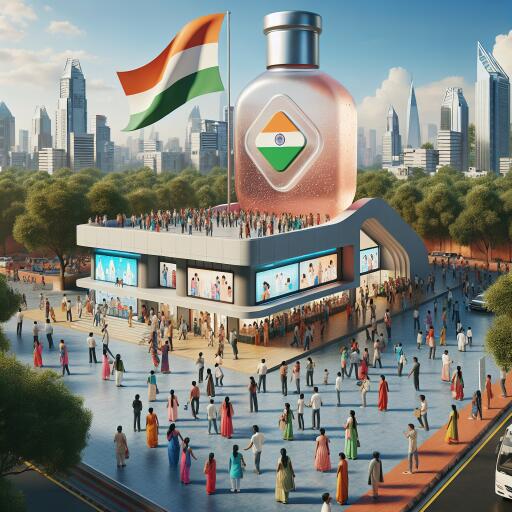
At Mumbai’s Prabhadevi Primary Marathi School, walls, floors, staircases, and play areas are being reimagined as living classrooms—teaching hygiene not as a chapter, but as a daily habit. Reckitt, under its Dettol Banega Swasth India programme and in collaboration with NDTV, has unveiled India’s first Hygiene Building as Learning Aid (H-BaLA), a design-led blueprint that turns school infrastructure into interactive hygiene educators.
What is H-BaLA?
H-BaLA—Hygiene Building as Learning Aid—extends the well-known concept of Building as Learning Aid by embedding hygiene education directly into a school’s architecture. Instead of treating hygiene as a poster on a wall or a once-a-year workshop, H-BaLA integrates cues and activities throughout the campus so children can see, touch, play, and practice clean habits every day.
Launched at Prabhadevi Primary Marathi School in Mumbai, the initiative reframes the entire school as a multi-sensory teaching tool. Hallways host visual prompts. Stair risers nudge better behavior. Playgrounds become practice zones. Classrooms reinforce routines. The result: hygiene learning that’s constant, contextual, and fun.
Design That Teaches by Doing
As a technology and design story, H-BaLA is compelling precisely because it’s “ambient learning”—no screens required. It uses behavior design, color theory, and spatial cues to make the right action the easy action:
- Handwashing, step by step: Color-coded sinks and illustrated tiles walk children through the recommended sequence, from palm rub to wrist clean, turning a routine into a game.
- Mirror and door cues: Decals near washbasins and handles nudge “wash before meals,” “after play,” and “after restroom.” Cues are placed at eye level for young learners.
- Playground learning: Hopscotch and floor trails embed hygiene steps—every jump is a reminder of what comes next.
- Waste and water etiquette: Clear visuals guide segregation and mindful use, encouraging sustainability alongside hygiene.
- Local language, inclusive design: Instructions and graphics are designed for quick comprehension, with simple Marathi text and universally legible icons.
This is low-tech done right: durable materials, easy maintenance, and a layout that aligns with a school’s daily rhythms. It’s infrastructure as pedagogy.
Why It Matters
Hygiene literacy is fundamental to public health, but it’s often taught as a one-off message. H-BaLA tackles the hardest part—habit formation—by making hygiene unavoidable, visible, and enjoyable. For students, it’s a hands-on experience that turns learning into muscle memory. For teachers, it’s a practical toolkit that supports lesson plans without adding workload. For parents and administrators, it promises a school culture that normalizes clean habits.
The potential benefits are wide-ranging: better handwashing compliance, reduced spread of common infections, and more confident, informed young citizens. While the program’s long-term data will take time to build, the design is grounded in a clear principle—repeat, practice, and reinforce in the moments that matter.
From Campaign to Campus
Reckitt’s Dettol Banega Swasth India programme has focused for years on hygiene awareness at scale. Partnering with NDTV, the initiative has used media reach and community engagement to shift norms nationwide. With H-BaLA, that ambition meets architecture: the message is now quite literally built into the learning environment.
The choice of a municipal primary school in Mumbai is deliberate—if it works here, it can be adapted for diverse geographies and budgets. Think templated floor designs, modular decals, and localized content that can roll out across urban and rural schools alike.
Inside the Launch Experience
During the unveiling, educators and students explored the transformed spaces: tracing handwashing steps at the sink, playing hygiene-themed floor games, and following visual prompts around the campus. The school becomes a living lab where every transition—from playground to classroom to lunch—reinforces clean habits without a lecture.
Watch the video to see how a familiar environment doubles as an interactive hygiene coach, turning micro-moments into teachable moments.
A Scalable Blueprint
H-BaLA is designed for replication: map the campus, identify high-traffic touchpoints, and seed them with age-appropriate cues. It’s cost-aware, material-conscious, and maintenance-focused. With the right toolkit—print packs, layout guides, and teacher facilitation—any school can adapt it to local languages and cultural contexts.
The next frontier is measurement: pre/post observations by teachers, simple checklists, and periodic feedback from students. Over time, these inputs can inform which cues drive the strongest behavior change, helping refine a national template for hygiene-first schools.
The Bottom Line
Good habits do start young—but they stick when practice becomes part of place. With India’s first Hygiene Building as Learning Aid, Reckitt’s Dettol Banega Swasth India and NDTV are betting on a simple, powerful idea: if the school teaches hygiene everywhere, children will carry it anywhere.
Hit play on the video and step inside a campus where learning lives on every surface—and health begins at every step.