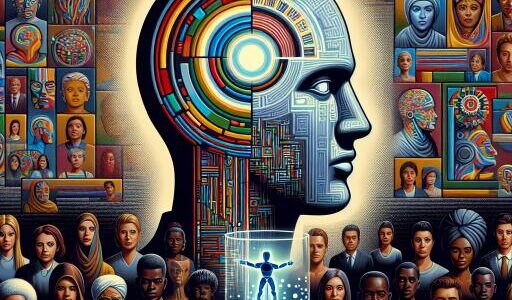

Genesis Mission To Accelerate AI For Scientific Discovery Launched
President Donald Trump has signed an Executive Order establishing the Genesis Mission, a national initiative to harness artificial intelligence to modernize how research is conducted across U.S. science agencies and to speed up the pace of discovery.
The directive centers on the Department of Energy (DOE) and its National Laboratories, tasking the Secretary of Energy with bringing together top researchers, leading-edge supercomputers, and vast troves of scientific data into a coordinated, AI-driven research ecosystem. The goal: enable scientists to rapidly explore hypotheses, iterate on experiments, and translate insights into breakthroughs far faster than current workflows allow.
What the Executive Order Does
The order instructs DOE to build an end-to-end, feedback-loop AI platform for science. This environment will connect the nation’s most powerful high-performance computing resources with unique federal datasets to:
- Develop foundation models tailored to scientific domains,
- Run automated and robotic laboratories that can design, execute, and refine experiments,
- Continuously learn from results to improve predictions and experimental plans.
To ensure government-wide coordination, the Assistant to the President for Science and Technology (APST) will oversee integration of data, infrastructure, and standards across federal agencies. The Secretary of Energy, the APST, and the Special Advisor for AI & Crypto are directed to partner with universities and private-sector innovators to strengthen the platform, expand access, and accelerate technology transfer.
Focus Areas
The White House identifies priority fields where AI-enabled research could deliver major national, economic, and health benefits. Initial areas include:
- Biotechnology and biomanufacturing,
- Critical materials discovery and supply resilience,
- Nuclear energy (fission and fusion) R&D,
- Space exploration technologies,
- Quantum information science,
- Semiconductors and advanced microelectronics.
Why It Matters
According to the administration, even as research funding has grown since the 1990s, scientific output in some domains has not kept pace, with indicators such as drug approvals and productivity per researcher showing signs of stagnation. The Genesis Mission aims to reverse that trend by infusing AI into every stage of the scientific method—hypothesis generation, experimental design, data collection, analysis, and validation.
Practical examples include AI systems that can predict protein structures and functions, propose novel materials with desired properties, optimize complex experimental conditions, and synthesize insights across disparate datasets. Coupled with automated laboratories, such systems could compress research timelines from years to weeks or months, while improving reproducibility and lowering costs.
What to Watch Next
- Build-out of the AI platform at DOE National Labs and how it links with other federal computing and data assets.
- Development of domain-specific foundation models for biology, materials science, energy, and space.
- Standards for data sharing, provenance, and security across agencies and partners.
- Academic and industry partnerships that translate platform advances into applied innovation.
With the Genesis Mission, the administration’s stated aim is to markedly increase the productivity and impact of federal R&D within the next decade by turning AI into a core instrument of discovery, not just an auxiliary tool. If successful, the effort could reshape how the United States tackles its most complex scientific challenges and brings new technologies to market.