
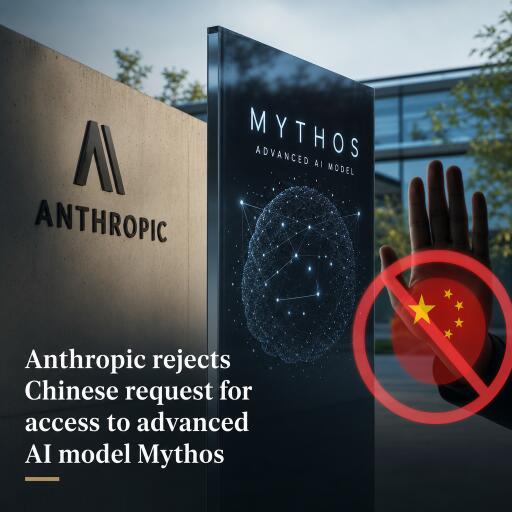

Anthropic rejects Chinese request for access to advanced AI model Mythos
In a move that highlights the widening tech rift between major global powers, a leading AI lab declined a request from a Chinese research institution to access its most capable vulnerability-focused model, Mythos. The decision, conveyed in mid‑May, underscores how advances in artificial intelligence are becoming a strategic axis in international competition and are already rippling into crypto markets and decentralized technology initiatives.
Mythos differs from conventional language models. Its utility lies in its ability to detect software weaknesses—exploits that could threaten everything from government networks to smart contracts on blockchain platforms. Rather than generating text, Mythos is trained to surface vulnerabilities and risks that standard tools might miss.
The exchange took place as part of broader conversations about who should have access to powerful AI capabilities and under what safeguards. While the request was described as informal and not an official diplomatic overture, it has amplified discussions about how geopolitical tensions shape the development and deployment of cutting‑edge AI technologies.
The situation arrives at a moment when policy discussions in the United States propose tighter vetting of AI systems. Some observers say such governance shifts could push ecosystem builders toward decentralized, open‑source approaches that operate with less dependence on any single nation’s corporate platform. In this view, projects focused on open, permissionless AI infrastructure could become more attractive to developers and governments that feel sidelined by centralized AI providers.
Separately, a separate incident this week highlighted the risks that accompany the financialization of technology brands. Unauthorized tokens circulating as representations of Anthropic’s equity were deemed fraudulent by the issuer, who warned potential buyers about the risk of deception. The episode serves as a cautionary tale about tokenized equity in an evolving regulatory landscape, where guidance and enforcement continue to take shape.
From a security standpoint, Mythos embodies the value of proactive vulnerability detection. If such capabilities prove reliable at scale, they could reshape how organizations manage risk across software and hardware ecosystems, potentially becoming a standard component of security reviews and compliance efforts, including in decentralized finance.
Questions persist about who else is pursuing similar capabilities and how quickly AI‑assisted vulnerability analysis will be adopted across industries. Analysts anticipate greater integration of automated security scanning into development pipelines, bringing both efficiencies and new risk vectors as automation deepens.
As governance debates evolve, balancing security, innovation, and strategic interests remains complex. The current disagreement illustrates how control over powerful AI technologies can become a strategic lever shaping policy choices, investor sentiment, and the architecture of global technology ecosystems.