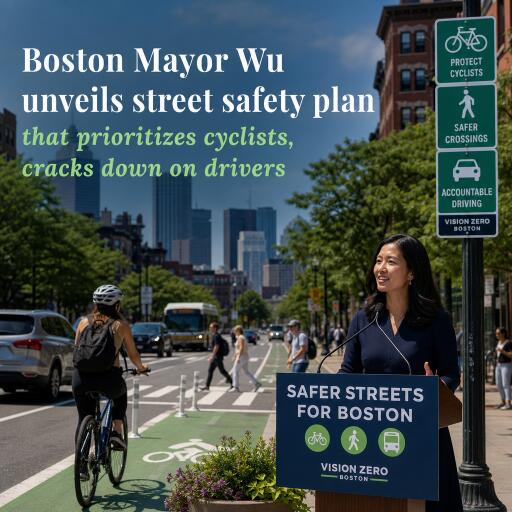

Boston Mayor Wu unveils street safety plan that prioritizes cyclists, cracks down on drivers
In the aftermath of a fatal crash that claimed the life of a city transportation staffer, Boston’s mayor unveiled a sweeping street-safety package aimed at strengthening protections for people on bikes while tightening oversight of drivers who pose risks on the road.
The announcement, made on Friday, signals a renewed push to finish overdue bike-lane projects and to accelerate the rollout of protected cycling routes across neighborhoods. The plan responds to sustained pressure from advocates who organized a vigil in memory of the city employee who was struck while riding a bicycle earlier this month.
Officials describe the package as a comprehensive shift in how the city designs and manages streets, combining infrastructure upgrades with stricter enforcement and education. Below are the core elements the administration is signaling as a path forward:
- Expanded protected bike lanes and safer intersection designs to separate cyclists from turning vehicles.
- Lower speed limits in busy, high-pedestrian areas and the introduction of traffic-calming measures to slow traffic in sensitive zones.
- Improved maintenance and quicker repairs for existing cycling infrastructure to reduce hazards on shared routes.
- Increased enforcement presence at known collision hotspots, plus automated monitoring near schools and other education-centered zones.
- Tougher penalties for motorists who fail to yield to vulnerable road users, paired with ongoing public outreach about safer driving practices.
- Greater integration of cycling with public transit plans, including expanded bike-share access and better connections to rapid-transit corridors.
City leaders emphasize that the reforms are not solely about penalties but about creating a culture of safer, more predictable behavior on streets used by cyclists, pedestrians, and drivers alike. The administration also pledges to publish performance metrics and crash-data analyses to keep the plan transparent and adaptable as conditions change.
Reaction from community groups and residents has been mixed. Supporters welcome the renewed commitment to infrastructure and accountability, while critics caution that rapid changes could disrupt traffic and local commerce if not carefully phased. Officials say the plan represents a targeted, equity-focused approach to urban mobility—one that prioritizes safety for those most exposed to road danger while maintaining reasonable access for all users.
As part of the broader reform effort, authorities indicated additional funding will be allocated in upcoming budgets to sustain improvements and monitor outcomes. The plan will be reviewed regularly, with adjustments guided by data from ongoing traffic studies and rider feedback to ensure progress remains on track.