
What is Deep Learning in AI? Understanding How AI Really Works
Every time AI hits the headlines, you’ll hear about “training models,” “neural networks,” and “deep learning.” But what is deep learning, really—and how does it power the AI systems we use every day? Here’s a concise, no-jargon tour of what deep learning is, how it works, the main model types, and where you encounter it in the real world.
What Is Deep Learning?
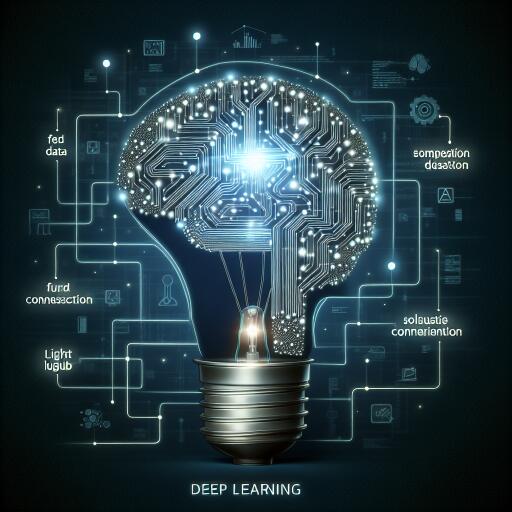
Deep learning is a branch of machine learning that trains multi-layered neural networks to recognize patterns in large datasets. “Deep” refers to the many layers of interconnected nodes (neurons) that transform raw inputs—like pixels, audio, or text—into meaningful outputs, such as “cat in the photo,” a translated sentence, or a helpful chatbot reply.
While inspired by the brain, deep learning isn’t a brain replica. It’s a stack of mathematical functions that learn to extract features automatically, improving through experience. This approach underpins modern AI systems in image recognition, language translation, speech processing, recommender systems, agentic AI tools, and more.
How Deep Learning Works (In Plain English)
- Collect and label data (or use self-supervised methods).
- Feed data into a neural network for a “forward pass” to get a prediction.
- Compare prediction to the correct answer and compute a “loss.”
- Adjust the network’s weights via backpropagation to reduce that loss.
- Repeat this process for thousands to millions of steps until the model’s predictions stabilize and reach the desired accuracy.
A Quick History
The roots of deep learning stretch back to the 1950s (perceptrons), grew with backpropagation in the 1980s, and accelerated when big datasets and GPUs arrived. Milestones like 2012’s ImageNet breakthrough and 2017’s Transformer architecture unlocked today’s explosion in vision, speech, and language models.
Deep Learning vs. Machine Learning
- Feature engineering: Traditional ML often requires hand-crafted features; deep learning learns features automatically from raw data.
- Data scale: Deep models thrive on large datasets; classic ML can work well with less data.
- Unstructured data: Deep learning excels at images, audio, and text; ML shines on tabular data.
- Compute and training time: Deep models demand more compute and longer training.
- Interpretability: Deep models can be harder to explain, though new tools are improving this.
The Main Deep Learning Model Types
Convolutional Neural Networks (CNNs)
Best for images and video. CNNs apply convolutions—small, sliding filters—that learn hierarchies of features. Early layers detect edges and textures; deeper layers capture shapes and objects (like eyes, faces, or wheels). They power photo classification, Face ID, medical imaging, and object detection in cameras and cars.
Recurrent Neural Networks (RNNs) and LSTMs
Built for sequences where order matters, including text and speech. RNNs process input step by step, using previous context to inform the next step—like how you read a sentence. Classic RNNs struggle with long-range memory (the “vanishing gradient” problem), so Long Short-Term Memory (LSTM) networks add gates to better retain important information. They’re used in speech recognition, time-series analysis, and music generation, though many sequence tasks have shifted to Transformers.
Generative Adversarial Networks (GANs)
Two networks play a game: a Generator creates synthetic data; a Discriminator tries to tell real from fake. Through competition, both improve, enabling the creation of realistic images, video, and audio not present in the training set. GANs are used for creative tools, upscaling images, data augmentation, and more across generative AI.
Transformers
The backbone of modern language and increasingly vision models. Transformers use self-attention to weigh how different parts of the input relate to each other, enabling better context understanding and parallel processing. If a sentence mentions “school,” the model attends to related words like “bus” or “principal” to disambiguate meaning. Transformers power large language models (LLMs) behind today’s chatbots and assistants, as well as vision transformers for image tasks.
Where You See Deep Learning Today
- Vision: Face unlock, photo search, medical imaging diagnostics, defect detection in manufacturing.
- Language: Translation, summarization, content moderation, enterprise document parsing.
- Speech and audio: Voice assistants, call transcription, noise suppression, text-to-speech.
- Recommendations and personalization: What to watch, read, buy, or listen to next.
- Autonomous systems: Driver assistance, robotics, drones, warehouse automation.
- Finance and cybersecurity: Fraud detection, risk scoring, anomaly and intrusion detection.
- Science and health: Protein structure prediction, drug discovery, pathology, climate modeling.
- Creative tools: AI art, music, and video generation; synthetic data for safer, faster R&D.
- Agentic AI: Multi-step assistants that plan, call tools, and take actions, built on deep models.
Final Thoughts
Deep learning is the engine room of modern AI: data goes in, patterns are learned, and useful predictions come out. From 1950s theory to today’s billion-parameter models, the arc has been steady—more data, more compute, smarter architectures. As AI spreads into every industry, expect deep learning to keep evolving, powering systems that see, listen, read, reason, and increasingly act on our behalf.