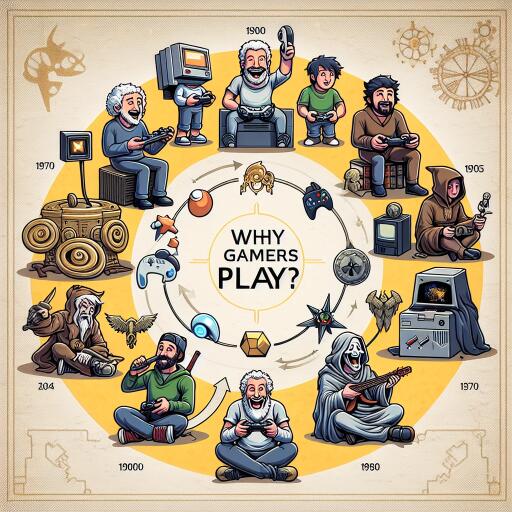

Gaming Through the Ages: Why We Play, And Why We Keep Returning
Every intense gaming session, every pixel you’ve pushed, every bleary-eyed night spent glued to the screen raises the timeless question:
Why do we play video games?
This query, often accompanied by the exasperation of a concerned parent, deserves genuine contemplation. Perhaps it’s the exhilarating triumph, the thrill of strategy well-executed, or even the mystical allure of inhabiting another world that keeps us coming back. It might be a mix of all these elements and more.
From the vintage hum of early gaming consoles to the stunning visuals found in today’s high-definition simulations, video games have always represented a significant part of human entertainment. They give us the chance to step into alternate realities, play out roles of heroes we’ve never been, and navigate intricate moral landscapes—all from the comfort of our seats. Video games are more than passive narratives; they compel us to engage, decide, reflect, and occasionally surrender to the beauty of creation.
The Art of Virtual Worlds
The joy found in gaming fundamentally stems from entertainment; a well-crafted game is undeniably enjoyable. The gaming experience merges continual challenges, which often demand intelligent strategic planning, creative problem-solving, and sometimes sheer swift reflexes. These elements blend into an endlessly fun concoction.
Games transport us into vivid realms, offering escapism from daily monotony. This can manifest as nostalgia, allowing us to revisit resonant experiences of the past, or through the excitement of new adventures where the ordinary fades away, giving way to the extraordinary.
Games are living stories, and like any compelling narrative, they are art forms. They possess the cinematic immersion akin to film, the narrative depth found in literature, and an added thrill of personal involvement. Art reflects the human experience, and video games uniquely facilitate our participation in worlds and experiences that only exist in our imaginations.
By developing breathtaking worlds and granting players the agency to interact with them, gaming becomes an unparalleled medium for exploring paths untraveled. From managing everyday tasks in life simulators to the epic quests involving mythical creatures and interstellar adventures, games allow us to become heroes in ways we might never experience in reality. Whether our victories come from raising virtual families, defeating mythical beasts, or outpacing rivals on race tracks, gaming encourages us to dream vast aspirations.
In the most captivating games, players can embody towering moral characters. Being presented with choices—offering help to fictional characters in need or choosing the darker path—enhances the moral dimension of games. These choices remind us that, even in fictitious realms, bringing light to darkness resonates more profoundly than embodying villainy. Games like city-building simulations invite us to nurture vibrant communities, enhancing our understanding that our actions shape the worlds within the screen, mirroring the ethics of our real lives.
The Social Dimension of Gaming
Gaming has evolved beyond solitary adventures, becoming an inherently social pastime. The shift from the early days of isolated play to the bustling, interactive digital world reflects broader changes in how we connect as a society. We live in a world where interaction with digital platforms is the norm, and gaming seamlessly integrates into this as a beloved hobby. Shared joys and challenges in games form the glue that binds enthusiasts together, much like other communal activities.
Engaging in collective gaming experiences allows players to form connections, fostering communities and friendships spread across the globe. Even in single-player modes, the most impactful games inspire players to recount their experiences, transforming solitary endeavors into shared stories akin to any powerful work of art. These narratives draw players into communities, sparking conversations that probe the human condition, and reinforcing our need to share experiences.
Ultimately, exceptional games linger in our memories, holding a place alongside cherished books and films in our personal archives. Every gamer has encountered unforgettable moments that leave us awed by their brilliance. These shared experiences unite us, reminding us of the shared humanity reflected in our digital adventures.
Conclusion: Games as Timeless Creations
Video games transcend the tools and peripherals we associate with them; they are vessels of memory, creativity, and connection that persist. They invite us into action and reflection, and they continue to enrich us even when the screen dims. Forever, they remain an integral aspect of our creative expression, holding a lasting place in the artful tapestry of human experience.
Whether you have tales of gaming triumphs or profound reflections, join the conversation and be part of a community where the stories of games and life converge.