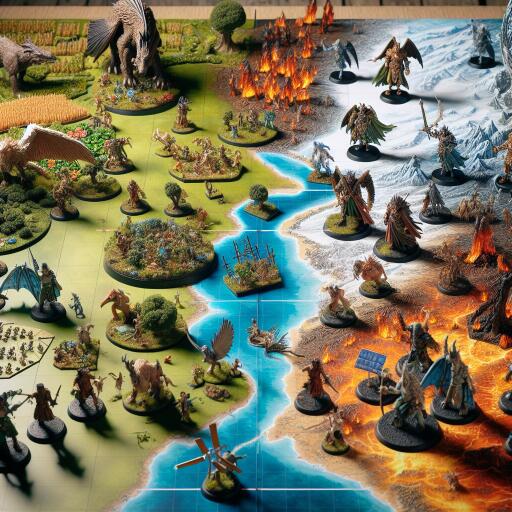

TTRPGs Like D&D Simulate Climate Crises for Adaptation Strategies
In an era increasingly defined by pressing environmental challenges, innovative thinking is in high demand. Surprisingly, a powerful tool is emerging from the world of gaming: table-top role-playing games (TTRPGs). These interactive storytelling experiences, which have been popularized by titles like Dungeons & Dragons, are now being adapted by researchers and policymakers alike to simulate complex sustainability scenarios. According to a recent abstract in the journal Environment: Science and Policy for Sustainable Development, accessible via Taylor & Francis Online, TTRPGs offer a dynamic framework for exploring climate adaptation strategies and fostering collaboration among diverse stakeholders.
The innovative approach involves participants assuming various roles in fictional yet realistic environmental crises, such as managing scarce water resources during a drought or negotiating international carbon reduction agreements. This method not only draws players in emotionally but also encourages the generation of out-of-the-box solutions that traditional models might overlook.
Bridging Games and Policy
The potential of TTRPGs has not gone unnoticed by industry insiders in sustainability consulting. These games provide a low-cost alternative to more expensive high-tech simulations, making them accessible and practical. The aforementioned abstract highlights several case studies where environmental scientists used these games to model disruptions in ecosystems. This approach has revealed significant insights into human behavior when placed under stress, providing a mirror to real-world policy pitfalls. Notably, in these scenarios, players often prioritize short-term survival over long-term ecological balance, reflecting common missteps found in actual policy-making.
Complementarily, research published on ResearchGate explores how participation in TTRPGs can enhance creativity. The study found that individuals who engaged in these games scored higher on divergent thinking tests. With 170 participants, the study demonstrated that the problem-solving skills honed during these gaming sessions are directly applicable to the sustainable development challenges faced today.
As TTRPGs gain recognition as valuable tools for sustainability research and policymaking, the intersection of gaming and environmental science may continue to expand. By offering immersive simulations that challenge players to think critically about resource management and sustainability, these games can help spark innovative ideas that could one day translate into effective real-world solutions.
Indeed, the integration of TTRPGs into environmental strategy development may represent a new frontier where creativity and critical thinking converge to address the complex challenges of climate change. As the world grapples with these increasingly urgent issues, mechanisms that foster cross-disciplinary collaboration and innovative problem-solving, like TTRPGs, could serve as crucial components in devising sustainable pathways forward.
Such applications of TTRPGs demonstrate the potential for gaming to go beyond entertainment, serving as a powerful platform for educational and strategic exploration. As researchers and policymakers continue to leverage these games, they might uncover fresh perspectives that contribute to the global dialogue on environmental sustainability.
The fusion of gaming methodologies with sustainability strategies allows for an engaging and inclusive approach to tackling the planet’s challenges, ensuring that a broader range of voices and ideas are considered in crafting the policies of tomorrow. As this trend grows, it holds the promise of not only reshaping how we approach environmental crises but also how we conceive the potential of interactive storytelling as a catalyst for real-world change.