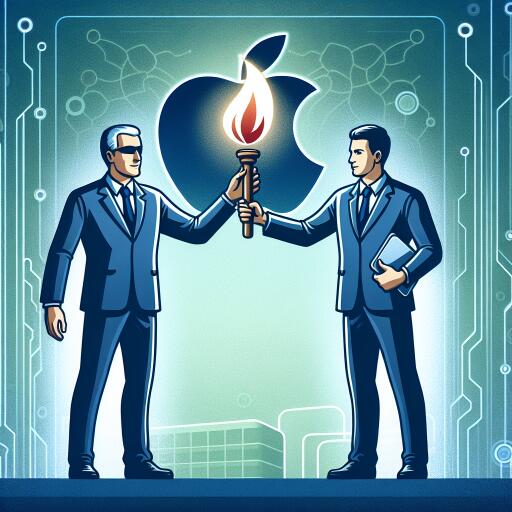

Apple’s next era: After Tim Cook’s dream run, new CEO has to help the company catch up
Tim Cook took over Apple nearly 15 years ago with doubters watching his every move. He exits the CEO chair after presiding over a staggering run: explosive growth, a booming services business, and a supply chain that delivered blockbuster devices at scale. On Sept. 1, John Ternus, a longtime hardware leader inside Apple, takes the helm—and inherits a new set of tests shaped by artificial intelligence, spatial computing, and a restless fanbase that wants Apple to surprise again.
Cook’s legacy: scale, steadiness, and a few stumbles
Under Cook, Apple’s value soared from the hundreds of billions to the multi-trillion range, while annual revenue swelled from just over $100 billion in 2011 to more than $416 billion by 2025. Apple’s ecosystem now counts over 2.5 billion active devices, supported by a global workforce of roughly 166,000 employees and anchored by its distinctive circular campus in Cupertino.
That success was forged amid formidable challenges: delicate relations with China; shifting tariff regimes; antitrust scrutiny; and the streaming and services land rush. Along the way, not every bet paid off. Apple Maps took time to recover from an early misstep. The long-rumored car effort was ultimately shelved. And while the Apple Vision Pro pushed the boundaries of mixed reality, its price and positioning kept it from breaking into the mainstream—at least so far.
Cook also left a cultural imprint: he leaned into environmental goals, philanthropy, and broader social responsibility. He publicly came out in 2014, becoming the first openly gay CEO of a Fortune 500 company, and often framed leadership as doing what’s right rather than following a script. When he steps down, he will remain in the fold as executive chairman of Apple’s board.
Apple’s challenge now: win the AI and spatial race
The next phase for Apple will be defined by how convincingly it answers the AI moment. Rivals have sprinted ahead in generative models and headline-grabbing demos, and consumers increasingly expect proactive, context-aware software that feels both personal and private. Apple’s long-standing strength—tight integration of hardware, software, and silicon—could be its biggest advantage if it translates into fast, reliable, on-device intelligence that doesn’t drain battery or compromise privacy.
Spatial computing is the second front. Vision Pro proved Apple can ship a technically astonishing headset; the question is whether the company can compress that magic into lighter, less expensive devices and experiences that resonate daily—especially with entertainment and gaming at the forefront. Rumors swirl about smart glasses and foldables. Whatever arrives, it needs to feel unmistakably Apple yet boldly new.
Enter John Ternus: the hardware architect steps up
Ternus isn’t a flashy pick; he’s a veteran insider with deep roots in hardware engineering. He helped steer the Mac’s transition to Apple-designed chips, an audacious pivot that paid off with performance and efficiency gains that rippled across the product line. Colleagues describe a leader who is decisive, collaborative, and adept at cutting through process to ship.
That profile suggests continuity with Cook’s operational excellence—but also raises a big strategic question: will Apple keep polishing the formula, or swing for bigger fences? Industry watchers warn that “incrementalism” won’t cut it when the ground is shifting underfoot. The next CEO must defend Apple’s core while staking out new territory in AI and spatial computing.
What success looks like in the Ternus era
- Make AI feel invisible and indispensable: Deliver fast, private, on-device intelligence that upgrades everything from the camera and health features to productivity, creative tools, and—crucially—developer workflows.
- Turn spatial computing into a daily habit: Translate Vision Pro’s wow factor into lighter hardware, longer battery life, and a content slate that hooks people—films, productivity suites, and especially games.
- Re-energize gaming across the ecosystem: Court developers with performance, tools, and predictable revenue opportunities. If Apple wants gamers to treat iPhone, iPad, Mac, and future headsets as primary platforms, it needs unmistakably strong reasons to build and play there.
- Balance geography and geopolitics: Keep scaling manufacturing beyond any single region and deepen emerging footholds like India to stay resilient against tariffs and supply shocks.
- Preserve services momentum: Subscriptions and payments remain critical ballast; the trick is tying them more tightly to AI and spatial experiences without overwhelming users with upsells.
The Cook-to-Ternus handoff
Cook’s tenure was marked by measured risk-taking and meticulous execution. He navigated turbulence abroad, expanded the supply chain to reduce exposure, and won unlikely praise from political leaders as Apple pledged vast domestic investments in recent years. The company exits this chapter on solid financial footing—but also with louder questions about its pace of invention.
Ternus inherits a machine that runs exceedingly well. Now he has to decide how far and how fast to push it. If Apple can pair its custom silicon and design discipline with standout AI features and compelling spatial hardware, the company could set the agenda for the next decade. If not, the narrative could shift from category creator to category caretaker.
After Tim Cook’s dream run, Apple doesn’t just need a steady hand—it needs a spark. The world’s most scrutinized hardware chief now gets his turn to light it.