
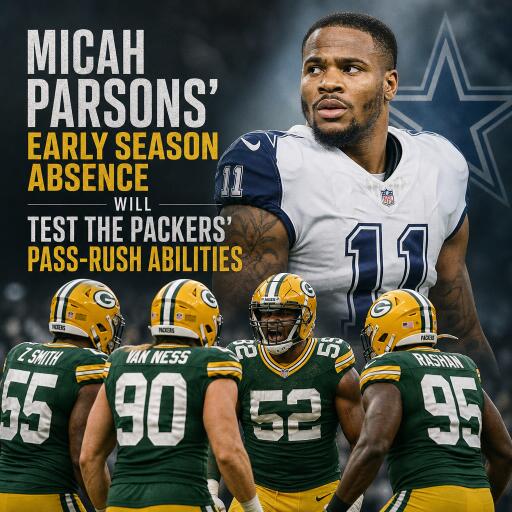

Micah Parsons’ early season absence will test the Packers’ pass-rush abilities
Green Bay enters the early portion of the season facing a substantial challenge without its standout edge defender, sidelined by an ACL injury that derailed his previous campaign. With Parsons unavailable, the coaching staff must orchestrate a cohesive rush from a shifting group while awaiting his return, leaning on versatility and depth rather than a single dominant force.
The opening test arrives this weekend on the road against a familiar rival, where pressuring the quarterback will be critical to any game plan. The defensive staff has voiced confidence that the unit can impact the passer, pointing to productive moments in camp and early preseason outings as signs the group is coming together despite the absence of the team’s top threat.
Last season highlighted the task at hand. Green Bay assembled a solid record before injuries and a late-season slide underscored vulnerabilities in getting after the quarterback. The inability to consistently disrupt opponents in key moments left the defense exposed as the year wore on, contributing to a stretch of defeats that hindered momentum and postseason results.
With Parsons out, the roster turnover at the position is evident. The current edge group is younger and still seeking consistency, awaiting a breakthrough from players who can soak up more reps and deliver sustained pressure. One standout prospect to watch is Lukas Van Ness, a first-round pick who is entering a pivotal season. After limited involvement due to a foot issue last year, he has spoken about approaching the game with more freedom, using his length, power, and speed to threaten tackles and collapse pockets. The expectation is that a healthy and confident Van Ness can become a real catalyst for the front, especially when paired with well-timed blitzes and interior pressure.
Additional options for edge pressure include Brenton Cox Jr., Barryn Sorrell, and Dani Dennis-Sutton, with Collin Oliver starting the season on injured reserve. Up front, the Packers lean on a rotating interior group designed to clog running lanes and generate push from the inside, supplementing the outside aggressors. The chemistry between the interior line and the edge players will be crucial as the defense attempts to apply heat from multiple angles while keeping coverage accountable.
The overarching philosophy for the unit centers on collective effort. Rush and coverage are treated as a coordinated package, where pressure isn’t solely the responsibility of the front four but a team-wide concept that relies on communication, scheme variety, and disciplined back-end coverage. The coaches are looking to mix up rush angles, stunts, and disguises to keep blockers guessing while building a steady rhythm that can sustain pressure as Parsons works his way back.
In this setup, the defense hopes to show versatility—producing pressure from different alignments, shifting duties among players, and exploiting mismatches created by proactive scheming. If the group can find a balance between edge speed and interior disruption, Green Bay could maintain its competitiveness even with the top-line pass-rusher sidelined, turning the absence into an opportunity for other players to emerge as reliable chess pieces in the front seven.