
Interview: Philip Colligan, CEO, Raspberry Pi Foundation
With the growing trend of “vibe coding,” Philip Colligan, CEO of the Raspberry Pi Foundation, issues a caution to educational institutions: don’t underplay the significance of coding education. As artificial intelligence (AI) becomes more deeply embedded in everyday applications, from chatbots to word processing, it’s easy to lose sight of the foundational skills that coding instills in young learners.
AI use cases are ubiquitous, and more recently, the emergence of “vibe coding” practices has allowed AI tools like ChatGPT to autonomously generate code based on user prompts. Such trends have caught the eye of tech giants; indeed, Microsoft CEO Satya Nadella noted a substantial 30% of the code in its GitHub is produced by AI.
Yet Colligan warns that this surge in AI-generated coding shouldn’t detract from the fundamental skills students gain from learning to code. He underscores these skills as essential for adapting and innovating within AI fields in an environment of rapid technological evolution. “There are voices suggesting that coding isn’t vital for children,” Colligan observes, “often because they are selling alternative solutions. Unfortunately, the implications for schools, particularly those with limited resources, can be damaging if they choose not to prioritize coding education.”
The tech sector in the UK confronts a persistent challenge—a shortage of skilled workers. This talent gap obstructs technological advancement for many companies, and basic digital competencies remain elusive for segments of the population. In response, the UK government transformed its computing curriculum in 2014, emphasizing “computational thinking” and programming skills, replacing the outdated ICT model.
Teaching computing since has been fraught with challenges, as many educators lack confidence in delivering tech-based material. “Most computer science lessons are taught by teachers without a specialization in the field,” Colligan explains, stressing this is not a fault on the teachers’ part.
To address this, Colligan advocates for international government investment in teacher skill enhancement. Many educators currently must independently strengthen their tech proficiency. “We need to allocate more time and support for teachers to develop critical skills, ensuring they remain abreast of ever-evolving technologies,” Colligan advises.
Furthermore, Colligan calls for a reevaluation of curriculum strategies to embed technology across educational subjects. Reflecting on the prospects of infusing tech education, he notes, “Integrating technology throughout the curriculum, including sciences, humanities, and the arts, poses one of the most pressing challenges for future educational frameworks.”
Despite existing hurdles in tech education, Colligan observes a strong drive to guide students toward potential AI careers. The spectrum of AI skills is broad, encompassing areas like cybersecurity, data analysis, and machine learning—areas where coding serves as a valuable cornerstone.
While recognizing the necessity of updating educational content, Colligan emphasizes the difficulty educational systems face in keeping pace with technological changes. He proposes a dual approach: positioning computer science and AI as both a standalone discipline for enthusiasts and as an integrated element of varied academic subjects.
“It’s vital to incorporate computer science and AI literacy throughout educational programs,” he affirms. “We must reassess how to use technology to enhance not only science and math but also humanities and arts—a significant goal for the coming years.”
By encouraging students to apply computing to solve practical, subject-relevant challenges, educators help demystify technology careers, making them more accessible. Colligan provides a compelling example: using AI in geography classes to chart the impacts of climate change.
Such interdisciplinary integration not only clarifies what tech careers might involve but also broadens access to these career paths, particularly for historically underrepresented audiences. This approach aligns with Raspberry Pi Foundation research affirming the importance of tech relevance to diverse student populations.
More broadly participating subjects help attract interest from girls and students from various backgrounds, catalyzing interest in tech fields: “The more subjects present real-world tech applications,” Colligan muses, “the more they resonate with diverse groups, ultimately helping rectify the historical diversity gap in computer science.”
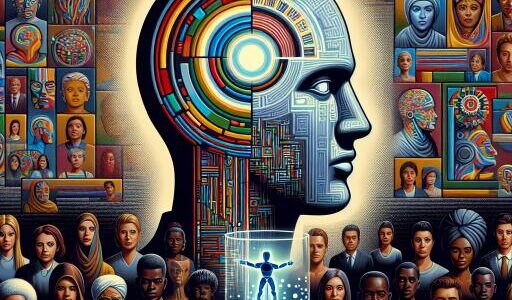
Colligan highlights that the tech sector increasingly appreciates how vital diversity is in AI development. Diverse teams combat biases inherently present in AI systems, an issue even noted by youth, as revealed by recent InnovateHer research. The belief that coding education could cease, constraining technology’s developmental frontiers to a select few, is troubling. As Colligan poignantly concludes: “Those who learn to code today shape the world tomorrow.”