
Resurrecting the GameBoy with Kiro
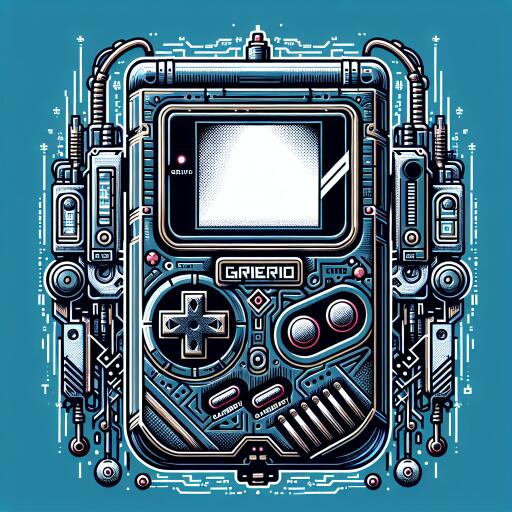
On a handheld that many of us first met through a monochrome screen and a tinny speaker, a new cartridge-style creation dares to push the hardware once more. KiroweenGBC is a supernatural action shooter for Game Boy Color, built entirely in assembly — a modern love letter to disciplined, byte-tight programming and the unmistakable charm of classic handhelds.
A Haunted Premise with a Digital Twist
The adventure follows Kiro, a mischievous ghost battling spirits warped by a rogue intelligence. It’s a fun collision of folklore and circuitry: spectral enemies that move like curses, yet think like code. The aim is old-school clarity — quick reads, snappy feedback, and a purity of play that would feel at home alongside late-’90s handheld staples.
Authenticity Through Constraint
What makes KiroweenGBC stand out isn’t just its theme — it’s the way it respects the machine. The Game Boy Color’s Z80-like CPU ticks at 4.19 MHz, backed by a scant 32KB of cartridge space and 8KB of working RAM. On hardware like that, nothing is free. Every sprite, every loop, every variable must earn its keep.
There’s no garbage collector to save you, no standard library to lean on, no modern abstraction to cushion the blows. Timing revolves around VBlank windows; VRAM access and OAM updates require careful choreography; and a typo in an opcode can derail an afternoon. The result is software that feels engineered rather than merely compiled.
The Game Feel
At its core, KiroweenGBC is immediate and readable: a nimble hero sprite evades and engages with incoming threats while dodging hazards. Movement is smooth and responsive, combat delivers crisp feedback, and each enemy type is designed to be recognized in a glance. That clarity is supported by lean effects, punchy sound cues, and the GBC’s bright palette doing subtle heavy lifting.
Under the hood, the project embraces metasprites for composite characters and strict memory layouts for tiles and animation frames. Collision routines are compact and deterministic. Nothing bloats; everything serves the frame.
A Lean Architecture
The engine pivots around a compact state machine with three core states. This keeps the loop predictable: input read, logic step, render pass, repeat. By limiting transitions and avoiding sprawling branches, the code remains approachable — crucial when your debugging tools are a mix of emulator tracing and painstaking comments.
Kiro, the Quiet Co‑Pilot
Beyond the on-screen ghost, “Kiro” also played a behind-the-scenes role as a development assistant — not a magic wand, but a reliable second brain for structure and repetition. The process began with concise spec documents detailing scope, systems, and assets. That groundwork enabled incremental progress instead of wandering through the weeds of low-level implementation.
Where Kiro proved especially valuable:
- Boilerplate and Scaffolding: Assembly projects demand predictable sections, memory maps, and include hierarchies. Kiro produced consistent templates quickly, letting the developer focus on the interesting parts.
- Pattern Carryover: Once a clean object/module pattern emerged for entities, Kiro replicated it for new components, keeping conventions intact across hero, enemy, and systems code.
- Self-Documenting Assembly: Thorough headers for each routine — inputs, outputs, clobbered registers, side effects — cut down on “what broke and why?” moments, a lifesaver when a single flag mishap can cause visual glitches or logic desyncs.
- Build Pipeline: From graphics conversion to assembly, linking, and ROM generation, the Makefile arrived properly wired. Dependencies were set up so that changing a tile sheet or a label rebuilt exactly what was needed.
Why Old Hardware, Why Now?
Because these limits forge sharper design. On modern machines, we can brute force our way through sloppy loops and oversized assets. On Game Boy Color, you negotiate for every byte and cycle. That discipline shows up on screen as clarity and speed. Animations feel intentional instead of bloated. Inputs respond instantly. Systems are comprehensible because they have to be.
There’s also an archival pleasure to it — understanding how games once threaded the needle of hardware constraints and adding a new chapter to that tradition. Projects like KiroweenGBC don’t just imitate the past; they extend it with fresh ideas and modern craft sensibilities.
The Takeaway
KiroweenGBC is the product of two complementary forces: a relentless respect for 8‑bit fundamentals and a modern assistant that keeps the low-level grind organized. The ghost named Kiro carries the vibe, but the workflow guided by Kiro keeps the ROM lean, the code readable, and the build reproducible.
Resurrecting the Game Boy isn’t just about spinning up a retro aesthetic; it’s about writing software that fits the hardware like a glove. This cartridge-sized shooter shows how far that philosophy can go — and hints at how many more handheld hauntings the homebrew scene still has in store.