
Continue reading →
Routledge is set to publish a timely new volume by Nicos Komninos in its Advances in Regional Science, Economics, and Policy series. Titled “Evolving Intelligent Environments: Smart Ecosystems and Transformative Innovations in the 21st Century,” the book offers a rigorous, interdisciplinary look at how cities, industries, and services are being reshaped by platform economies, AI, and the fusion of human and machine intelligence.
What the book is about
Komninos frames “intelligent environments” around three mutually reinforcing pillars—smart ecosystems, connected intelligence, and transformative innovations—arguing that together they redefine how we design, operate, and upgrade urban and industrial systems.
- Smart ecosystems: Networks of organizations within and across cities, powered by digital platforms, data, and AI. They coordinate production, services, supply chains, districts, utilities, and innovation hubs to raise efficiency and sustainability.
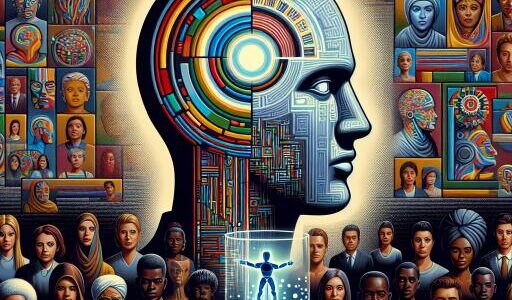
- Connected intelligence: The catalytic layer where human, collective, and machine intelligence converge. Under the right conditions, this integration drives collaborative problem-solving, accelerates discovery, and triggers ecosystem transitions.
- Transformative innovations: Not mere optimizations, but deep shifts in routines and performance. Enabled by data spaces, modeling, and experimental sandboxes, these innovations emerge from connected intelligence and can disrupt entire sectors.
Why it matters now
The book captures a pivotal leap forward in how cities and industries operate, from infrastructure to services:
- The maturation of platform economies is restructuring value creation and coordination.
- Industrial sectors are pivoting into smart-green ecosystems that fuse productivity with climate action.
- Service ecosystems are being amplified by generative AI, transforming customer experience and back-end operations.
- Net-zero energy districts and cleaner, safer neighborhoods are moving from pilots to scalable models.
- Car-free city visions are getting real via intermodal, robotic, and on-demand mobility solutions.
- Globally connected innovation ecosystems are stitching together capabilities across regions and digital-physical spaces.
Inside the book: a concise tour
Foundations
- From Bletchley Park’s collaborative problem-solving to today’s AI-augmented city, the opening chapter traces how connected intelligence took shape and why interdependencies define intelligent environments.
- A theoretical framework explains how connected intelligence can reliably emerge within smart ecosystems and the conditions that sustain it.
Part I: The rise of smart ecosystems
- Systems-of-systems reshape cities and innovation: How layered, interoperable platforms underpin modern smart cities and drive innovation across sectors, including digital and green transitions.
- Near-future foresight: Literature scans, expert views to 2050, and scenarios mapping the evolution paths of smart ecosystems.
Part II: Transformative innovations and transition models
- Industry: Pathways for moving sectors to smart-green operations, with case evidence (including Mediterranean regions) and a generic model of transition and growth.
- Services: From supply chains to platforms, the city-as-a-platform concept, and how generative AI is widening reach and deepening service ecosystems.
- Residential districts: The feasibility of self-sufficient net-zero energy districts (S-NZEDs), combining eight systems, simulation thresholds, and the role of connected intelligence in achieving carbon neutrality.
- Mobility: Blueprints for car-free cities via Mobility-as-a-Service, connected intelligence, time-efficiency modeling, and nature-based urban redesign.
- Innovation ecosystems: Baseline typologies, multi-scalar interconnections, evidence of transition, and an integrative model linking connected intelligence with innovation supply chains.
Part III: Actualising connected intelligence
- Architecture and cases: A universal architecture for developing connected intelligence in smart ecosystems, supported by case studies and conditions for emergence.
- From idea to impact: Practical instruments for discovery:
- DIP platforms that drive engagement, awareness, and externalities.
- Data alignment across heterogeneous sources to make insights portable.
- Agent-based models for simulating behavior and system dynamics.
- Experimentation sandboxes to safely test and iterate.
- Binary coupling interfaces to match problems with solutions and stimulate innovation.
Key takeaways
- Intelligent environments thrive where data, platforms, and AI meet collaborative governance and human expertise.
- Transformations succeed when ecosystems adopt experimentation mindsets—using models, sandboxes, and aligned datasets to reduce risk and accelerate learning.
- Transition pathways can be generalized—from industry decarbonization to mobility redesign—yet they depend on local context, thresholds, and interoperable infrastructure.
Who should read this
Urban technologists, policy makers, industry strategists, platform builders, and researchers looking to operationalize AI-enabled, sustainable transitions will find a rigorous playbook here. Komninos connects the dots between vision and implementation—showing how connected intelligence, when intentionally engineered, can turn smart systems into truly intelligent environments.