
The role of Big Data and IoT in optimizing grid operation and energy consumption | AltEnergyMag
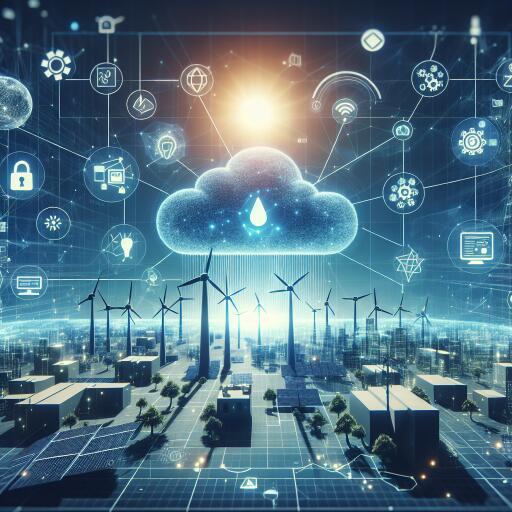
Yesterday’s power systems ran on fixed rules, manual checks, and rigid schedules. Today’s operate on continuous streams of data. The rise of the Internet of Things (IoT), Big Data analytics, and software-defined control is reshaping how we generate, route, and consume electricity—moving the sector from reactive firefighting to proactive, optimized operations.
From rigid grids to data-driven networks
Legacy grids were centrally managed, planned years in advance, and bound by static models. Their limitations became painfully clear in August 2003, when a single line outage in Ohio went unnoticed due to a software alarm failure. The resulting cascade left 50 million people across the U.S. and Canada without power, slashed 61,800 MW of load, cost an estimated $6 billion, and contributed to at least 11 fatalities. The lesson: human error and outdated infrastructure can compound quickly—and catastrophically.
Since then, accelerating demand, renewable variability, and tougher climate targets have exposed how ill-suited those systems were. Big Data and IoT have stepped into that gap, enabling smarter, more resilient grid operations.
What Big Data + IoT make possible
Smart sensors, edge devices, and secure connectivity now stream real-time information on voltage, load, weather, asset health, and more. Advanced analytics convert that data into actionable insight, enabling operators to:
- Detect anomalies early and predict failures before they trigger downtime
- Balance loads dynamically and integrate variable renewables smoothly
- Automate switching, fault location, and power flow calculations
- Coordinate across dispersed assets from a unified interface
The market is voting with investment. The IoT in energy grid management market, valued at $27.4 billion in 2023, is projected to reach $87.9 billion by 2033. The broader smart grid market is expected to grow from $44.56 billion in 2024 to over $215 billion by 2034.
From maintenance to optimization
Traditional maintenance relied on scheduled inspections or visible symptoms—often after service had already deteriorated. With pervasive monitoring and predictive analytics, operators can identify stress points in advance and intervene at optimal times, reducing outages and costs.
Real-world examples illustrate the shift:
- Gorenjske Elektrarne, a Slovenian renewables producer, centralized control with COPA-DATA’s zenon software. Engineers access real-time performance across 36 locations via mobile, cutting downtime by 15 percent and operating costs by 30 percent.
- KOMIPO’s Jeju Sangmyeong wind facility in Korea combined a smart grid system with an Energy Storage System to automatically store excess wind output and release it during peak demand—smoothing variability and improving economics.
- At Austria’s Stadtwerke Feldkirch, unified asset management, alarm handling, and trend analysis helped detect issues earlier, while secure remote access enabled rapid response from anywhere, including smartphones.
Smarter demand, empowered consumers
Load management—distributing demand evenly to prevent overloads—has become a core capability. Software now forecasts consumption patterns, shifts usage to off-peak windows, and orchestrates distributed resources. On the customer side, smart meters and responsive tariffs help households and businesses time-shift loads and reduce waste. The result is a more stable grid and lower bills.
Security and interoperability: modernization’s twin hurdles
Digitalization raises the stakes on cybersecurity. In recent years, the majority of large energy providers have faced breaches. Governments are tightening rules, and standards such as IEC 62443 provide a framework for secure-by-design operations. Platforms certified to IEC 62443—like zenon—embed security into design, development, and testing, helping utilities comply while modernizing.
Interoperability is the other critical piece. Replacing legacy hardware en masse is costly and slow. Vendor-agnostic software that speaks industrial and utility protocols lets operators integrate existing equipment into data-driven workflows, enabling gradual, modular upgrades instead of disruptive rip-and-replace projects.
What’s next: AI, digital twins, and virtual substations
As smart grids become more complex, artificial intelligence will be central to simplifying operations. Machine learning can refine demand forecasts, detect subtle inefficiencies, and orchestrate controls in real time. Digital twins—virtual replicas of grid assets and networks—allow operators to simulate scenarios, test contingency plans, and optimize configurations before making changes in the field.
Virtual substations, built on software-defined architectures, push further by centralizing control logic, enhancing flexibility, and reducing hardware dependencies. As Protection, Automation, and Control (PAC) functions virtualize, utilities gain a scalable, resilient foundation for future growth. Complementary technologies such as blockchain could add tamper-resistant audit trails for energy transactions and data sharing.
The bottom line
Grids designed for a different era are giving way to intelligent, software-driven systems. Big Data and IoT are delivering real-time visibility, faster decisions, and better integration of renewables—benefits that cut costs, improve reliability, and reduce emissions. With strong cybersecurity, interoperable platforms, and AI-driven automation, the smart grid is not just modernizing the network—it’s redefining how we produce and use energy.
About COPA-DATA: COPA-DATA develops the zenon software platform for digitalization in manufacturing and energy, enabling users to automate, monitor, integrate, and optimize equipment and power grids. Its approach blends decades of automation expertise with sustainability-focused innovation.