
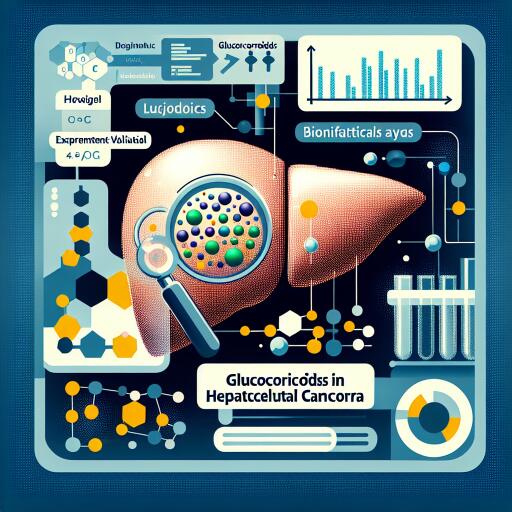

Collection and Initial Processing of Bulk Transcriptome Data
In the quest to unravel the complexities of hepatocellular carcinoma (HCC), researchers are increasingly relying on public data repositories. This study primarily utilized data from The Cancer Genome Atlas (TCGA) and the Gene Expression Omnibus (GEO). By employing the R package ‘TCGAbiolinks’ (version 2.25.0), data on genome-wide expression profiles, clinical information, and variations were extracted specifically for Liver Hepatocellular Carcinoma (LIHC). Meanwhile, the ‘GEOquery’ R package facilitated access to expression profiles and clinical data from the GEO database.
In this study, the datasets TCGA-LIHC and GSE14520 were pivotal. TCGA-LIHC encompasses 374 tumor samples and 50 normal controls, with comprehensive prognostic data available for 338 samples, which were analyzed for their prognostic significance. In contrast, GSE14520, derived from the Affymetrix Human Genome Arrays, served as an external validation set, comprising 242 tumor samples with extensive data. This robust selection underscores GSE14520’s authority within HCC research circles.
Genes and Regulatory Targets in HCC
Glucocorticoid-linked genes were identified using the Molecular Signatures Database (MsigDB). The ‘limma’ R package (version 3.50.0) was instrumental in conducting differential expression analysis (DEA) on control versus tumor samples from TCGA-LIHC. By adhering to strict criteria (|log2FoldChange| > 1.5 and BH-corrected p-value < 0.05), differentially expressed genes (DEGs) were pinpointed. Tumor subtypes were discerned through glucocorticoid-related gene expression, employing unsupervised Consensus Clustering. DEGs across tumor subtypes were similarly analyzed, focusing on intersections that may indicate pivotal roles in HCC progression. These genes potentially activate glucocorticoid signaling pathways, thus representing critical targets in HCC pathogenesis.
Enrichment Analysis and Pathway Insights
Gene Set Enrichment Analysis (GSEA) determined the enrichment of predefined gene sets, using the ‘clusterProfiler’ R package. With reference to curated collections from MSigDB, significant pathways that emerged are likely vital in HCC tumorigenesis. Furthermore, the KEGG and GO enrichment analyses shed light on altered metabolic pathways, utilizing the ‘clusterProfiler’ R package to elucidate these pathways’ biological roles.
In addition to these analyses, the study leveraged the interaction between tumor-immune system data to navigate the immune landscape of HCC. The Consensus Clustering algorithm further reinforced these findings, validating clustering stability through sampling variability.
Genomic Landscape and Drug Sensitivity
Mutation data from TCGA-LIHC provided insights into the genomic mutation landscape. The ‘maftools’ R package highlighted somatic differences across subtypes, identifying the top 20 frequently mutated genes that are potentially key to malignancy development.
Concurrently, drug sensitivity data from the Genomics of Drug Sensitivity in Cancer (GDSC) database enabled the prediction of drug efficacy in HCC, facilitated by the ‘oncoPredict’ R package. This approach signifies potential therapeutic avenues for HCC intervention.
Immune Checkpoints and Immunotherapy
Deciphering immune checkpoint gene expressions offers insight into immune response regulations within HCC tumors. The Tumor Immune Dysfunction and Exclusion (TIDE) analysis was pivotal in assessing immunotherapy responsiveness.
Prognostic and Diagnostic Value Assessment
The study used univariate Cox regression analysis to evaluate glucocorticoid-related DEGs concerning overall survival (OS). ROC (Receiver Operating Characteristic) curves verified the efficacy of the prognostic models, with curves generated in the ‘pROC’ R package portraying their capacity to predict survival outcomes across datasets.
Continued Model Evaluation and Nomogram Construction
A multivariate Cox regression model facilitated nomogram construction, projecting continuous risk scores. Time-dependent ROC curves gauged these scores’ predictive efficacy over time, complemented by clinical data-derived calibration curves.
Experimental Validation and Human Sample Analysis
Human tissue samples from surgical resections of HCC patients, including hepatic cancer and adjacent normal tissues, underwent immunohistochemical analysis. Researchers deployed various antibodies for protein detection, alongside image acquisition via optical microscopy. Pathologists independently scored staining intensity and extent, providing crucial insights into the biological behavior of HCC tissues.
Conclusion and Statistical Methodology
All statistical analyses were conducted within the R environment, with the Kaplan-Meier method and log-rank test used for survival analysis. A p-value < 0.05 signified statistical significance, as outlined in accompanying supplementary materials. This integration of bioinformatics analysis with experimental validation illuminates the intricate role of glucocorticoids in HCC and underscores potential pathways for therapeutic intervention. The study benefitted from ethical approval and patient consent, aligning with the Declaration of Helsinki guidelines. For additional details, including analytical workflows and coded methodologies, readers are encouraged to consult the supplementary materials provided.