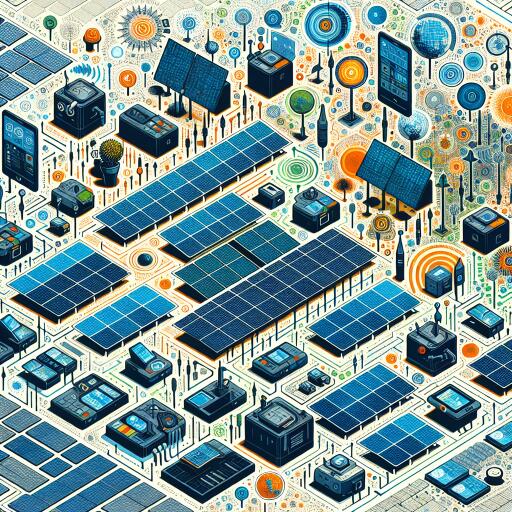

All low-cost PV monitoring systems at a glance
A new wave of reviews on budget-friendly photovoltaic (PV) monitoring finds a field rich with DIY hardware and open-source software—but still lagging on analytics. A Chinese research team reports that only 11 of 88 PV monitoring studies use machine learning. Both they and a separate group at the American University of Iraq call for lightweight ML and deeper smartphone integration to make low-cost systems smarter and more accessible.
What the latest reviews examined
Two complementary literature reviews dissect the state of low-cost PV monitoring:
- A comprehensive analysis by a team in China surveyed 88 approaches to PV monitoring, focusing on affordability, component choices, and data processing strategies. Their headline finding: machine learning is rarely applied, despite clear opportunities to improve fault detection, performance assessment, and maintenance scheduling.
- A systematic review by researchers at the American University of Iraq mapped the hardware, software, and system-integration layers that shape practical, low-cost deployments. Their focus underscores how design decisions at each layer can make or break reliability and scalability in the field.
Machine learning: high potential, low adoption
Only 11 of the 88 studies surveyed by the Chinese team used machine learning. That gap suggests analytics remain an afterthought in many low-cost builds, where budgets steer choices toward basic sensing and logging.
The researchers advocate for lightweight ML that runs on modest hardware—think microcontrollers or single-board computers—to enable:
- Early anomaly and fault detection without cloud dependence
- Performance benchmarking across seasons and operating conditions
- Adaptive sampling to conserve power and data bandwidth
Pragmatically, edge-friendly models (e.g., simple classifiers, compressed neural networks) can fit within tight CPU, memory, and power constraints while avoiding recurring cloud costs.
Smartphones as the user interface
Both reviews highlight smartphones as natural hubs for low-cost PV monitoring. Mobile integration can provide:
- Easy commissioning and on-site diagnostics via Bluetooth or local Wi-Fi
- Offline-first dashboards with periodic sync, reducing data plans
- Push notifications for faults or performance anomalies
- Simple firmware updates and configuration changes
Pairing edge analytics with a mobile app keeps costs down, improves usability for non-experts, and shortens the loop between detection and action.
Core building blocks of low-cost PV monitoring
Across studies, a common architecture emerges:
- Sensing: Current and voltage sensors for strings/modules; irradiance and temperature for context; optional wind and ambient sensors for site-aware insights.
- Compute: Microcontrollers or single-board computers for data acquisition, preprocessing, and basic ML; emphasis on low power and ruggedization.
- Connectivity: Bluetooth/Wi-Fi for local access; LoRa/Cellular for remote sites; intermittent-sync strategies to minimize data costs.
- Power management: Efficient regulators, battery buffering, and sleep modes to support off-grid monitoring nodes.
- Software stack: Open-source firmware and containerized services; lightweight databases; secure OTA updates where possible.
- Visualization: Mobile-first dashboards, optional web portals, and exportable logs for deeper analysis.
Why the ML gap matters
Without analytics, low-cost systems often act as passive loggers. Even simple models can automate triage—flagging shading, soiling, sensor drift, or partial string faults—so technicians focus on the right problems first. For small operators and community projects, that can translate into higher uptime and faster payback with minimal extra spend.
Practical recommendations from the reviews
- Prioritize lightweight ML at the edge: Start with rule-based baselines, then add compact classifiers for anomaly detection.
- Design mobile-first: Treat the smartphone as the primary interface for setup, alerts, and diagnostics.
- Engineer for intermittency: Cache locally, sync opportunistically, and compress aggressively to cut data costs.
- Optimize energy use: Duty-cycle sensing, use event-driven sampling, and right-size compute to extend battery life.
- Standardize interfaces: Use open protocols and well-documented APIs to mix-and-match sensors, gateways, and apps.
- Bake in security early: Unique device credentials, encrypted transport, and signed firmware updates—even on low-power hardware.
- Validate in the field: Report real-world performance, not just lab results, and publish datasets to accelerate reproducibility.
The bigger picture
As PV proliferates across rooftops, farms, and microgrids, monitoring must remain reliable, affordable, and simple. The reviewed studies show the hardware and software exist today to build capable systems on a budget. The next leap will come from putting lightweight intelligence and user-friendly mobile tools at the center—so small and large operators alike can keep their arrays performing at their best without costly infrastructure.