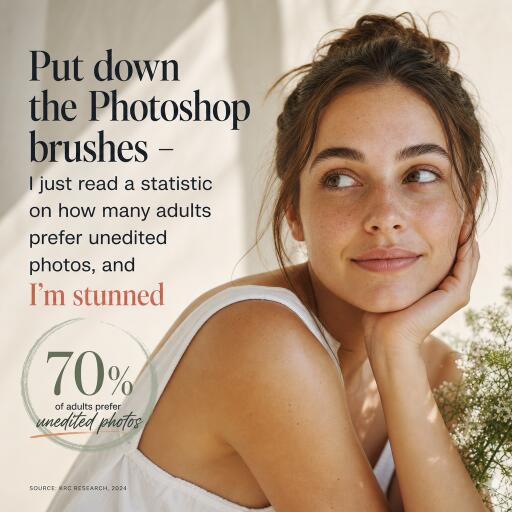

Put down the Photoshop brushes – I just read a statistic on how many adults prefer unedited photos, and I’m stunned
For years, learning photography has felt intertwined with mastering post-production. Yet a recent global finding suggests a majority of adults actually favor images that aren’t polished to perfection.
A large survey indicates roughly 65% of people worldwide prefer brands to use real, unedited photos in advertisements. The takeaway is clear: authenticity resonates with a broader audience than many marketers expect, potentially reshaping how campaigns are crafted.
Advertising has gradually leaned toward a less-processed look. Some brands have embraced unretouched visuals, showcasing models as they appear in real life. Campaigns featuring diverse body types and natural skin textures have gained traction, accompanied by efforts to curb heavy Photoshop and to rethink reliance on AI-generated imagery.
But as artificial intelligence tools become more powerful, the conversation has intensified. There’s a growing sense that AI could be the final push toward a radically realistic or, conversely, an over-synthesized aesthetic. In practice, many feed pictures still cross the line into over-editing, or read as artificial, even when they’re not generated by machines.
The tension between flawless, airbrushed looks and textured, human skin is reshaping the field. While AI can render convincing texture, portraits with unnaturally smooth surfaces tend to lose the moment and character that viewers connect with. The challenge is balancing refinement with authenticity, especially as audiences become more adept at spotting inconsistencies.
From a practical standpoint, achieving a flattering yet natural result is increasingly about lighting and capture quality. Soft, directional light can smooth skin while preserving natural texture; harsh light tends to exaggerate pores and imperfections. A light, restrained retouching approach—one that preserves character rather than erasing it—aligns with contemporary expectations, even as AI tools expand the palette of possibilities.
As this shift unfolds, retro aesthetics and imperfect, real-world imagery are making a comeback in mainstream visuals. The aim isn’t to abandon technique but to reassess where editing adds value and where it detracts from the sense of reality that many viewers expect. In a culture that prizes transparent representation, the practice of retouching is being reevaluated across brand photography and personal portraiture alike.
Ultimately, the move toward authentic visuals reflects a broader cultural preference for images that feel relatable and true to life. This doesn’t mean ditching craftsmanship—rather, it emphasizes texture, light, and nuance over an unattainable ideal of perfection. As audiences lean into realism, the art and business of image-making are likely to evolve in ways that celebrate humanity as much as technique.