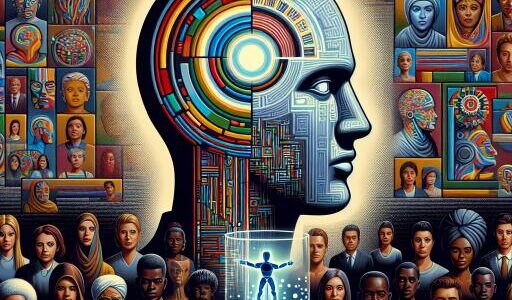

Battle of the Nerds: Godfather of AI, Google DeepMind Chief Argue Over AGI
It wasn’t on anyone’s 2025 bingo card, but a high-profile AI spat broke out on X (formerly Twitter) between Demis Hassabis, CEO of Google DeepMind, and Yann LeCun, Meta’s Chief AI Scientist and a Turing Award laureate. The topic: whether “general intelligence” really exists—and what that means for artificial general intelligence (AGI).
The flashpoint on X
The exchange kicked off when Hassabis responded to a recent interview in which LeCun argued that “general intelligence as a concept” doesn’t make sense. LeCun’s view: human minds are not universally capable; they’re highly specialized for tasks in our physical world. Calling “general” a misnomer, he suggested we overestimate human generality because we can’t even conceive of the problems our brains can’t solve. He pointed to chess as an example where machines already outperform us.
Hassabis fired back that LeCun is “plain incorrect,” saying LeCun was conflating general intelligence with universal intelligence. In Hassabis’s view, the human brain is “extremely general,” and what looks like specialization is largely an adaptation to bounded memory and energy.
Hassabis: Brains as (approximate) Turing machines
Hassabis framed the debate in computational terms. In theory, a general system—“in the Turing Machine sense”—should be capable of learning anything computable, given sufficient time, memory, and data. By that yardstick, he argued, both human brains and today’s AI foundation models function as approximate Turing machines: limited by resources, but architecturally general.
He also rebutted the chess example. If machines dominate chess, that doesn’t prove humans lack general intelligence; humans invented chess in the first place, which he sees as evidence of our underlying generality and ability to create new problem spaces.
LeCun: Humans are specialized—and inefficient under constraints
LeCun countered that using “general” to mean “human-level” is misleading precisely because humans are specialized. He offered the eye as an analogy: the optic system is powerful across many vision tasks, yet it only perceives a tiny slice of the electromagnetic spectrum. In other words, impressive breadth still falls far short of universality.
LeCun granted a key theoretical point: a “properly trained human brain with an infinite supply of pens and paper” is Turing complete. But, he said, for most computational problems, humans are “horribly inefficient,” making us suboptimal under real-world constraints—like playing a timed chess game. In his view, practical boundedness matters more than theoretical universality when assessing intelligence in the wild.
What this means for AGI
Behind the terminology tussle lies a strategic question for the entire AI field. If humans aren’t truly “generally” intelligent, skeptics argue, then AGI is a misguided target; the real destination might be specialized systems stacked into superintelligence, not a human-like generalist. Others counter that AGI is a meaningful milestone: systems with human-level breadth across domains that can learn, adapt, and perform general-purpose tasks before surpassing us.
Hassabis’s stance implicitly supports the AGI roadmap: if brains and modern AI architectures are general in the Turing sense, then expanding data, compute, and training could eventually yield systems with robust, broadly applicable capabilities. LeCun’s emphasis on resource-bounded efficiency suggests a different priority: architectures that learn more efficiently, reason better, and operate under constraints—potentially sidestepping the classical AGI framing in favor of scalable, energy-aware intelligence.
Why the semantics matter
Words like “general,” “universal,” and “human-level” carry technical and strategic weight. Conflating them can shape research agendas and public expectations. The Turing-completeness perspective underscores theoretical possibility; the bounded-resource critique emphasizes what actually works within time, energy, and memory limits. Both lenses influence how labs design models, benchmark progress, and describe end goals to investors, regulators, and society.
The bottom line
For now, the debate is unresolved—and likely to continue. Hassabis argues that human cognition and today’s foundation models point to an inherently general architecture constrained by resources, not by design. LeCun accepts theoretical generality but insists that real intelligence must be judged by efficiency and performance under constraints, where humans—and current AI—often fall short.
Whether you see AGI as a coherent goal or a moving target, one thing is clear: the field’s leading minds still disagree on what “general intelligence” actually means. And that definition will shape how—and how quickly—we pursue the next era of AI.