
The Rise of “AI Employees” – La Nouvelle Tribune
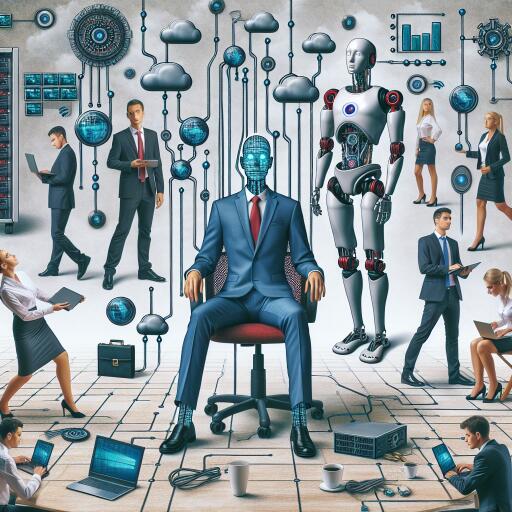
Across boardrooms and back offices, a quiet transformation is taking shape: the emergence of “AI employees.” Far from being simple chatbots, these autonomous AI agents are starting to take on real workplace tasks with minimal human supervision—sometimes completing end-to-end workflows that once demanded dedicated staff time.
What exactly is an “AI employee”?
Think of it as a digital coworker rather than a static tool. Instead of waiting for a human to click buttons, these systems can reason through steps, decide what to do next, and coordinate with multiple applications. In early pilots, companies are testing agents built on models from companies like OpenAI and Anthropic, then pairing them with internal tools and data. The result: software that can understand instructions, act across systems, and adapt its approach as conditions change.
From inbox to action
One of the clearest use cases is administrative workflow automation. Several startups now deploy agents that:
- Read and categorize incoming emails
- Draft and send context-aware replies for review
- Create support tickets and route requests to the right team
- Update records in internal databases and CRMs
These end-to-end flows used to require manual handoffs. Today, AI agents can execute most steps autonomously, escalating to humans only when policies or confidence thresholds require it.
How it works under the hood
The technology at the heart of this shift is the AI agent: a program that combines a large language model with external tools—APIs, databases, automations, and sometimes a secure browser. The model interprets goals, plans a sequence of actions, and calls the right tools in the right order. Crucially, it can reflect on intermediate results and adjust, much like a junior colleague learning on the job.
Why it matters
Analysts expect significant productivity gains as these systems mature. Early research suggests that a substantial portion of routine knowledge-work tasks—often cited around 30%—could be assisted or automated by AI. While the exact number will vary by industry and process complexity, the direction of travel is clear: repetitive, rules-based tasks are increasingly fair game for automation, freeing people to focus on judgment-heavy work.
Still early—and still supervised
Despite rapid progress, this isn’t a wholesale replacement of human roles. Most deployments today keep a human in the loop, especially for customer-facing decisions, compliance-sensitive steps, or any action with material business impact. Companies building these systems emphasize:
- Clear policies for what agents may and may not do
- Audit trails for every action taken
- Confidence thresholds that trigger human review
- Regular evaluation to prevent drift and errors
What changes inside organizations
Introducing AI employees reshapes work in several ways:
- Roles evolve: People spend less time on execution and more on supervision, exception handling, and process design.
- Process clarity becomes critical: Ambiguities that humans could intuitively resolve must be spelled out as rules and guardrails for agents.
- Data quality moves to the forefront: Clean, well-structured data and reliable APIs directly determine outcomes.
- Metrics shift: Teams start tracking cycle time, handoff rates, and agent confidence scores alongside traditional KPIs.
Practical first steps
For teams testing the waters, the most successful pilots tend to share common features:
- Narrow scope: Start with one well-defined workflow (for instance, triaging inbound requests) before expanding.
- Clear success criteria: Measure time saved, accuracy, and the percentage of tasks completed without intervention.
- Human verification: Keep approvals in place until the agent consistently meets your quality bar.
- Security and compliance by design: Use least-privilege access, sandboxed tools, and rigorous logging from day one.
Risks and realities
AI employees are powerful—but not infallible. They can misinterpret edge cases, struggle with poorly formatted data, or overstep if guardrails are weak. There are also organizational risks: change fatigue, overhyped expectations, or shadow deployments that bypass IT. Addressing these requires candid communication, realistic timelines, and a partnership between business leaders, operations, and security teams.
From tool to teammate
Perhaps the most important shift is psychological. For decades, software was a passive instrument; humans clicked, it responded. AI employees flip that script. They can initiate actions, coordinate across apps, and ask for help when stuck—traits we associate with coworkers, not code. The promise isn’t merely speed; it’s adaptability at scale.
What’s next
As pilots become production deployments, expect organizations to formalize “agent operations” alongside DevOps and SecOps: playbooks for updates, drift monitoring, incident response, and ongoing evaluation. We’ll also see new roles emerge—workflow designers, prompt engineers, and AI product owners—focused on aligning agent behavior with business goals.
The open question is no longer whether AI will join the workforce, but how quickly companies can integrate it responsibly. With prudent oversight, strong data foundations, and clear accountability, AI employees won’t simply automate tasks—they’ll help teams reimagine work itself.