
How a 3-Part AI System Can Automate Your Complex Web Tasks
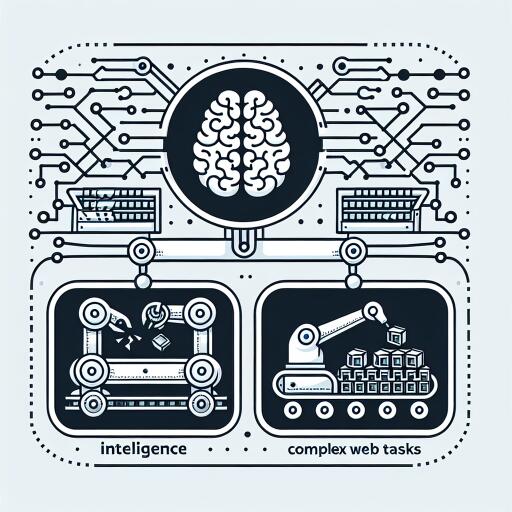
Automation isn’t just a nice-to-have anymore—it’s essential for keeping complex, multi-step workflows on track. As outlined by All About AI, a practical way to reach full-stack automation pairs reliable scheduling with smart, browser-based agents. Their 3-part AI system combines cron jobs, a headless browser, and a custom Surf Agent to tackle tasks like research, data collection, verification, and reporting with minimal manual effort.
The 3 building blocks—working in sync
Cron jobs: dependable timing and orchestration
Cron jobs run your automations at precise intervals—hourly, daily, or on custom schedules—so tasks happen consistently without human intervention. They’re also a clean way to sequence multi-step workflows and parallelize different processes across multiple schedules for scale.
Headless browser: hands-free web interactions
A headless browser (such as Chromium driven by Playwright or Puppeteer) performs the same actions a user would—navigating sites, clicking elements, scrolling, handling cookies, and loading dynamic content—without a visible UI. This makes it ideal for scraping structured data, handling single-page apps, and interacting with authenticated portals at speed.
Surf Agent: your adaptable, task-aware operator
The Surf Agent is a custom agent that interprets instructions, reacts to page changes, and executes nuanced browser tasks. It can verify source credibility, extract fields, fill forms, upload files, and gracefully handle unexpected UI states. This is where precision meets adaptability—especially for workflows that require judgment, validation steps, and retries.
How a full workflow comes together
Imagine you need to research a topic, confirm sources, and submit a summary via an online form. Here’s a typical run:
- Schedule the job: A cron entry kicks off the workflow at 6 a.m. daily.
- Gather sources: The headless browser visits target sites, performs searches, loads dynamic results, and collects candidate links.
- Verify credibility: The Surf Agent checks domain reputation, author details, publication dates, and cross-references facts via APIs. It flags conflicts and prioritizes trustworthy sources.
- Extract structured data: Content and metadata are normalized into JSON, with fields like title, URL, author, date, and key quotes.
- Draft and refine: The agent composes a concise overview, aligns it with your style rules, and validates citations back to their URLs.
- Submit the report: The headless browser logs in, fills out the web form, uploads any attachments, and submits—capturing screenshots and logs for audit trails.
- Alert and archive: Results are posted to Slack or email; JSON records and artifacts (screenshots, HTML snapshots) are stored for traceability.
Technical backbone for reliability and scale
- API-first design: Integrate search, NLP, reputation, and verification APIs to enrich data and reduce false positives.
- JSON everywhere: Use JSON for inputs, intermediate states, and outputs to standardize data flow and make debugging easier.
- Resilient execution: Implement retries with exponential backoff, circuit breakers for flaky endpoints, and timeouts to avoid hangs.
- Stateful runs: Persist checkpoints so long tasks can resume after failures without starting from scratch.
- Observability: Centralized logs, screenshots, performance metrics, and error traces enable root-cause analysis and continuous improvement.
- Parallelization: Run multiple cron jobs and browser instances to scale horizontally across projects and teams.
Where this system shines
- Market and competitive research: Track product changes, pricing, and feature updates across competitor sites.
- Lead enrichment: Validate company details, pull public signals, and push clean records into your CRM.
- Compliance and QA checks: Verify policy or accessibility requirements across large site inventories.
- Content operations: Gather sources, create briefs, assemble citations, and submit drafts to CMS forms.
- E-commerce monitoring: Capture availability, shipping times, and promotions for dynamic catalogs.
- Reporting pipelines: Compile weekly rollups from multiple dashboards and submit summaries to stakeholders.
Quick start: from concept to production
- Define the workflow: Clarify inputs, outputs, success criteria, and any compliance constraints.
- Set up scheduling: Create cron entries for each job stage; stagger timings to avoid rate limits.
- Choose the browser stack: Use Playwright or Puppeteer with stealth and robust wait-for selectors.
- Build the Surf Agent: Encode task logic, verification rules, and recovery paths for UI changes.
- Wire APIs and data flow: Ingest and emit JSON; add enrichment and validation endpoints.
- Test and harden: Run canary jobs, capture artifacts, simulate failures, and tune retries/timeouts.
- Monitor and iterate: Track success rates, latency, and quality scores to guide improvements.
Benefits you can measure
- Time saved: Offload repetitive browsing, verification, and form-filling.
- Higher accuracy: Programmatic checks and repeatable logic reduce human error.
- Scalability: Multiple cron jobs and browser instances handle growing workloads.
- Auditability: JSON outputs, logs, and screenshots create a defensible trail.
- Focus on strategy: Free teams to handle analysis and decision-making, not drudgery.
Bottom line
This 3-part framework—cron jobs, a headless browser, and the Surf Agent—balances technical rigor with day-one usability. By adopting it, you can streamline complex, web-centric tasks, reduce manual effort, and scale operations with confidence. Whether you’re verifying sources, compiling reports, or submitting forms, the result is faster cycles, fewer errors, and workflows that grow with your ambitions.
Disclosure: Some of our articles include affiliate links. If you buy something through one of these links, Geeky Gadgets may earn an affiliate commission. Learn about our Disclosure Policy.