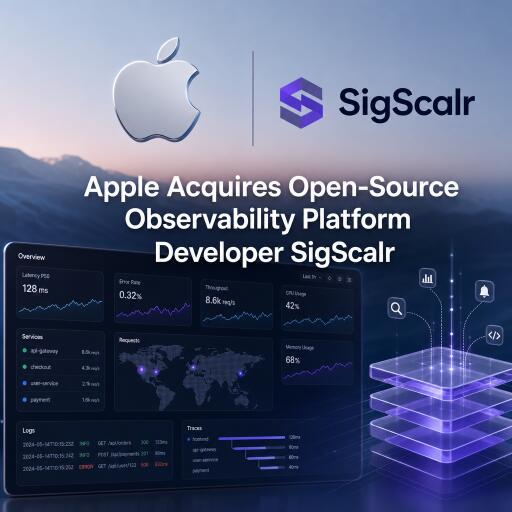

Apple acquires open-source observability platform developer SigScalr
Apple has expanded its internal toolset by acquiring SigScalr, a small software company best known for delivering an open-source observability solution designed to help teams capture, organize, and analyze logs, metrics, and traces from modern applications and the surrounding infrastructure. Official regulatory filings show that Apple informed authorities about the deal in the spring, with subsequent disclosures appearing in public records later in the year.
At the center of the acquisition is SigLens, a platform that enables engineers to collect observability data, perform fast searches, and glean actionable insights across complex software environments. By providing visibility into how services interact and where bottlenecks arise, SigLens aims to shorten debugging cycles and improve reliability for production systems.
Following the news, SigScalr’s public-facing site was taken offline and the project’s code repository was switched to a read-only state, signaling an orderly transition as Apple integrates the technology into its product ecosystem. An archival note in the repository indicated a licensing shift toward a more permissive framework, encouraging forks and community-driven evolution while preserving the project’s core concepts.
Industry observers have highlighted SigLens as a lean, cost-conscious alternative that delivers speed and simplicity compared with heavier, feature-saturated platforms. The move is viewed as part of a broader industry trend where major technology players seek to embed observability more deeply into their offerings, enabling faster diagnosis of issues across interconnected services.
SigScalr had previously signaled growth through an initial launch from stealth and a subsequent seed-stage funding round supported by venture investors, building a foundation for broader adoption of its tooling. This background provides context for the strategic rationale behind folding SigLens into a larger platform, where it can benefit from tighter integration with other developer tools and services.
Looking ahead, the question is how Apple will weave SigLens into its broader lineup and what adjustments, if any, will be made to licensing or governance. The outcome will hinge on how seamlessly the tool can be merged with Apple’s existing observability and developer workflows, and whether the combined offering can yield faster, more reliable performance across extensive ecosystems.
As the integration unfolds, the industry will be watching to see if SigLens remains available as an open-source option or evolves into a more tightly integrated component of a comprehensive Apple toolkit. The coming months are expected to reveal the company’s strategy for enabling developers to gain deeper, timelier insights without sacrificing ease of use.