
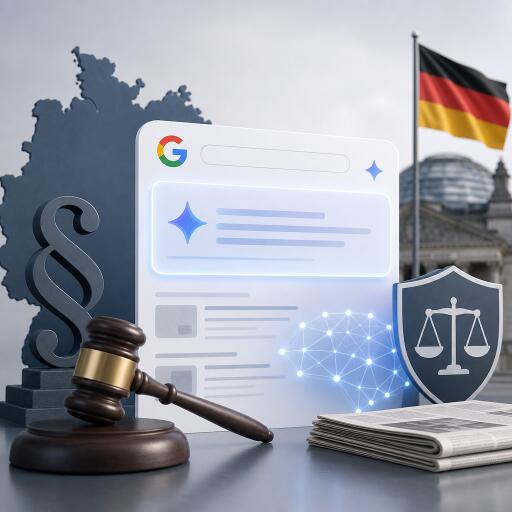

German media regulator says Google’s AI Overviews subject to German media law
Germany’s media regulator has said that Google’s AI Overviews and Perplexity AI fall under the country’s media laws, marking a significant step in Europe’s growing effort to regulate AI-generated information.
The decision came from ZAK, the Commission for Licensing and Supervision, which represents Germany’s 14 state media authorities. According to the body, AI-generated news summaries and chatbot answers should not be treated as simple displays of material created by others. Instead, regulators view these responses as content produced by the AI providers themselves.
That distinction matters because it could make companies more directly responsible for the accuracy and presentation of the information their systems generate.
The announcement follows mounting scrutiny in Germany and across Europe over AI tools that summarize search results, answer questions directly, and shape how users discover news online.
In a related development, a court in Munich recently found that Google could be held directly liable for allegedly inaccurate statements generated by its AI Overview feature. According to the German newspaper publishers’ association BDZV, the court determined that AI-generated summaries should be considered Google’s own content rather than a neutral reproduction of third-party sources.
ZAK Chairman Thorsten Schmiege made the regulator’s position clear, saying AI search engines and chatbots are content providers and that German media law will be consistently applied to them going forward.
The regulator also said the liability protections offered under the European Union’s Digital Services Act do not apply in these cases. Normally, the DSA gives platforms some protection from responsibility for illegal user-generated content posted by others. But Germany’s media authorities argue that AI summaries are different because they are actively created and assembled by the service provider.
This interpretation could have wide-reaching implications for AI-powered search products. Google’s AI Overviews, for example, are placed prominently at the top of search results. Regulators say that positioning can make traditional lists of links less visible, potentially putting publishers and other third-party media providers at a disadvantage.
ZAK raised similar concerns about chatbot-style services such as Perplexity. When these systems choose which sources to cite, which links to surface, or what recommendations to attach to an answer, they can influence which news outlets gain visibility and which do not. For that reason, regulators say such services could qualify as media intermediaries, a category subject to rules meant to protect media diversity and plurality.
The decision does not end the matter. Both Google and Perplexity have legal options to challenge the regulator’s position in court or through other formal channels.
Perplexity declined to comment directly on the ruling, but said it complies with the EU’s GDPR privacy framework and holds SOC 2 Type II certification for security and privacy controls. Google did not immediately respond to requests for comment.
The broader significance of the German move is hard to ignore. As AI tools become a central gateway to online information, regulators are increasingly asking whether these systems act more like neutral platforms or like publishers making editorial choices. Germany’s answer, at least for now, leans strongly toward the latter.
If that view gains traction elsewhere in Europe, AI companies may face stricter obligations around accuracy, transparency, source selection, and the impact their products have on the news ecosystem.