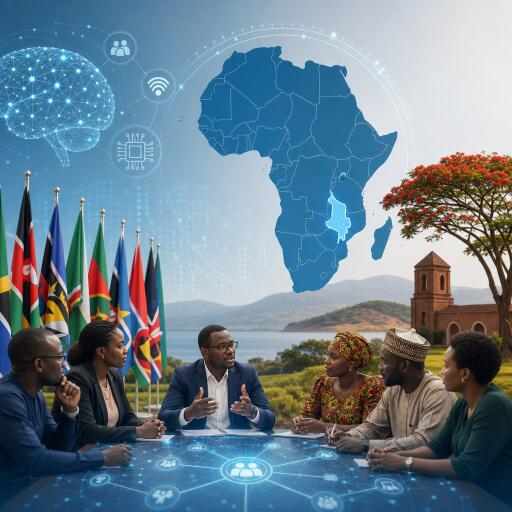

Common Market for Eastern and Southern Africa (COMESA) Launches Artificial Intelligence and Digital Inclusion Consultations in Malawi
COMESA has begun a four-day stakeholder consultation in Lilongwe, Malawi, aimed at shaping the regional agenda for artificial intelligence and digital inclusion. The discussions are designed to gather practical input from government, business, academia, development partners and civil society as the bloc works on new strategies, action plans and model regulatory frameworks.
The consultations are being held under the IDEA Programme, with support from the World Bank and the Digital Malawi Acceleration Project (DMAP). Organizers say the goal is to develop evidence-based policies that reflect the different levels of digital development across COMESA member states.
Speaking on behalf of the regional body, COMESA Director of Infrastructure and Logistics Dr. Bernard Dzawanda said the meeting in Malawi is part of a wider effort to define how Eastern and Southern Africa should respond to both the promise and the risks of AI.
According to Dr. Dzawanda, artificial intelligence has the potential to improve public service delivery, strengthen agriculture, modernize healthcare systems and support regional trade. At the same time, he cautioned that the rapid growth of AI brings governance, regulatory and ethical challenges that cannot be addressed by countries acting in isolation.
He stressed that regional coordination will be essential if COMESA wants to build policies that encourage innovation while also protecting citizens and ensuring responsible use of emerging technologies. He also tied the AI conversation to the broader issue of digital inclusion, arguing that digital transformation will only deliver meaningful benefits if access to technology is expanded fairly across society.
The consultation was held under the patronage of Malawi’s Minister of Information and Communications Technology, Dr. Shadric Namalomba, who used the forum to call for a shift in the country’s technology ambitions. Rather than remaining a consumer of imported digital tools, he said, Malawi should focus on building AI-enabled solutions that directly address its own development priorities.
Dr. Namalomba framed the challenge not around whether AI will create economic and social value, but around how Malawi can secure a meaningful share of that value. In his view, the country has an opportunity to apply AI in sectors that matter most to its citizens, including agriculture, healthcare, education and climate resilience.
He pointed to existing digital investments, including DMAP and the National Data Centre, as foundational infrastructure that can support the next phase of innovation. These systems, he suggested, can help Malawi move from basic digital adoption toward more advanced, locally relevant applications of AI.
The minister also emphasized that digital inclusion must remain at the center of any national or regional technology strategy. He said the benefits of AI should not be limited to urban populations or large institutions, but should extend to women, young people, rural communities and persons with disabilities.
That focus is reflected in the structure of the workshop, which has been divided into two main workstreams. The first examines AI readiness, practical use cases and regulatory questions. The second concentrates on digital inclusion, with discussions covering connectivity, digital skills, affordability, accessible services, and trust and safety online.
This twin-track approach suggests COMESA is trying to avoid a common policy failure: promoting advanced technologies without addressing the structural barriers that prevent broad participation. In many African markets, access gaps remain a serious obstacle, whether because of weak infrastructure, high data costs, low digital literacy or limited accessibility for marginalized groups.
By combining the AI policy conversation with digital inclusion, COMESA is signaling that innovation and access must move together. That matters because AI adoption without inclusive digital systems could deepen existing inequalities, while stronger inclusion policies can widen the base of people and institutions able to benefit from new tools.
Input collected in Malawi will feed into broader regional consultations that will help shape COMESA’s future digital strategies, model guidelines and regulatory frameworks. Officials say the final outputs are intended to be practical and adaptable, giving member states options that match their varying levels of digital maturity.
For Malawi, hosting the consultation positions the country within a growing regional debate over how Africa should govern AI while accelerating digital transformation. For COMESA, the Lilongwe meeting is an early but important step toward building a common framework for responsible AI adoption and more inclusive digital growth across Eastern and Southern Africa.