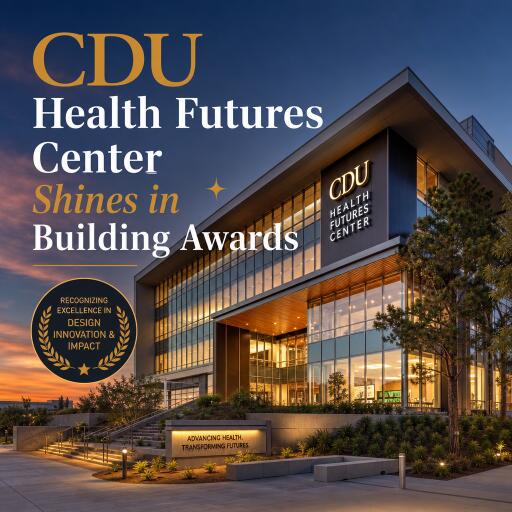
CDU Health Futures Center Shines in Building Awards
The Centre for Better Health Futures at Charles Darwin University has taken a major victory lap, collecting four accolades at the 2026 Master Builders NT Excellence in Building and Construction Awards. It’s a strong signal that the Northern Territory’s flagship health-education hub isn’t just forward-thinking inside the classroom—its build quality, collaboration, and project delivery are all industry-leading.
Headline recognition went to the project’s principal contractor, SHAPE Australia, which secured the Commercial/Industrial Construction $20 Million–$50 Million award. That category typically celebrates projects that push for innovation while nailing execution—sound management, strong leadership, and top-tier finishes. Alongside the main prize, three additional awards highlighted the outstanding contributions of specialist subcontractors, underscoring how tightly coordinated the entire delivery was from start to finish.
From a virtual reality and simulation standpoint, this facility is especially exciting. The building brings together preclinical and clinical environments enhanced by immersive technologies, letting students step into high-fidelity scenarios that mirror real-world healthcare moments. Think lifelike emergency responses, clinical assessments, and interprofessional teamwork, all practiced in safe, repeatable, data-rich simulations. For a region as vast as the Territory, networked VR and mobile setups can bridge distance, enabling learners across multiple campuses to train together in shared virtual spaces.
University leaders have framed the awards as validation of a long-term investment into cutting-edge health education—one designed to boost workforce readiness and, ultimately, patient outcomes. Project leads at SHAPE have pointed to the complexity of integrating specialist technology while adapting to evolving design needs, crediting tight collaboration with the university and local partners as the backbone of the build’s success.
Why this matters for immersive learning
- Hands-on without the risk: VR-enabled simulations let students practice rare or high-stakes procedures repeatedly, building muscle memory before they ever set foot in clinic.
- Multi-user training: Networked scenarios allow teams—nurses, doctors, and allied health students—to rehearse communication and decision-making under pressure.
- Data-driven debriefs: Digital practice sessions can capture performance metrics to inform coaching and accelerate skill acquisition.
- Access across the Territory: Mobile simulation rigs and remote connectivity reduce barriers for regional learners, ensuring consistent training quality regardless of location.
A blueprint for next-gen health campuses
The Centre’s design leans into flexibility: spaces can morph from lecture to lab to simulation floor, while tech infrastructure is wired for rapid iteration as tools evolve. That future-proofing matters. As mixed reality hardware gets lighter and software becomes more lifelike, the facility is positioned to plug in new modules—ranging from advanced patient assessment to intricate surgical rehearsals—without major overhauls.
It’s also a tangible example of how construction excellence intersects with educational innovation. Building teams had to accommodate acoustics, sightlines, device tracking, power and data redundancy, and safety protocols suited to complex simulation gear—all while delivering a polished environment that feels like a contemporary clinic one moment and a high-end lab the next.
The takeaway
Four awards in one night is more than a trophy haul—it’s a statement about where health training is headed in the Northern Territory. With VR and mobile simulation now built into the campus DNA, CDU’s Centre for Better Health Futures can scale immersive learning to meet urgent workforce needs. Expect to see richer training scenarios, stronger interprofessional collaboration, and graduates who step into clinical settings with a level of confidence that only high-fidelity practice can provide.
For the broader building and tech communities, the project shows what’s possible when construction precision meets educational vision: a platform where cutting-edge tools don’t just sit on shelves—they transform how the next generation learns to care for patients.