
Designing and Implementing Stream-Based Applications
Streaming turns data from something you “collect and process later” into something you react to the moment it happens. For modern platforms—multiplayer games, XR experiences, fintech dashboards, IoT fleets—instant feedback isn’t a luxury, it’s table stakes. Building for continuous flows, not discrete batches, demands different assumptions, designs, and operational habits.
Streams 101: What Changes When Data Never Stops
Streams are unbounded: there’s no final record, only the next one. That means you engineer for sustained throughput rather than one-time crunches. Key dimensions:
- Unboundedness: algorithms and storage must tolerate perpetual input and rolling state.
- Velocity: anything from a trickle to millions of events per second; capacity must scale elastically.
- Variety: schemas evolve mid-flight; pipelines need tolerant parsing, versioning, and graceful fallbacks.
- Time semantics: events arrive late or out of order. “Event time” (when something happened) and “processing time” (when you saw it) diverge, so watermarks, lateness policies, and idempotent updates matter.
Media and Interactive Streams
Interactive media—game streams, social VR, esports broadcasts—push a different set of constraints: quality, latency, and bandwidth must be balanced in real time. Consider:
- Codec choices: modern codecs improve compression but can increase encode/decode cost. Pick per device class and scenario (live play vs. VOD, cloud streaming vs. local capture).
- Adaptive strategies: adjust bitrate and resolution to network conditions, but avoid ping‑ponging quality by smoothing decisions and predicting near‑term bandwidth.
- Buffering: enough to mask jitter, not so much that it adds visible lag—especially critical for competitive play and collaborative XR.
- A/V sync: align streams with timestamps and careful buffering to prevent drift.
Time-Series Thinking
Temporal structure is the point, not a byproduct. The backbone of analysis is windowing:
- Fixed windows: uniform buckets (e.g., 5 minutes) for predictable aggregations.
- Sliding windows: overlapping views for smoother trend lines and rolling stats.
- Session windows: activity-bounded groups ideal for user sessions and gameplay segments.
Aggregations must respect sampling intervals and gaps. Resampling, interpolation, and rolling statistics turn noisy event streams into signals. For anomaly detection, combine baselines with seasonality-aware models so you catch real issues (temperature spikes, suspicious payments, lag bursts) without paging on normal diurnal swings.
Architectures That Fit the Flow
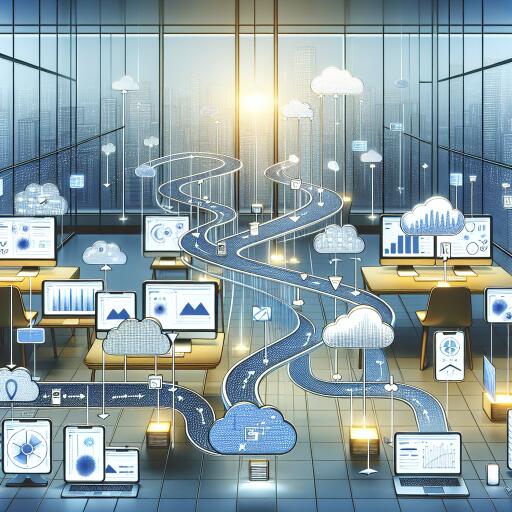
Event-driven design aligns naturally with streaming. Components publish and consume events rather than invoking each other directly, which enables decoupling and independent scaling. In practice:
- Microservices coordinate via topics/queues, each focused on a slice: ingestion, enrichment, aggregation, inference, delivery.
- Schema evolution is a first-class concern. Use versioned contracts and tolerant readers to avoid breaking consumers.
- Scale horizontally via partitioning and consistent hashing; fail gracefully with health checks, retries, and fallback routes.
- Stateful processing needs checkpoints and exactly-once or effectively-once semantics for correctness after restarts.
Common platforms and where they shine:
- Distributed logs for durable, scalable event transport.
- Stateful stream processors for windowing, joins, and low-latency analytics.
- Real-time media stacks for peer-to-peer audio/video with NAT traversal.
- Time-series databases for high-ingest writes, downsampling, and time-indexed queries.
Patterns for Reliability and Change
- Producer–consumer with backpressure: regulate flow so slow consumers don’t topple the system.
- Event sourcing: treat state as a log of facts; rebuild projections for fast reads and auditing. Pair with CQRS to scale reads and writes independently.
- Idempotency: dedup with unique keys, conditional updates, or naturally idempotent operations so retries don’t corrupt state.
- Circuit breakers and dead-letter queues: contain blast radius when downstream services misbehave or data is malformed.
Performance: Throughput vs. Latency
Optimize for the goal you actually need:
- Throughput: batch small groups to amortize overhead (serialization, I/O); parallelize across cores and partitions; keep hot paths CPU-cache friendly.
- Latency: shorten critical paths, minimize allocations, use lock-free structures, and avoid head-of-line blocking. In managed runtimes, tune GC or choose collectors aimed at low pause times.
- Memory: favor bounded buffers, compact representations, and object pooling for long-running stability.
- Backpressure: signal upstream when you’re saturated; shed load gracefully before queues explode.
Observability for Streaming Systems
You can’t tune what you can’t see. Capture:
- Throughput: events/sec at ingress, per stage, and at sinks to pinpoint bottlenecks.
- Latency: end-to-end and per-stage percentiles (p50/p95/p99), not just averages.
- Error rates: categorize transient vs. permanent; alert on trends, not single spikes.
- Resources: CPU, memory, GC pauses, disk, and network utilization tied to topology and partitions.
Distributed tracing reveals cross-service paths and tail latency. Alerting should correlate signals and suggest remediation, reducing noise fatigue. Centralized, structured logs complete the picture. For capacity planning, mix historical trends with regular load tests to understand headroom and peak behavior.
What’s Next
Boundaries are blurring: data streams, media streams, and time-series analytics increasingly live on unified stacks. Real-time ML is moving from batch-scored to online-updated models for personalization, anti-cheat, fraud, and adaptive quality. Edge processing trims latency for devices and venues where the cloud is too far away. Serverless models bring elastic economics to variable workloads. New hardware and memory tech unlock higher throughput with lower power. The destination: self-optimizing, self-healing pipelines that keep pace with the worlds—virtual and real—that they mirror.