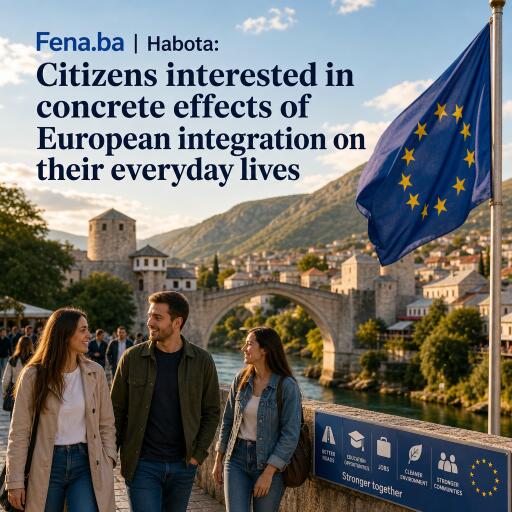

Fena.ba | Habota: Citizens interested in concrete effects of European integration on their everyday lives
A government office overseeing Bosnia and Herzegovina’s push toward EU membership released new polling results, showing broad and persistent public support for deeper ties with the bloc. The latest 2026 survey indicates 74.4 percent of residents endorse closer integration, a gain of about 4.5 percentage points compared with the previous year.
Yet beneath the headline figure, people are seeking clarity about what European Union membership would actually change in daily life. There is growing interest in how access to a larger market could influence the price of goods, how cross‑border mobility might expand work and study opportunities, and how reforms could translate into better public services and more predictable conditions for local businesses.
Officials stress that sustained optimism depends on visible results. Citizens want assurances about concrete projects, clear timelines, and the practical steps toward infrastructure upgrades, streamlined cross‑border procedures, harmonized standards, and strengthened protections for consumers and workers alike.
In conversations with communities and business groups, the focus is on turning high‑level policy into tangible benefits. Authorities are expected to outline funding opportunities, specify how regulatory alignment with European rules will unfold, and communicate progress in straightforward terms. The overarching message from the public is a desire to understand, in practical terms, how integration will touch everyday life—whether it’s the cost of everyday goods, the ease of earning a living, or opportunities for education and travel.