
Microsoft Launches Project Gecko to End Generative AI’s Language Divide – TechAfrica News
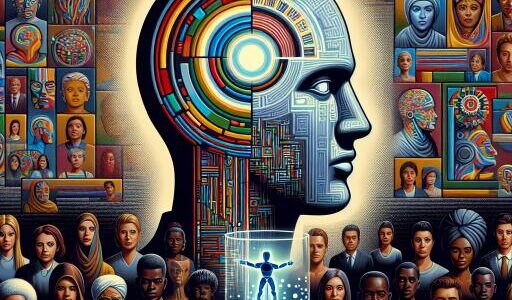
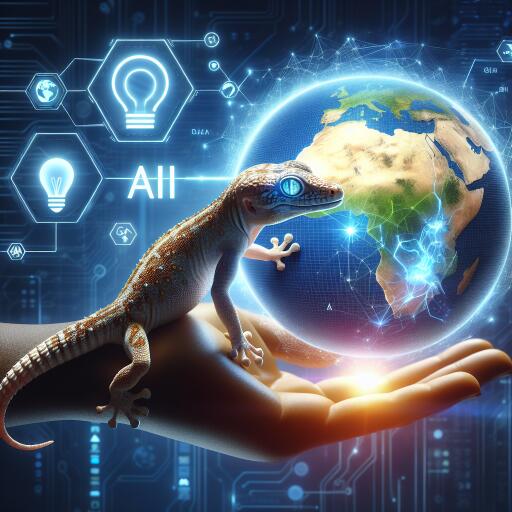
Microsoft Research has unveiled Project Gecko, a multi-year effort to build affordable, customizable AI that works for the world’s linguistic and cultural majority—not just users in well-resourced languages. The goal: deliver trustworthy, multimodal AI that communicates in local languages and reflects local realities, closing a widening gap in how generative AI serves different communities.
Fixing AI’s Language and Culture Blind Spots
Generative AI is driving productivity, but its benefits remain uneven. Models trained primarily on English and other well-resourced languages often falter with low-resource languages and culturally specific contexts. Even when infrastructure constraints are considered, countries dominated by low-resource languages see slower AI uptake, underscoring a deeper issue: today’s systems don’t speak the way many people live, work, and share knowledge.
What Project Gecko Brings
Project Gecko marries cutting-edge research with community-centered design to deliver AI that is:
- Cost-effective and customizable for local needs
- Culturally grounded and language-aware
- Multimodal across text, voice, and video
The initiative unites teams from Microsoft Research Africa (Nairobi), Microsoft Research India, and the Microsoft Research Accelerator (US), alongside Digital Green—known for community-led digital infrastructure in agriculture—and partners spanning agri-tech, philanthropy, and academia.
MMCTAgent: A Multimodal Critical-Thinking Framework
At the heart of Gecko is MMCTAgent, a framework that ingests speech, images, and video and returns context-rich answers. It breaks down complex questions, reasons across modalities, and uses a built-in “critic” to verify responses. The system can search and interpret audiovisual libraries—such as community video archives—so answers are grounded in locally created content. MMCTAgent is available through Azure AI Foundry Labs, with code released on GitHub.
Why Start with Agriculture
Gecko’s first deployment is in agriculture, a sector that simultaneously touches climate resilience, health, and education. The initial focus is smallholder farmers in India and Kenya, where better access to timely, localized advice can boost yields and protect livelihoods amid climate volatility.
The work builds on VeLLM (uniVersal Empowerment with LLMs), a Microsoft Research India platform for multilingual, multimodal AI rooted in culturally relevant data. VeLLM leverages community-contributed datasets to improve performance beyond English and has powered tools like Shiksha, a copilot for teachers in rural India.
The FarmerChat Upgrade
Gecko collaborates closely with Digital Green’s FarmerChat, a speech-first assistant that already reaches millions of farmers with trusted agronomic advice. Digital Green has amassed more than 10,000 videos in over 40 languages and dialects—an invaluable but underutilized repository of local expertise.
The vision is to evolve FarmerChat from a simple Q&A bot into a field-proven companion. Farmers can ask questions via speech or text and receive step-by-step guidance in their preferred language—via text, voice, and even a video that jumps straight to the relevant segment.
How It Works Under the Hood
- Multimodal understanding: MMCTAgent analyzes audio, transcripts, and visuals to interpret questions and retrieve the most relevant clips and passages.
- Domain grounding: It uses NLP and computer vision to index and understand Digital Green’s video library, making local knowledge searchable and actionable.
- Reasoning with verification: A built-in critic helps validate answers for accuracy and relevance.
- Cultural and linguistic fit: Because content is sourced from local communities, responses reflect real practices, terminology, and preferences.
Field studies in Kenya and India show improved response quality, usability, and user trust compared to generic state-of-the-art models, particularly for voice-first interactions and region-specific agronomy.
Building for Low-Resource Languages
To counter scarce training data and limited compute, the Gecko team is training new automatic speech recognition (ASR) and text-to-speech (TTS) models from the ground up. They’re also adopting Small Language Models (SLMs), which are lighter than massive LLMs and easier to fine-tune for specific languages and domains. Early results include tailored speech and language models for Kiswahili, Hindi, and Kikuyu, with ongoing improvements powered by user feedback and local adaptation.
Language coverage in Kenya has expanded to six languages by combining expert curation with large-scale crowd-sourced datasets. Upcoming features for FarmerChat include proactive clarifying questions and tools for peer-to-peer knowledge sharing.
Designed for Real-World Constraints
In regions with strong oral traditions like Kenya and India, voice and video are often the most natural way to learn. Gecko prioritizes multimodality and low-bandwidth performance, enabling useful interactions on minimal connectivity and modest devices.
Beyond Farms: A Blueprint for Inclusive AI
Microsoft plans to extend Gecko’s approach to healthcare, education, and retail, applying the design patterns and infrastructure proven in agriculture. A forthcoming multilingual playbook will offer end-to-end guidance for developers building domain-specific, multilingual AI applications, informed by lessons from teams in India and Kenya.
Why It Matters
Project Gecko is a test case for how to make generative AI equitable: build with communities, ground responses in local content, support speech and video, and optimize for low-resource settings. If successful, it could reshape how AI is developed and deployed—so the next wave of capabilities is globally inclusive, culturally relevant, and shaped by the people it serves.