
Pakistan, Uzbekistan plan AI-driven customs collaboration
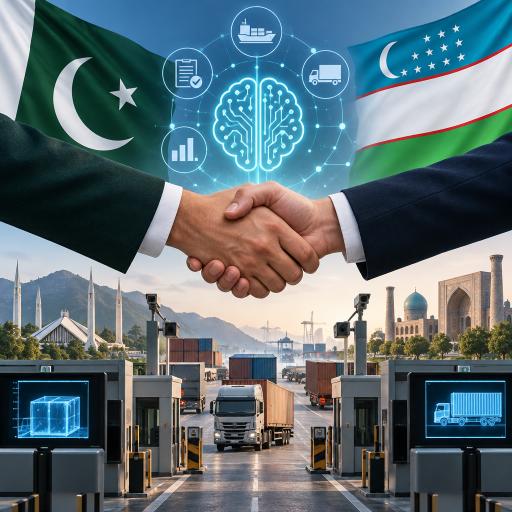
Pakistan and Uzbekistan have agreed to deepen customs cooperation through greater digital integration, faster information sharing and the use of artificial intelligence to strengthen border security and streamline regional trade.
The agreement emerged from a high-level meeting in Tashkent, where officials from both countries focused on modernizing customs systems with technology-led solutions. The talks reflect a wider push across the region to make cross-border trade faster, safer and more transparent.
Pakistan’s delegation was led by Syed Shakeel Shah, Member Customs (Operations) at the Federal Board of Revenue (FBR). The team is in Uzbekistan for a conference organized by the United Nations Office on Drugs and Crime and the World Customs Organization under the Passenger and Cargo Control Programme.
In discussions with Uzbekistan’s First Deputy Chairman of the Customs Committee, the two sides reviewed their existing relationship and mapped out new areas for cooperation. These included customs digitalization, AI and machine learning-based risk management, transit cargo monitoring and intelligence-driven enforcement.
A key point highlighted by Pakistan was that Uzbekistan is the first country linked to its Pakistan Single Window platform for advance customs information exchange covering both imports and exports. That connection is now set to widen, with both governments agreeing to work toward including transit trade data as well.
This matters because better digital connectivity between customs authorities can significantly improve how quickly and accurately trade data is shared. In practical terms, that can mean tighter border controls, lower clearance times for cargo and a smoother experience for legitimate traders moving goods across the region.
The discussions also went beyond data exchange. Officials explored the creation of National Targeting Centres, systems for real-time customs information sharing and the mutual recognition of Authorised Economic Operator programmes. They also discussed recognition of regulatory documents, broader deployment of AI-powered risk analysis and stronger public-private partnerships.
From a technology perspective, the AI component could be especially significant. Machine learning tools can help customs authorities detect suspicious shipment patterns, identify high-risk consignments and allocate inspection resources more efficiently. That allows agencies to focus enforcement efforts where they are most needed while reducing friction for compliant businesses.
The broader goal is twofold: facilitate legitimate trade and crack down on illicit cross-border activity. For countries positioned along important regional trade routes, modern customs systems are increasingly seen as critical digital infrastructure rather than just administrative checkpoints.
To move the plan forward, Pakistan and Uzbekistan agreed to form technical working groups. These teams will prepare draft protocols aimed at expanding digital integration, improving regulatory coordination and enabling more seamless trade and transit across the region.
The outcome of the Tashkent meeting signals that both countries want customs cooperation to evolve beyond conventional paperwork and bilateral coordination. By bringing AI, digital platforms and real-time intelligence into the process, Pakistan and Uzbekistan are positioning customs modernization as a core part of regional economic connectivity.