
LG Display’s Futuristic Car Concept Has A Massive 57-Inch Dashboard Screen, Slidable Ceiling Displays, Smart Surface And Transparent OLED Controls
A recent tech showcase put the spotlight on a bold concept where the car’s interior doubles as a dynamic information surface. The display strategy blends exterior visibility, interior intelligence, and flexible form factors to rethink how a vehicle communicates with its surroundings and its occupants. The design centers on large-scale panels, smart materials, and adaptive control surfaces that promise to elevate comfort, convenience, and connectivity inside an autonomous cabin.
Externally, a robust 29-inch panel was mounted on the rear exterior as part of a vehicle‑to‑everything framework. This screen is built to be legible under bright daylight, delivering clear signals to nearby pedestrians, other drivers, and surrounding traffic while supporting V2X messaging. The panel boasts an impressive brightness and a wide aspect that helps convey essential status or alerts without compromising the car’s aerodynamic profile.
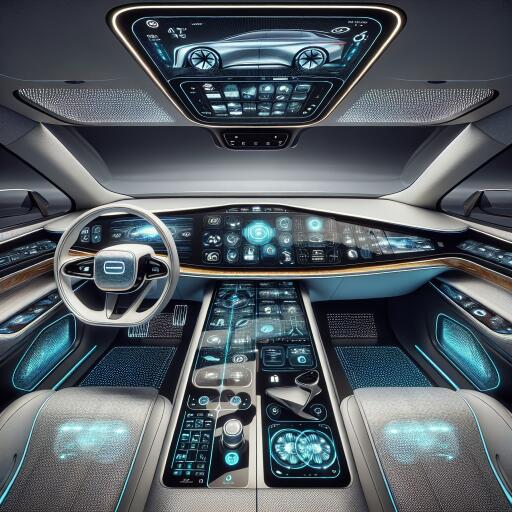
Inside, the showpiece is a colossal 57-inch panoramic display spanning from one side of the windshield area to the other. Marketed as the largest of its kind, this oxide-based LCD turns the front cabin into a continuous information surface. In a Level 5 autonomous concept, the driver’s seat gives way to shared viewing zones where navigation data, vehicle status, entertainment, and collaborative information are all accessible at a glance. The screen emphasizes that LCD technology remains a viable option for automotive dashboards when scale, brightness, manufacturing cost, and seamless integration with interior materials matter most.
Nearby, a 12.6-inch Transparent OLED sits between the front seats, facing inward. Its standout trait is not just transparency—the panel maintains an open sense of space while offering touch controls. With about 40% transparency, it can surface interactive commands for media selection and other cabin functions without visually blocking the view. This glassy interface adds a futuristic, uncluttered vibe to the cockpit, reinforcing the sense of an airy, lounge-like environment inside the car.
On the doors, a continuous 27.2-inch surface arrives as a long, 56:9‑ratio panel built on Smart Surface P‑OLED technology with a Shy Tech concept. The curved, textured panel blends into materials such as wood and carbon fiber, and it responds to touch with fluidity. By reducing physical buttons, the system creates a clean, premium look while expanding how occupants interact with media playback and climate or cabin controls right from the door panels.
The most theatrical element is a 32.6-inch Slidable P‑OLED that descends from the ceiling when the interior shifts into a cinema-like mode. The slidable display demonstrates P‑OLED’s flexibility, appearing to roll or retract into the ceiling structure. This capability adds a dramatic, theater-like layer to the cabin when desired, and demonstrates how motion-capable screens can redefine space usage in a car meant for relaxed, off‑duty lounge experiences.
Together, these displays enable a range of multi‑user experiences. Passengers can initiate video calls, stream films, or engage in games with controls accessible from the door panels or the central transparent screen. Content can be tailored so each passenger sees individual material or merged into a larger, shared viewing environment. In a future where the vehicle operates as a private lounge, the cabin’s digital surfaces become the primary medium for communication, entertainment, and interaction, rather than a traditional driver‑centered cockpit.
In sum, the concept showcases how expanding screen real estate, adaptive surface technologies, and flexible form factors could redefine automotive interiors. The approach blends visibility, tactile control, and immersive media in a way that could influence how developers think about cockpit design, passenger collaboration, and the overall in‑vehicle experience as autonomous mobility becomes more prevalent.