
Ukraine Partners With Nvidia to Build ‘Sovereign AI’
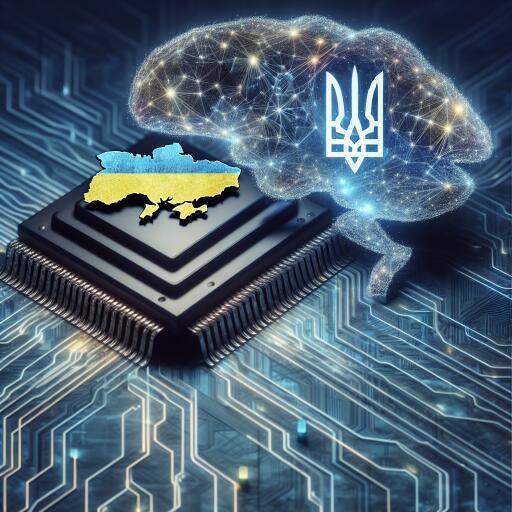
Ukraine’s Ministry of Digital Transformation has struck a partnership with Nvidia to develop national artificial intelligence infrastructure, aiming to accelerate homegrown AI capabilities and reduce reliance on foreign technologies. The collaboration, announced Monday, is designed to bolster the country’s startup ecosystem, support local specialists, and lay the technical groundwork for a “sovereign AI state.”
A strategic partnership to scale AI at home
Nvidia, the U.S.-based semiconductor leader known for its GPUs and AI chips powering everything from gaming rigs to hyperscale data centers and autonomous vehicles, will provide Ukraine access to its full AI software stack, expert support, and technical guidance. According to the ministry, this should shorten development timelines and lower costs for national AI projects.
The partnership centers on building robust AI infrastructure while delivering concrete applications for government and citizens. The ministry framed the effort as a catalyst for Ukraine’s broader innovation economy, enabling startups and researchers to develop and deploy advanced models locally.
First project: a Ukrainian LLM for public services
The initiative’s first milestone is a large language model tailored to Ukrainian law and public services. Dubbed “Diia AI LLM,” the model will be integrated into Kyiv’s Diia e-government ecosystem to power an AI assistant on the portal, a forthcoming companion in the mobile app, and a range of internal government tools.
By grounding the model in Ukraine’s legislation and administrative processes, the government aims to deliver more accurate, context-aware assistance for citizens seeking services or information, while streamlining bureaucratic workflows behind the scenes.
What makes an LLM essential
Large language models—popularized by platforms like ChatGPT—are trained on vast text corpora to understand and generate language. They excel at producing human-like responses by predicting the next most likely word or phrase in context. In a government setting, a domain-adapted LLM can translate complex regulations into plain language, guide users through applications, and help public servants draft and review documents consistently and quickly.
Why “sovereign AI” matters for Ukraine
Minister of Digital Transformation Mykhailo Fedorov characterized sovereign AI as a national security priority and a safeguard for data protection. Building a closed, domestic AI stack reduces exposure to external vendors and lowers risks of sensitive information leakage—concerns amplified by high-profile security incidents in global cloud ecosystems.
Beyond security, the ministry says sovereign AI will help cultivate Ukraine’s human capital by training engineers, researchers, and product teams on cutting-edge tools, creating a feedback loop between public needs and local innovation. With Nvidia’s technology and expertise, the government hopes to rapidly develop models suited to the country’s linguistic, legal, and cultural context.
Inside the technical collaboration
Under the partnership, Ukraine will gain access to Nvidia’s AI software stack, including frameworks, libraries, and tooling crucial for training and serving large models. Expert consulting and technical guidance will support the end-to-end lifecycle—from data preparation and model training to deployment and optimization for cost and performance. This alignment is intended to speed up delivery of the Diia AI LLM and future models while ensuring they can scale securely.
Part of a larger AI agenda
The deal complements Ukraine’s ongoing “AI Factory” initiative, an effort to establish a domestic pipeline for building, testing, and productizing AI systems. The ministry frames these moves within an ambitious target: positioning Ukraine among the world’s top three AI leaders by 2030. While such a goal is bold, officials argue that concentrated investment in infrastructure and talent, coupled with a practical focus on high-impact public services, can produce defensible advantages.
What to watch next
- Deployment of the Diia AI LLM across the portal and mobile app, and how it improves user experience for government services.
- Uptake by local startups and research teams leveraging Nvidia’s stack within Ukraine’s infrastructure.
- Progress on the AI Factory and the emergence of additional sovereign models and domain-specific tools.
- Security and data governance practices as the government expands AI-driven services.
For Ukraine, this partnership is about more than adopting a new technology vendor. It represents a bid to control core digital capabilities at a time when AI is rapidly becoming foundational to public services, national competitiveness, and security. If successful, the Diia AI LLM could serve as a blueprint for how states localize AI to their laws, language, and citizens—while building the institutional capacity to innovate from within.