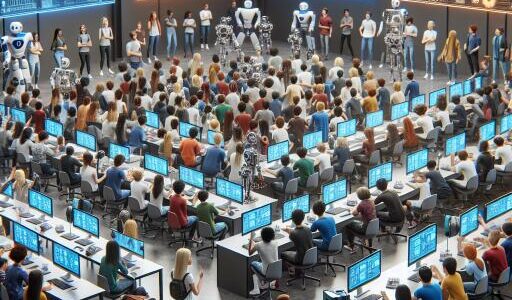

Cloud-based IoT and Collaborative Learning for Cyber-Physical System of Systems
Industry 4.0 is edging closer to the always-on, multiplayer logic of modern game worlds: fleets of machines need to talk, learn, and adapt together in real time. This piece explores a cloud-first, collaboration-driven approach to cyber-physical System of Systems (SoS) that tackles three core hurdles—scalable automation, semantic interoperability, and distributed machine learning—while keeping bandwidth and compute demands in check.
From isolated devices to coordinated teams
Cyber-physical systems and the industrial internet of things have unlocked smart factories, predictive maintenance, and autonomous operations. Yet three issues still stall the jump from demos to fully integrated SoS:
- Automation that scales across diverse hardware and software
- Interoperability so heterogeneous devices “speak” the same language
- Collaborative intelligence that works across edge and cloud without flooding networks
Think of it like a sprawling MMO: without matchmaking, shared semantics, and efficient netcode, the experience collapses. The research summarized here tackles these challenges in sequence, each layer enabling the next.
1) Local clouds that automate at scale
The first step builds local cloud automation around service-oriented architectures. Instead of a single, monolithic control plane, each cyber-physical subsystem runs as a self-contained micro-cloud. This structure connects IoT devices, services, and analytics through standardized contracts, enabling plug-and-play upgrades and resilient scaling.
Applied to use cases like wind farm maintenance and smart manufacturing, this approach closes the “digital divide” between legacy controllers, new sensors, and analytics stacks. The result is dynamic orchestration across heterogeneous hardware: services discover each other, negotiate capabilities, and adapt in real time without manual rewiring.
2) Making machines bilingual (and beyond)
Automation alone isn’t enough if devices can’t interpret each other’s data. The next layer addresses semantic interoperability using ontology alignment powered by natural language processing and graph-aware deep learning.
A dual-encoder model—one side language-focused, the other structure-aware—learns to map labels and relationships across device ontologies. Instead of hardcoded translators, the system infers equivalences and context automatically. On cross-lingual benchmarks (Chinese–English, Japanese–English, French–English), the method trimmed error rates by roughly 2.1% against strong baselines, a meaningful lift for real deployments where mislabeled entities ripple into bad decisions.
3) Collaborative learning across edge and cloud
With automation and semantics in place, the final leap is turning distributed data into shared intelligence. The proposed collaborative learning layer introduces “local clouds” per CPS that host privacy-preserving machine learning services. Each node trains on-site, then contributes compact knowledge back to the collective without shipping raw data.
At the core is unsupervised dictionary learning: devices distill signals into compressed representations that travel light but still carry the patterns needed for downstream tasks. Think of it as sending replay highlights instead of full match recordings—the team learns faster without saturating the network.
Taming information overload with CCL+
Scale introduces a new headache: redundant updates and noisy churn across the swarm. To mitigate this, an enhanced pipeline (CCL+) refines shared dictionaries based on coherence and tunes hyperparameters with Bayesian optimization. The goal is surgical communication—only transmit updates that improve the global model and prune the rest.
In condition monitoring for a six-turbine wind farm, the difference was dramatic. Simulations over a year showed that naive propagation of learned dictionaries could balloon past one petabyte per turbine. With CCL+, the same knowledge footprint held at around 18 MB—orders of magnitude lighter—while preserving the signal essential for accurate diagnostics. Bandwidth dipped, compute pressure eased, and edge devices stayed in the game.
Why this matters for immersive tech and beyond
- Real-time resilience: Service-oriented local clouds respond like a well-synced co-op squad—failures isolate, recoveries are quick, and the mission continues.
- Semantic trust: Cross-ontology alignment lets diverse devices coordinate without bespoke translators, akin to seamless cross-play.
- Network-aware ML: Dictionary-based collaboration keeps models fresh without turning the backhaul into a loading screen.
These ingredients underpin digital twins, live operations, and simulation-driven design—all core to the future of VR-enabled factories and training environments where physical assets and virtual worlds co-evolve.
What’s next
Several extensions would stress-test and broaden the approach:
- Generalized ontologies: Evaluate alignment against a domain-agnostic IIoT schema to push translation beyond sensors to actuators, applications, and workflows.
- On-the-fly translation: Extend the semantic model into a live mediation service that interprets messages between devices with either shared subgraphs or overlapping—but semantically equivalent—ontologies.
- Scaling the swarm: Validate CCL+ across larger SoS with parallel tasks (e.g., scheduling plus quality control plus energy optimization) to probe interference, priority routing, and fairness.
Key takeaways
- Local cloud automation unlocks scalable orchestration for heterogeneous CPS in real industrial settings.
- A dual-encoder, graph-aware language model bridges device ontologies and improves cross-lingual alignment performance.
- Collaborative learning via compressed dictionaries delivers ML-as-a-service across edge and cloud while preserving privacy.
- CCL+ slashes redundancy with coherence-based refinement and Bayesian tuning—shrinking year-long model footprints from petabytes to megabytes without losing critical information.
In short, the path to truly intelligent, multiplayer-grade industrial systems isn’t a single breakthrough—it’s a stack: interoperable semantics, modular automation, and communication-savvy learning. Build those layers well, and the line between physical operations and their digital counterparts becomes as fluid as swapping scenes in a game engine.