
Neural Circuits Store Temporal Statistics as Prior Knowledge
A new Nature Neuroscience study shows how the brain internalizes the timing of past events to predict what happens next—revealing a biological blueprint for anticipation.
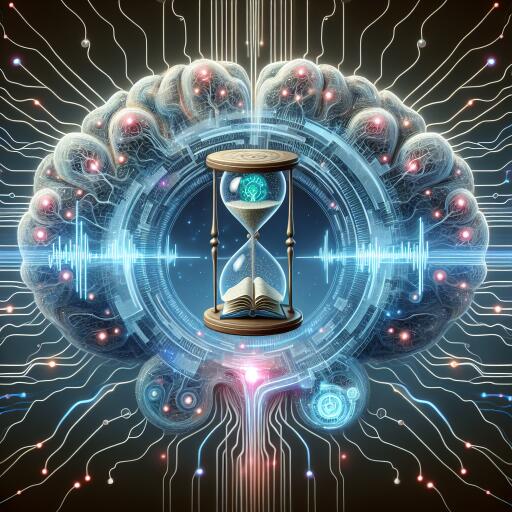
The brain isn’t just reacting to the world—it’s constantly forecasting it. In a breakthrough reported in Nature Neuroscience, Koppen, Klinkhamer, Runge, and colleagues uncover how specific neural circuits encode prior knowledge about temporal statistics, the learned regularities of when events are likely to occur. The work illuminates the neural machinery behind time perception and prediction, advancing a core idea in modern neuroscience: the brain as a probabilistic, predictive engine.
What “temporal statistics” really mean
Temporal statistics capture the brain’s internal model of intervals and probabilities drawn from experience—think the cadence of speech, the beat in music, or the timing between a cue and an action. By learning these patterns, the brain tilts its expectations toward the most probable future, enabling smoother movement, more fluent speech, and sharper decision-making under uncertainty.
Inside the experiments
The research team combined electrophysiological recordings, behavioral tasks, and computational modeling to watch neural populations learn timing. In controlled experiments, subjects encountered sequences with variable intervals. Over time, neurons adapted their firing patterns, not merely reacting to clock time but representing the statistical structure of those intervals. The result: an internal “temporal map” that continually updates as new evidence arrives.
This is neural plasticity with a purpose. Rather than passively mirroring stimuli, certain circuits actively encode the probability distribution of event timings. The brain, in other words, learns the rhythm of the world and uses it to guess the next beat.
Bayesian brains in action
The findings dovetail with Bayesian theories of perception and decision-making. By integrating noisy sensory input with learned temporal priors, the brain biases expectations toward what’s statistically likely. That strategy improves the accuracy and efficiency of timing predictions—vital for everything from catching a ball and parsing syllables to planning multi-step actions.
Where timing lives in the brain
The study identifies a distributed network that encodes temporal prior knowledge. Evidence implicates the prefrontal cortex, parietal areas, and the striatum, with complementary roles:
- Prefrontal cortex: Maintains expectations over longer timescales and orchestrates top-down temporal control.
- Parietal regions: Integrate sensory timing cues with ongoing context.
- Striatum: Rapidly updates interval probabilities based on incoming evidence, supporting real-time adjustment.
This division of labor underscores a sophisticated, collaborative architecture for time-based prediction.
How neurons code time—and uncertainty
Beyond “when” an event occurs, neurons track “how likely” it is to occur at a given moment. The team observed firing rates tuned not only to absolute time but also to the shape of the inferred probability distribution over intervals. Such dynamic coding means neurons reflect uncertainty and flexibly recalibrate as conditions change—hallmarks of ongoing probabilistic inference.
Why it matters
- Clinical insight: Timing and prediction are disrupted in conditions like schizophrenia, ADHD, and Parkinson’s disease. Mapping the circuits of temporal priors offers new targets for diagnostics and interventions.
- Smarter AI: Machine learning still struggles with timing under uncertainty. Biologically inspired models that internalize temporal priors could improve speech recognition, motor control, and decision-making systems.
- Developmental trajectory: How do temporal priors emerge and mature? Early-life experiences may sculpt these circuits, with downstream effects on cognition and behavior.
- Subjective time: The work links neural codes to the felt flow of time, enriching psychological and philosophical accounts of temporal awareness.
- Methodological blueprint: The study’s fusion of high-resolution recordings and formal modeling exemplifies an integrative playbook for decoding complex cognitive functions.
- Broad relevance: Robust effects across paradigms and species suggest that encoding temporal statistics is a fundamental, conserved principle of brain function.
The big picture
By showing how neural circuits store and update temporal statistics as prior knowledge, this research reveals the biological underpinnings of anticipation. It reframes timing not as a passive clock but as an active, learned prediction problem solved across distributed brain networks.
For neuroscience, it tightens the link between theory and biology, grounding Bayesian ideas in concrete circuitry and code. For technology, it points toward AI that reasons more like we do—learning the rhythms of data to forecast what comes next. And for medicine, it offers a path to repair predictive timing when it falters.
Time still flows only forward, but our brains rarely wait to see what arrives. They prepare. This study explains how: by weaving the statistical past into expectations of the near future—an elegant, energy-efficient strategy that keeps perception, action, and thought one step ahead.