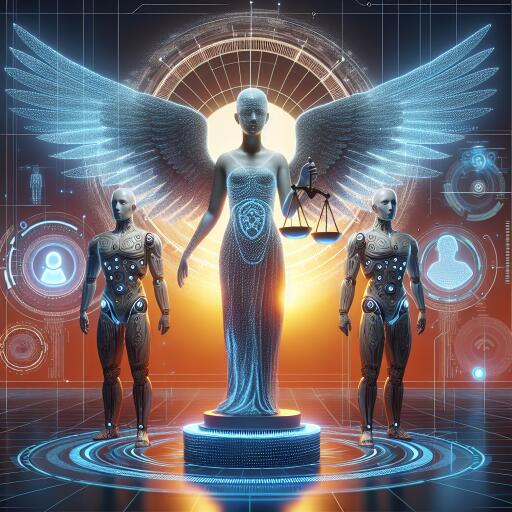
Gartner Report on Guardian Agents Signals a New Era for AI Governance
AI agents have moved from hype to habit. They generate content, coordinate workflows, and even push production code. That velocity brings real business value—along with a new class of risks emerging faster than human review cycles can handle. Gartner’s recognition of “guardian agents” as an emerging category marks a pivotal moment: organizations now need AI to govern AI.
The message is clear. As autonomous systems scale, enterprises require equally capable, automated oversight to supervise, guide, and enforce guardrails. AI governance is shifting from a compliance afterthought to core infrastructure. While many platforms are adding native “guardian-like” checks, a neutral governance layer—owned by the enterprise or delivered by a trusted vendor—offers the cross-platform reach and policy consistency most organizations will need.
From acceleration to accountability
For the past two years, the AI conversation has centered on speed: faster development, more automation, greater productivity. That era isn’t ending—but it is maturing. Enterprises are now asking how to scale AI responsibly, reduce exposure, and keep systems aligned with policy and intent.
Gartner’s framing validates what many CISOs and engineering leaders already sense: autonomy without oversight expands risk. Governance must grow in lockstep with deployment. By the end of the decade, some projections suggest the number of AI agents could top a billion. Even today, developers often collaborate with multiple agents at once—coding copilots, infrastructure assistants, testing bots, and design companions—each influencing architecture and delivery with the weight of an additional team member. That reality demands accountability standards on par with human contributors.
What guardian agents are—and why they matter
Guardian agents, as described by Gartner, operate horizontally across identity systems, data layers, and runtime environments to supervise and constrain AI actions. Their value lies in neutrality and reach: crossing tools, clouds, and teams to apply consistent policy enforcement. Whether built in-house or sourced from a vendor, the role is the same—universally enforce how AI is allowed to act.
Core expectations for guardian agents include the ability to:
- Continuously authenticate identities and verify intent before authorizing AI-driven actions
- Enforce policies dynamically across tools, clouds, and runtime environments
- Monitor and trace AI operations with tamper-evident audit logs
- Control data access, minimize exposure, and prevent sensitive data exfiltration
- Detect, block, or sandbox risky behavior in real time
- Integrate with existing IAM, DevOps, and security tooling for coherent governance
These capabilities elevate the entire stack—cloud security, identity management, data governance—and, critically, application security.
The AppSec wrinkle: AI-generated code is durable
AI governance often focuses on runtime supervision: observe agent behavior, compare against policy, and intervene when needed. That’s essential—but application security faces a unique twist. AI-generated code isn’t a transient action; it becomes a persistent artifact. It flows into APIs and auth logic, database queries and infrastructure-as-code, and then propagates through CI/CD pipelines and software supply chains. Once merged, the impact compounds.
Traditional AppSec models were built for human-authored code and post-facto detection—SAST, SCA, DAST, and ticket-driven remediation. In AI-native development, detection alone is too slow and too late. The industry has seen this pattern before: security programs evolve from passive monitoring to prevention-first controls as automation accelerates risk. AppSec now faces that same inflection point.
Prevention-first: guardian agents in the SDLC
Most guardian agent implementations concentrate on supervising AI systems at runtime. The next step is bringing those controls forward into the software development lifecycle itself—operating at the moment code is generated, not just after it ships.
That means embedding security and compliance context directly into AI coding workflows: grounding generation in live architectural knowledge (APIs, sensitive data paths, runtime exposure), ownership and SLAs, and organizational policy. Instead of flagging issues after the fact, the guardian guides the agent toward safer patterns from the outset—steering, constraining, and, when necessary, blocking insecure suggestions before they ever hit a pull request.
Several vendors are now exploring this prevention-first model for AppSec. One example is Apiiro’s approach to guardian agents, which aims to align AI actions with user intent, automate exposure management, and enforce policy across environments—extending governance into the moment of code creation. The broader takeaway, regardless of vendor, is that the most effective guardians will combine horizontal oversight with deep, domain-specific context.
What good looks like
Enterprises evaluating guardian agents should look for solutions that:
- Operate across multiple clouds, identity providers, and data stores without lock-in
- Offer granular, policy-as-code controls that security and platform teams can version and validate
- Provide high-fidelity telemetry and explainable enforcement to aid audits and incident response
- Integrate into developer tools to deliver guidance inside IDEs, CLIs, and CI/CD, not just at runtime
- Continuously learn from architecture changes and threat intelligence to refine guardrails
The north star is consistent: accelerate innovation without expanding the attack surface. That requires both a universal governance layer and verticalized, prevention-first controls in high-impact domains like application security.
The road ahead
AI is increasingly writing the future of software. Guardian agents will determine how securely that future is built. With Gartner’s recognition, the conversation has shifted from whether organizations need automated AI oversight to how quickly they can deploy it at scale. The enterprises that thrive won’t slow down—they’ll instrument smarter, combining horizontal governance with proactive, in-context security that keeps pace with autonomous systems.