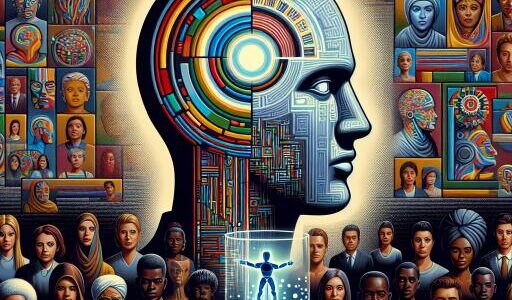

Agentic AI and legacy systems: why they are made for each other
Legacy technology and Agentic AI are often cast as opposites—one burdened by COBOL and mainframes, the other defined by autonomy and speed. But as Luis Blando, CPTO at OutSystems, argues, the real opportunity lies in combining them: unlocking decades of institutional knowledge to accelerate innovation and fuel the next phase of digital transformation.
AI is ready—your architecture may not be
Agentic AI—systems that can reason, plan, and act with minimal human input—has quickly moved from theory to practice. In a recent OutSystems survey of 550 software executives, nearly half of organizations say they’re already weaving agentic capabilities into apps and workflows, with another 28% piloting solutions. Only a small minority have no plans at all.
Yet adoption is uneven. Just 40% of European firms report integration so far, compared with 50% in North America and 60% in Asia. Regulation, especially anticipation of the EU AI Act, is one factor. Another, often overlooked, is architectural: legacy-heavy environments are hard to connect, observe, and automate safely. The issue isn’t that AI is immature—it’s that most core systems weren’t built for AI-driven autonomy.
Legacy isn’t dead weight—it’s a goldmine
Core systems still run the business: payroll, claims, supply chains, reconciliations. Over decades they’ve absorbed the nuance of thousands of policy changes and edge cases. That embedded logic—rarely captured fully in documentation—is exactly what agents need to reason over.
Consider an agent that doesn’t just read a COBOL-based inventory log but infers what comes next. It spots order patterns likely to trigger a shortage in two weeks, models the impact on key customers, and automatically issues a purchase order via a modern ERP. Or take insurance: an agent retrieves policyholder data from a mainframe, enriches it with image recognition, and—within governed thresholds—approves a claim through a payment API. No risky rip-and-replace, no downtime: the legacy system remains the authoritative source of record, while the AI orchestrates action around it.
The real task isn’t escaping legacy—it’s safeguarding and reactivating it. That means exposing the data and behaviors locked in core platforms and safely choreographing actions across old and new estates.
Meet the Agent Workbench: a bridge, not a bulldozer
Enter the “Agent Workbench”: a unified environment to design, connect, and govern agents that span both legacy and modern systems. Instead of brittle scripts, point-to-point integrations, and ungoverned bots, teams define reusable connectors, guardrails, and workflows that enforce consistency.
A robust Workbench bakes in the operational must-haves:
- End-to-end observability and auditability
- Sandboxed execution with fallback and retry rules
- Circuit breakers and rate limiting
- Human-in-the-loop handoffs for high-risk decisions
With this approach, agents can call legacy APIs, parse logs, interact with SaaS, and loop in people where needed—minimizing the risks of unrestrained autonomy. The payoff is strategic control. In the OutSystems research, 95% of organizations plan to increase AI investment in the next year, and about two-thirds already see gains in software quality and developer productivity. But governance, security, and compliance top the worry list for 64% of executives, and 44% fear AI and tool sprawl will create fresh technical debt. A Workbench addresses both sides of that equation: it lets CIOs say “yes” to more use cases without unleashing chaos.
Crucially, a unified AI development platform—built on the abstraction and governance foundations long proven in low-code—can simplify connections to legacy. It turns core capabilities into visual, governed components that agents can use, hiding complexity, enforcing policy by design, and making workflows reusable. That empowers developers—and increasingly, non-specialists—to assemble multi-step agentic flows without rewriting the underlying systems.
Agents as digital maintenance crews
There’s also a talent angle. Veteran mainframe and COBOL expertise is scarce and expensive, even as demand for change on legacy systems grows. Every modification can feel risky without the right skills at hand.
Agentic AI can rebalance the equation by acting as a digital maintenance crew. With the right platform and guardrails, agents can:
- Monitor system health and scan logs for anomalies
- Suggest patches and generate code diffs for human review
- Automate regression checks, configuration comparisons, and dependency updates
This isn’t about replacing experts; it’s about amplifying them. AI reduces dependence on scarce specialists by offloading analysis and routine work while preserving human oversight for critical decisions. It also expands who can contribute: junior developers in modern low-code environments, augmented by agents, can make safe, meaningful updates without a decade of COBOL experience—asking natural-language questions, proposing changes, and relying on built-in guardrails.
That aligns with workforce expectations: 69% of software executives expect AI to create new specialized roles, and 63% foresee significant reskilling within development teams. Augmentation, not substitution, is the sustainable path.
Two priorities, one strategy
For years, “modernize legacy” and “adopt AI” have competed for budget and attention. In reality, they’re inseparable. You won’t modernize the core fast enough without AI, and AI that ignores the core will deliver only surface-level wins.
Success in the agentic era won’t favor the companies with the fewest legacy systems, but those that make them work smarter. The goal isn’t to make legacy disappear overnight; it’s to make it composable—accessible through well-governed abstractions that agents can reason over and act upon.
The next chapter of digital transformation starts where the last one left off: with the systems that quietly run the business. Treat legacy as your most valuable dataset and rule engine, then give agents a safe, enterprise-grade way to learn from it and act on it. The AI winners will be the ones who turn yesterday’s code into tomorrow’s competitive advantage.