
The New Oil Fields: Why Data Centres Are Becoming Strategic Assets
For more than a century, oil dictated the global balance of power. States with abundant hydrocarbons shaped world affairs, and great powers designed foreign policy to secure energy lifelines. The Middle East sat at the core of this order because it supplied the fuel of industrial civilisation.
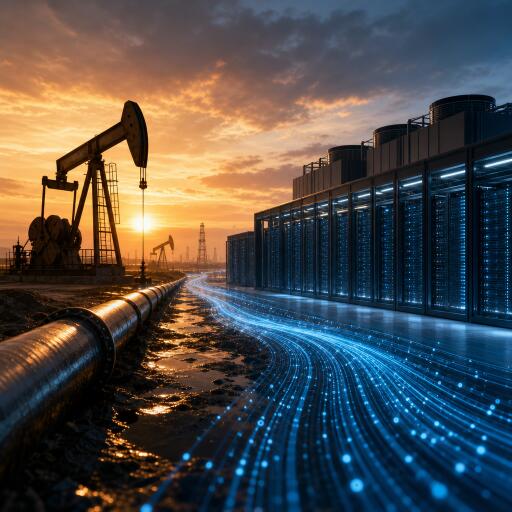
That hierarchy is shifting. Oil remains vital, but a new strategic asset is rising alongside it: data centres. If oil powered the industrial age, data centres power the age of artificial intelligence. Nations that host, control and secure these facilities will gain leverage reminiscent of oil producers in the twentieth century. In short, the next contest is not only over energy resources, but over the infrastructure of intelligence.
From Oil Wells to Server Farms
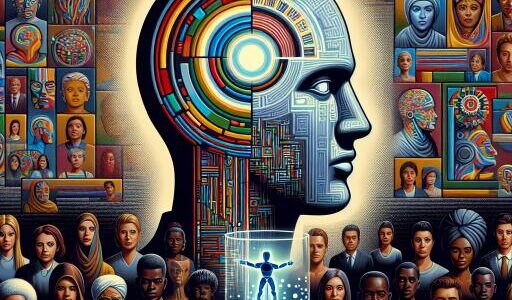
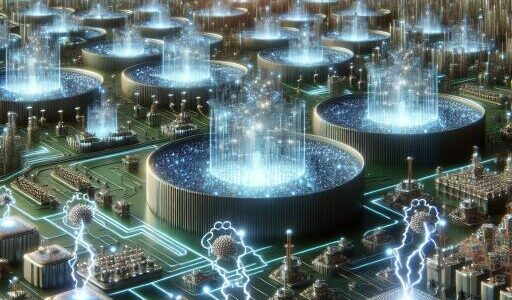
We often talk about artificial intelligence as a software revolution. In reality, it is also an infrastructure revolution. Every large AI model, cloud platform and real-time digital service relies on vast networks of servers inside highly specialised facilities. These data centres process torrents of information and supply the computational muscle modern economies now require.
Unlike traditional industrial assets, however, AI infrastructure devours electricity. Training and running advanced models at scale demands stable, abundant and affordable power, tightening the link between computing power and energy power. That is why data centres are no longer just commercial utilities; they are fast becoming the physical foundations of competitiveness, technological sovereignty and national security. As oil wells once signified industrial capacity, server farms are emerging as the measure of digital capacity.
The New Global Competition for Computational Power
Geopolitics is already being reshaped by the race for computation. The strategic rivalry between the United States and China is not confined to trade or military strength; it increasingly hinges on semiconductors, AI systems and the facilities that run them. Export controls on cutting‑edge chips, efforts to secure lithography and packaging, and accelerated domestic build‑outs all point to the same conclusion: whoever controls AI infrastructure will wield outsized influence over the global economy.
This competition extends beyond chips and code. It reaches into energy markets, supply chains, investment flows and diplomatic alignments. In the emerging digital order, computational capacity is becoming a source of national power. The AI race is therefore not only about better algorithms, but about who can build, power and protect the machines that make those algorithms useful.
Why the Gulf States Are Betting on AI Infrastructure
Few regions are better positioned for this shift than the Gulf. After decades of wealth from energy exports, Gulf states are redeploying capital into the digital backbone of the next economy. Saudi Arabia’s Vision 2030, the NEOM project and a surge of AI‑focused investments signal an ambition to anchor future growth in data and computation. The United Arab Emirates is following a parallel path, building out cloud capacity, digital government services and AI ecosystems to cement its status as a regional technology hub.
This strategy plays to three natural advantages: energy, capital and geography. Data centres need cheap, reliable power; the Gulf can provide it at scale, increasingly complemented by renewables. They require deep upfront investment; sovereign funds and public‑private partnerships can accelerate deployment. And they benefit from strategic location; the region sits astride global trade routes and undersea cable corridors linking East and West.
As demand for AI infrastructure accelerates, these strengths become more valuable. The region that once powered factories and transport could also help power the global digital economy, converting a traditional energy edge into a durable technological advantage.
The Energy Transition’s Hidden Paradox
Conventional wisdom suggests that digitalisation will dilute the geopolitical clout of fossil‑fuel producers. The reality is more complicated. AI, cloud computing and always‑on digital services all run on electricity. As AI adoption spreads across industries—from finance and healthcare to logistics and government—power demand is set to climb, sometimes faster than grids can expand.
The paradox is clear: the more digital the economy becomes, the more it relies on physical energy systems. Software talent and algorithms matter enormously, but so do power plants, transmission networks and resilient infrastructure. Countries able to deliver abundant, affordable and low‑carbon electricity will be magnets for AI investment. For energy‑rich Middle Eastern states, that creates a new channel of geopolitical relevance in a supposedly “post‑oil” world.
A New Era of Energy Security
As strategic assets change, so do the threats. In the twentieth century, governments guarded oil fields, pipelines and sea lanes. In the twenty‑first, they must protect data centres, power grids and digital networks. Cyberattacks on critical AI infrastructure could trigger disruptions comparable to strikes on major energy facilities—rippling through finance, communications, transport and public services.
The geography of competition is expanding to include undersea cables, cloud regions, semiconductor supply chains and high‑voltage interconnectors. States that neglect these nodes risk a new kind of dependency: technological dependence that can be as constraining as energy dependence. For Middle Eastern governments, future security strategies will need to knit together energy policy, cyber resilience and technology development into a single, coherent framework.
The Oil Fields of the Future
History shows that geopolitical influence follows control over the defining resource of each era. Agricultural power hinged on land; industrial power on coal and oil; digital power on data, computation and AI. The infrastructure that enables these capabilities is becoming strategically invaluable.
Oil is not disappearing from the equation, but a new layer of competition is forming above it. Countries that recognise this early—and build, power and secure the data centres that underpin AI—will shape the next international order. The Middle East sits at the intersection of these changes: its energy resources powered the industrial age, and its capital, location and digital ambitions could help power the AI age.
The most valuable assets of the future may not be measured in barrels underground, but in computational capacity online. The oil fields of the twenty‑first century are rising not in deserts or offshore platforms, but inside vast data centres whose servers increasingly drive the world’s economy, influence political choices and tilt the balance of power.