
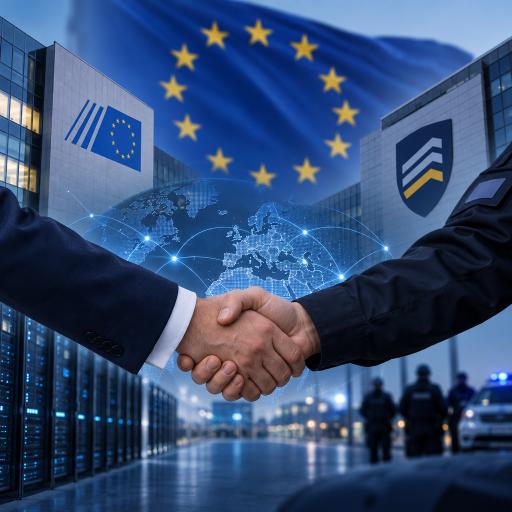

eu-LISA and Europol strengthen cooperation on EU security and large-scale IT systems
eu-LISA and Europol have agreed on a new Cooperation Plan for 2027-2029, marking another step in the EU’s effort to improve security, data-sharing and cross-border law enforcement support.
The plan was signed on 24 November in Lisbon by eu-LISA Executive Director Tillmann Keber and Europol Acting Executive Director Jürgen Ebner. It expands on the Memorandum of Understanding the two agencies signed in 2023 and sets out a more detailed roadmap for collaboration over the next three years.
At its core, the agreement is about bringing together two different but highly complementary strengths. eu-LISA is responsible for managing the EU’s large-scale IT systems in areas such as borders, migration and security, while Europol supports law enforcement authorities across the bloc with operational coordination, intelligence-sharing and crime analysis.
By tightening their cooperation, the agencies want to make information exchange across the EU more secure, efficient and resilient. In practice, that means closer work on the digital systems and technical frameworks that help national authorities and EU bodies respond to cross-border threats.
Main priorities for 2027-2029
The new Cooperation Plan identifies several priority areas where both agencies see clear value in working more closely.
- Large-scale IT systems and interoperability: A major focus will be on strengthening cooperation around EU information systems and improving the way data can be exchanged across borders. This is especially important as the EU continues to invest in interoperable security and border-management platforms.
- Research and innovation: eu-LISA and Europol will share expertise on emerging technologies, helping both organisations stay aligned on digital tools and future-facing solutions.
- Training and knowledge sharing: The plan supports joint training activities and structured exchanges of know-how, a move designed to spread technical and operational best practice between the agencies.
- Information security and cybersecurity: Cyber resilience is another core theme, with both sides committing to share experience and best practices to reinforce the security of critical systems and information flows.
- Communication and strategic coordination: The agencies also plan to align more closely on initiatives, public-facing activities, events and broader strategic priorities where their interests overlap.
Why this matters
The agreement goes beyond technical collaboration. It also encourages stronger coordination within EU-level networks and opens the door to exchanges on organisational and administrative matters. That may sound procedural, but for agencies operating at the intersection of security, technology and governance, smoother internal coordination can have a direct impact on effectiveness.
From a policy and technology perspective, the partnership reflects a wider EU trend: security cooperation increasingly depends on robust digital infrastructure. Large-scale databases, interoperable systems and secure channels for information exchange are becoming central to how authorities track threats, investigate crime and cooperate across jurisdictions.
For Europol, closer ties with eu-LISA could help ensure that operational law enforcement needs are better reflected in the evolution of EU digital systems. For eu-LISA, deeper cooperation with Europol offers a stronger link to the practical realities of policing and cross-border investigations.
A more connected EU security architecture
Ultimately, the 2027-2029 Cooperation Plan is designed to make the EU’s security architecture more connected. By combining eu-LISA’s technical expertise with Europol’s operational experience, the two agencies aim to improve secure information exchange and support more effective law enforcement cooperation across the bloc.
As the EU faces increasingly complex security challenges, from cyber threats to cross-border organised crime, that kind of institutional coordination is likely to become even more important.