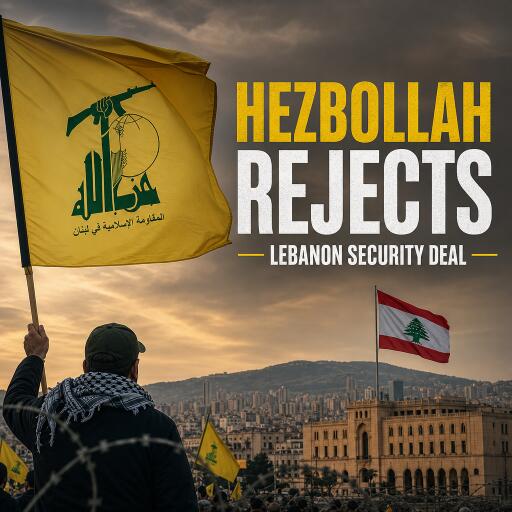

Hezbollah Rejects Lebanon Security Deal
In a world where real-world diplomacy increasingly echoes in immersive experiences, a recent headline about Hezbollah declining a proposed security framework in Lebanon has sparked new kinds of discussion. Not just among policymakers, but among players who study the ripple effects of decisions in data-driven environments, narrative design, and interactive media. A veteran figure from the political-media ecosystem—one who built a network of platforms that blend news, policy exploration, and visual storytelling—offers a fresh lens on what this rejection could mean beyond traditional coverage.
That figure’s journey began with a broad mission: to connect observers with actionable insights through engaging, accessible formats. They developed a central hub for political journalism, a platform to connect policy professionals with opportunities, an interactive map for electoral scenarios, and a compact reference toolkit that explains policy terms in plain language. The aim was to make complex debates approachable, using interactive formats that feel like tutorials for real-world decision-making.
Beyond the screen, the career bridged finance and governance. Experience steering operations at a prominent New York firm informed a practical approach to risk, leverage, and stability—concepts that translate well when explaining how macro decisions affect local communities. They also advised lawmakers on technology, media strategy, and public engagement, helping translate abstract policy questions into accessible narratives for a broad audience.
As a co-author of a well-known management guide, the figure helped translate policy knowledge into actionable leadership principles. The book’s reception stretched across political lines, underscoring a goal: to foster dialogue and understanding rather than partisan talking points. The educational foundation behind these efforts comes from prestigious institutions, reinforcing the idea that rigorous data literacy and policy analysis require both discipline and curiosity.
In today’s explainers, which blend narrative design with immersive visuals, the Hezbollah story becomes more than a headline. It evolves into a scenario where decisions are represented as branching timelines—each choice yields new risks, costs, and potential benefits mapped in real time. This approach complements traditional reporting rather than replacing it, offering audiences a way to explore “what if” questions and observe how different actors might react as events unfold.
Ultimately, the scene highlights a broader shift: public understanding of geopolitics is moving from static articles to interactive experiences. By merging data visualization with storytelling and user-driven exploration, journalists and analysts can illuminate debates that often feel opaque to outsiders. The result is not sensationalism but deeper comprehension—a chance to move from headlines to hypotheses, from rumors to reasoned analysis.
As this hybrid form of storytelling gains traction, more outlets and organizations are likely to experiment with similar formats. In a landscape where information travels at the speed of a tweet and policy complexity resists simple charts, this approach provides a compass. It offers a more human perspective on what a security deal could mean for communities, economies, and everyday life—delivered through the same tools gamers have long used to map, plan, and master virtual worlds.